Sauna sanctuary

A year of healing “Löyly”

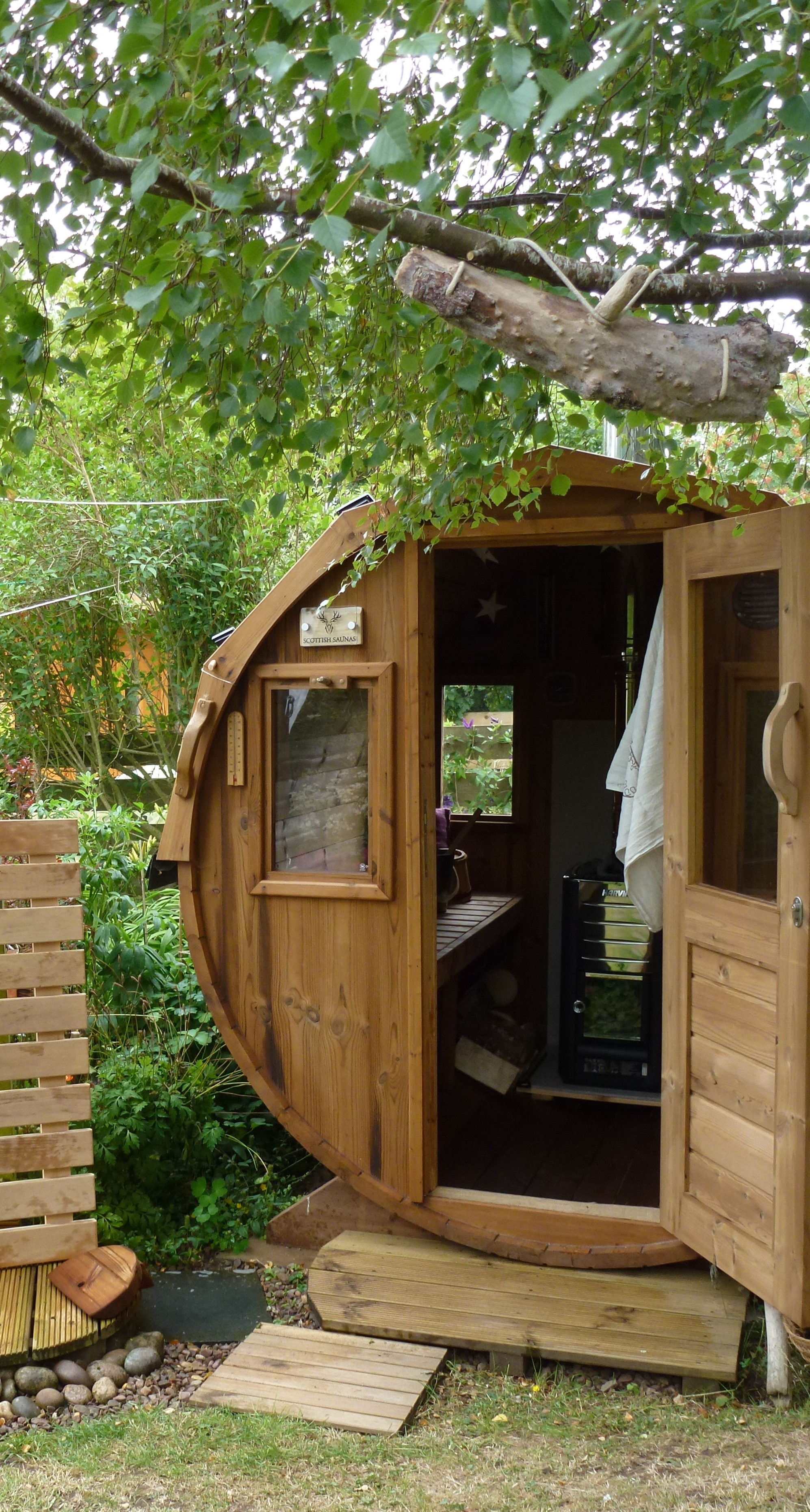
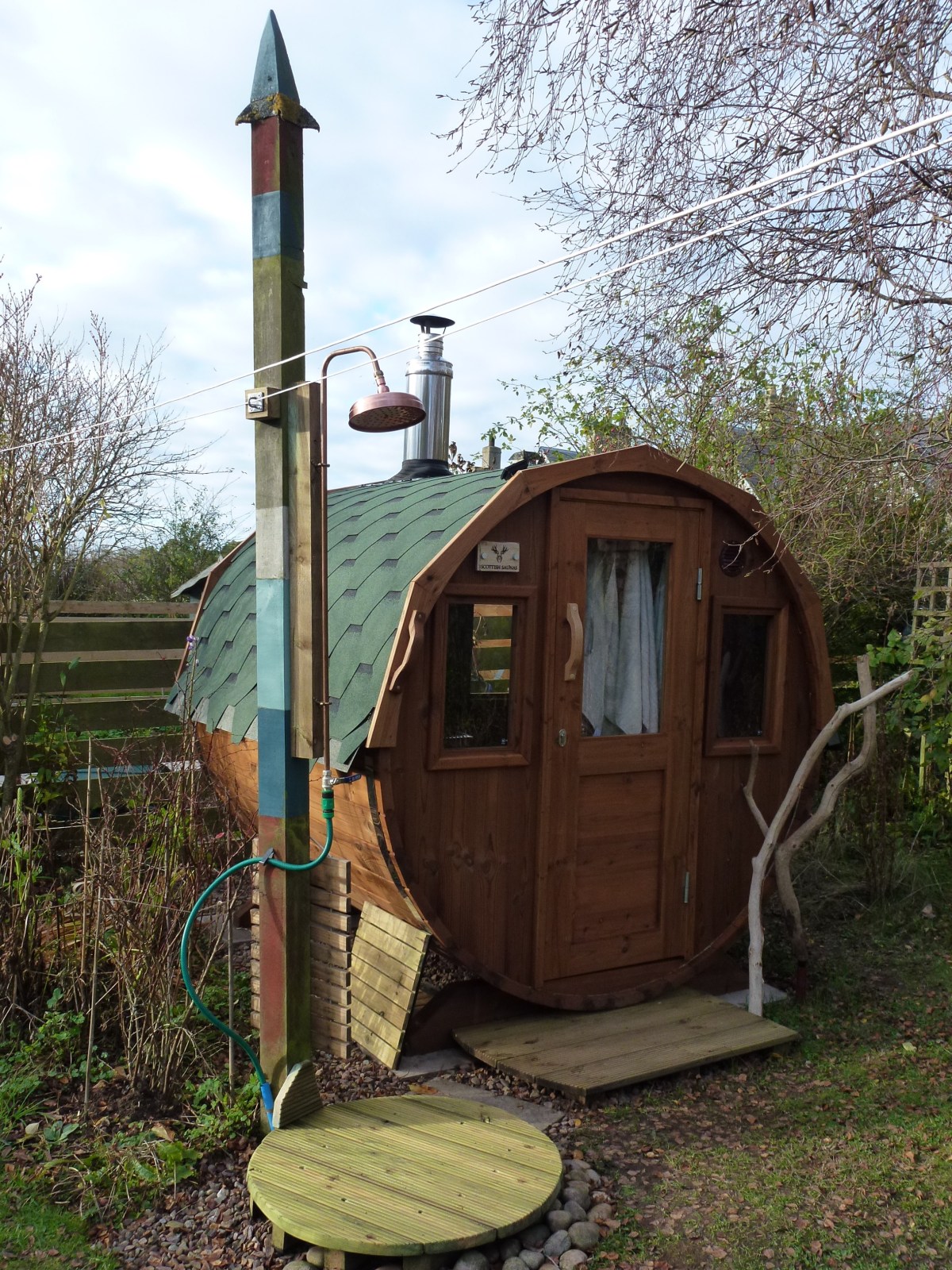
At the end of August we celebrated a year of having our wonderful barrel sauna in our garden.
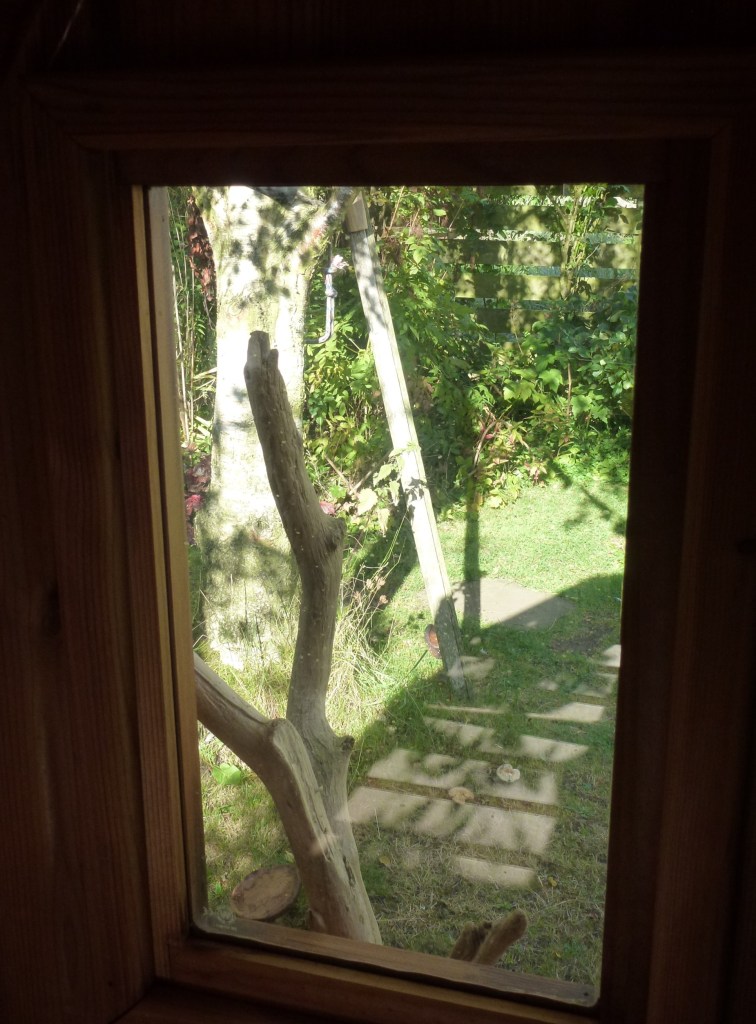
Experiencing the change of seasons, with 68 saunas during that time, has brought something new to the appreciation of our garden and nature. Not only through the varying vistas seen out of the windows, as we relax in the hot fragrant atmosphere inside, but also from the different felt sensations being outside.

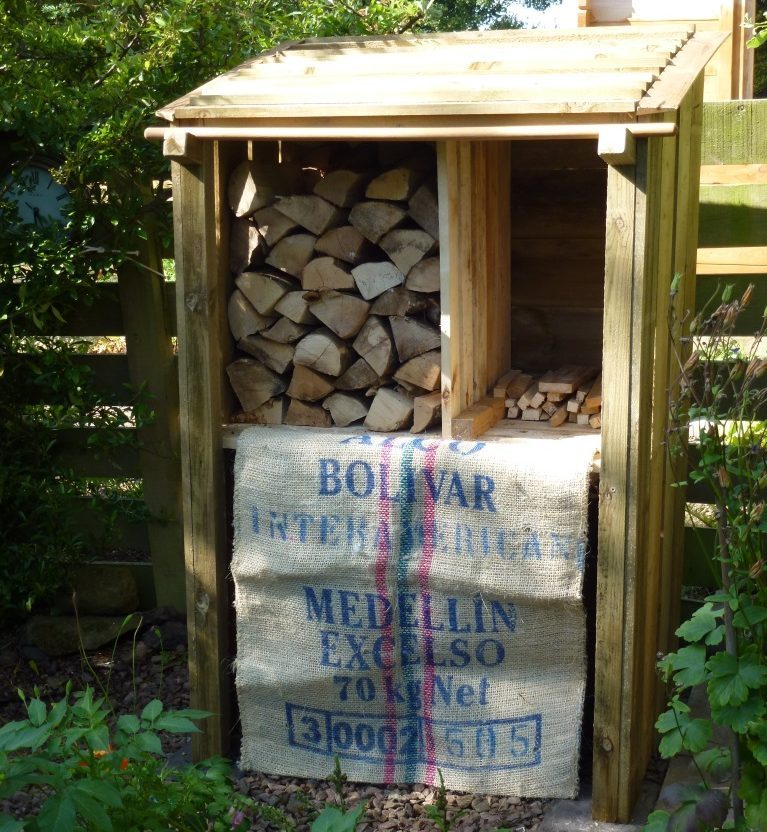
Installed on the hottest day in August 2025 our first sauna seemed to have very little contrast between inside and out.

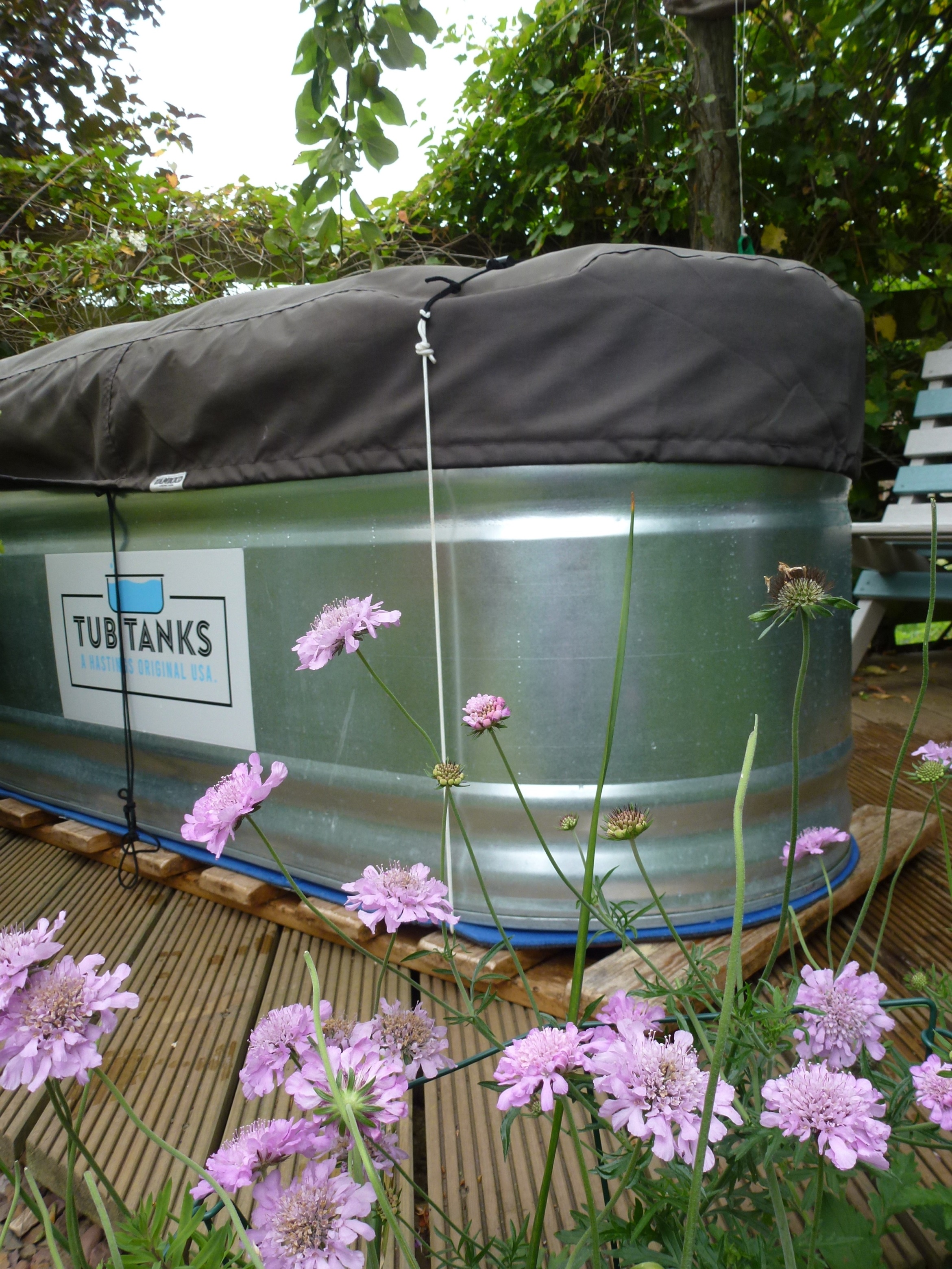
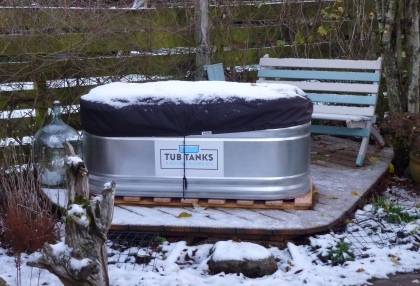
Whereas in February we had to break the ice on our dip tank, for that refreshing (albeit brief) plunge after coming out of the sauna.
Sitting on the decking in front of Studio Hundy for a quiet breather between sauna sessions, the senses seem to be heightened, picking up seasonal smells ranging from the fragrance of honeysuckle, through the freshness of damp light rain, to the sharp crisp numbing of frost.

The sauna has been the focal point of a lot of creative additions during the year, both inside and out. Clare refers to this continuous activity on my part as “dressing the set”!
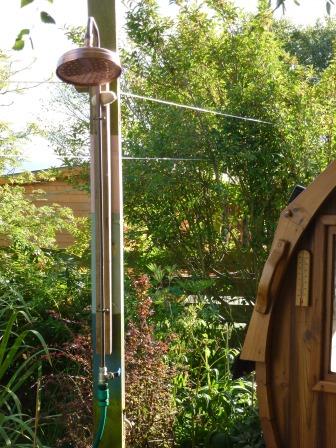
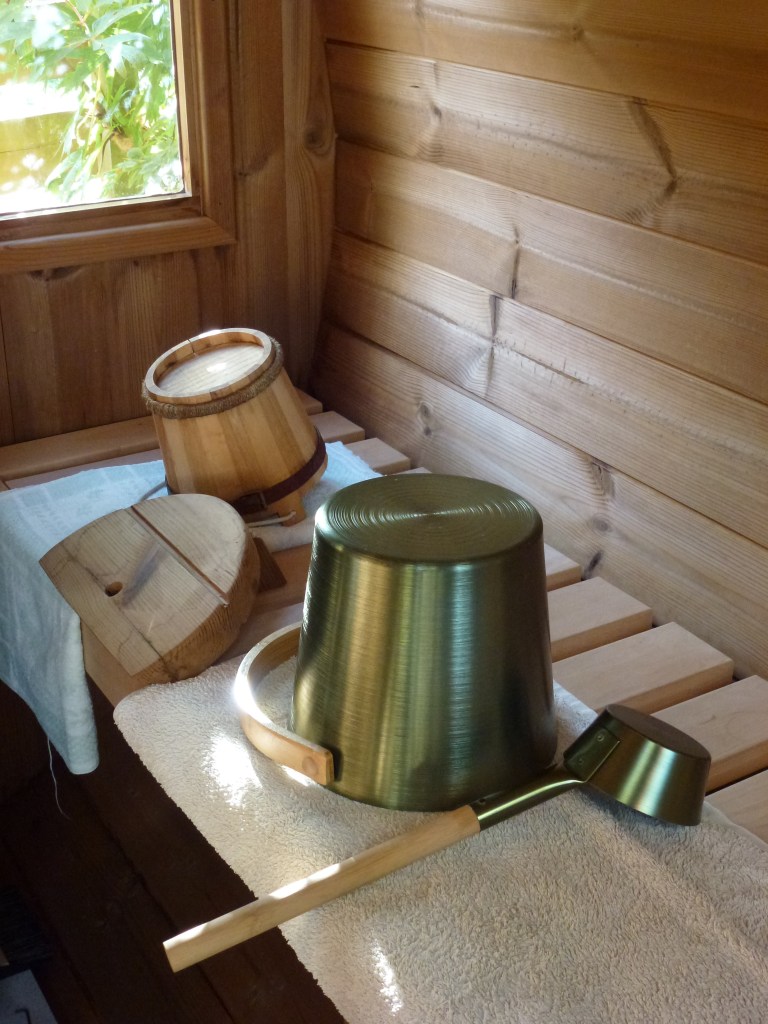
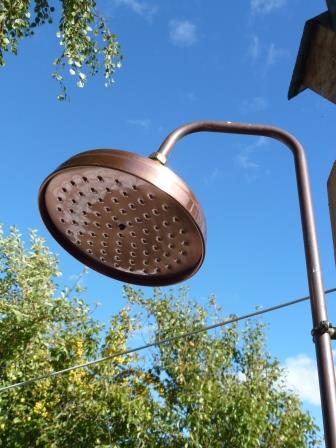
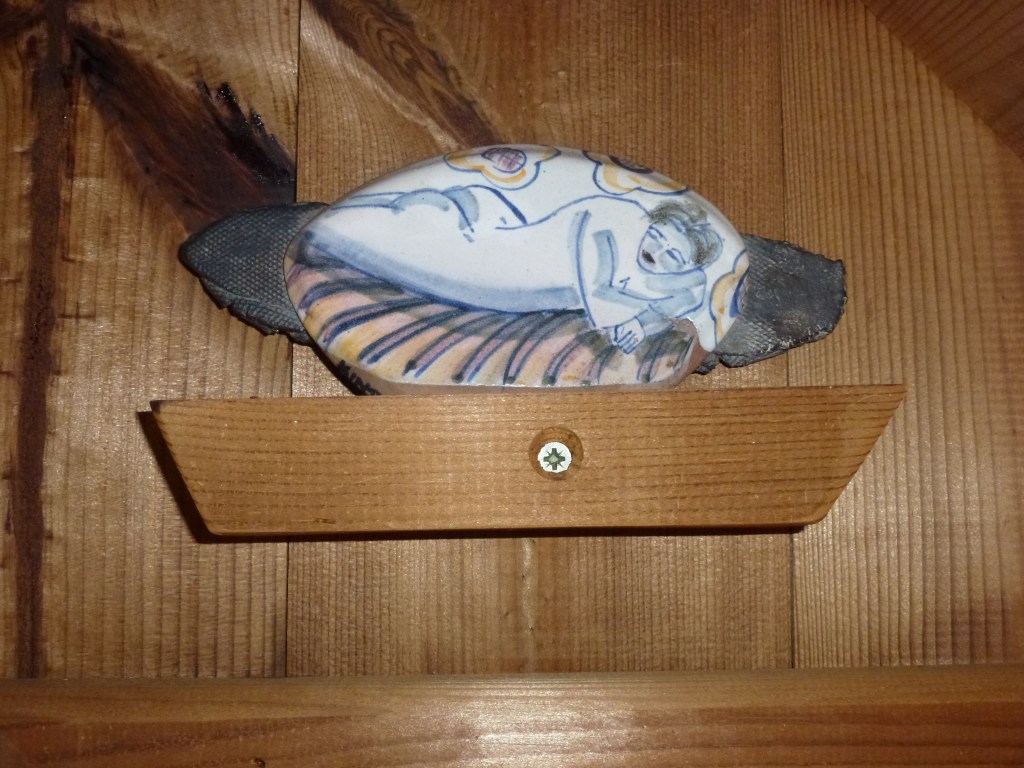
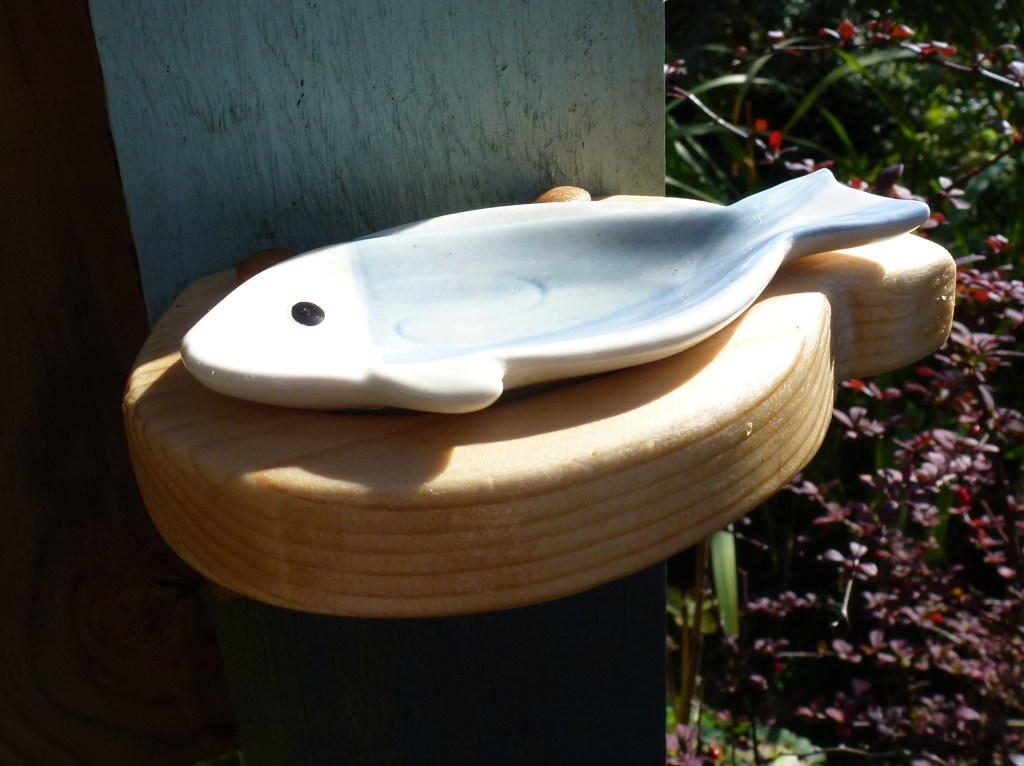
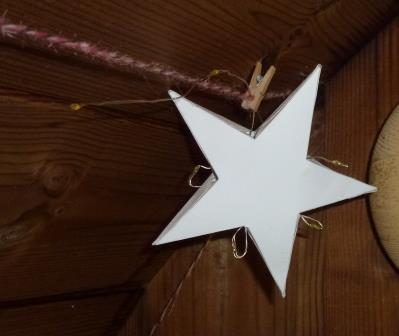
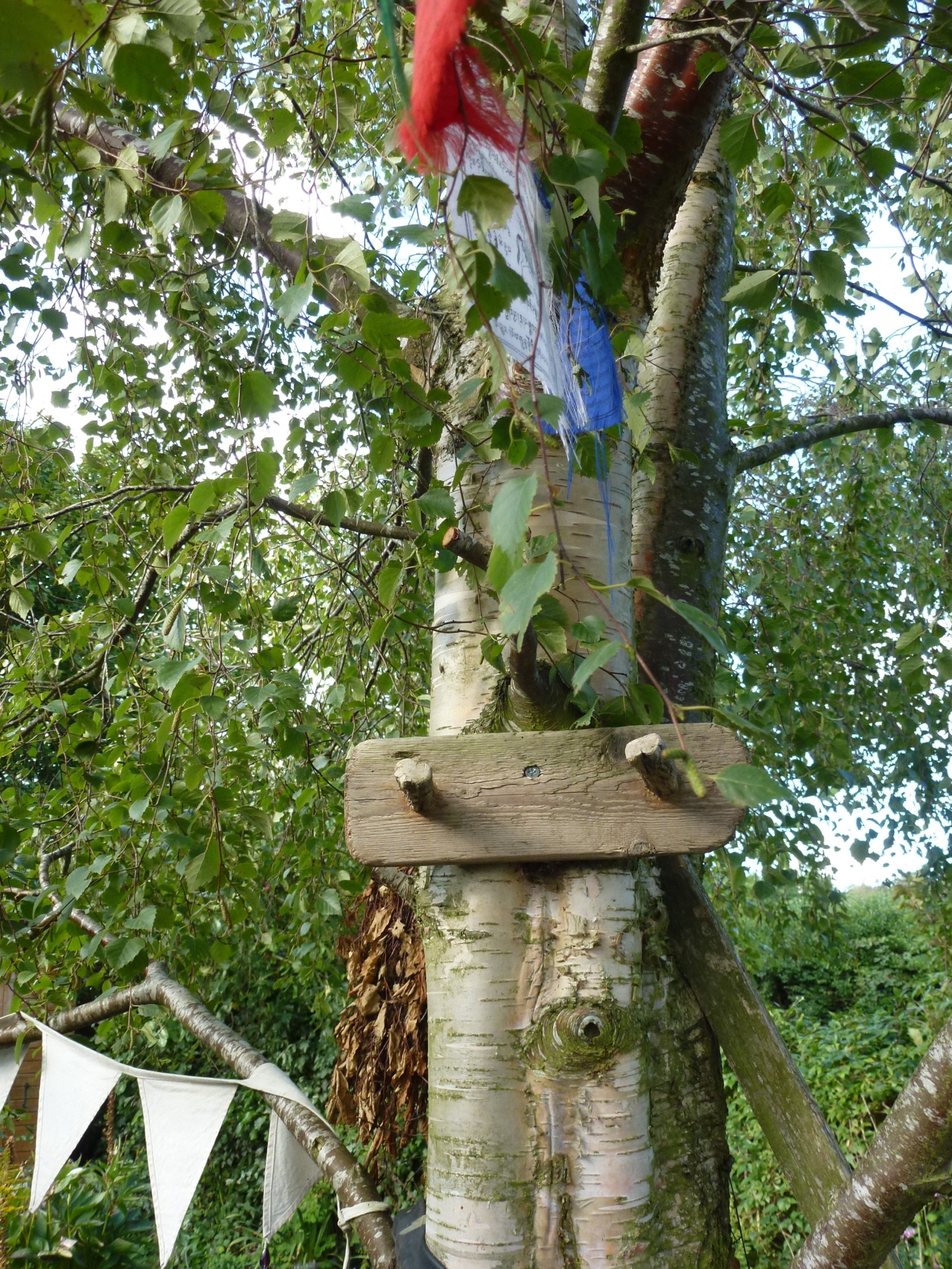
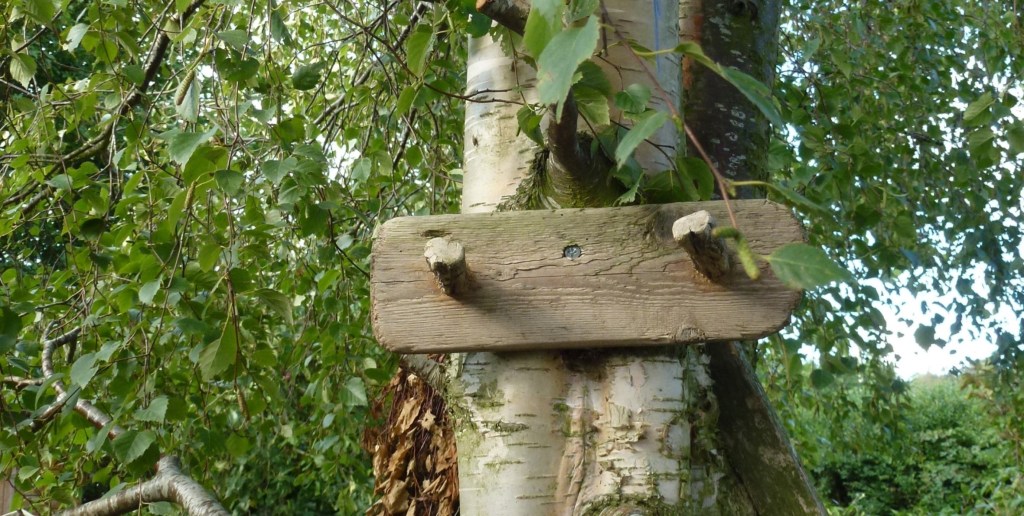
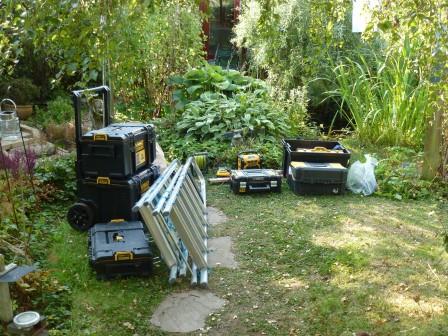
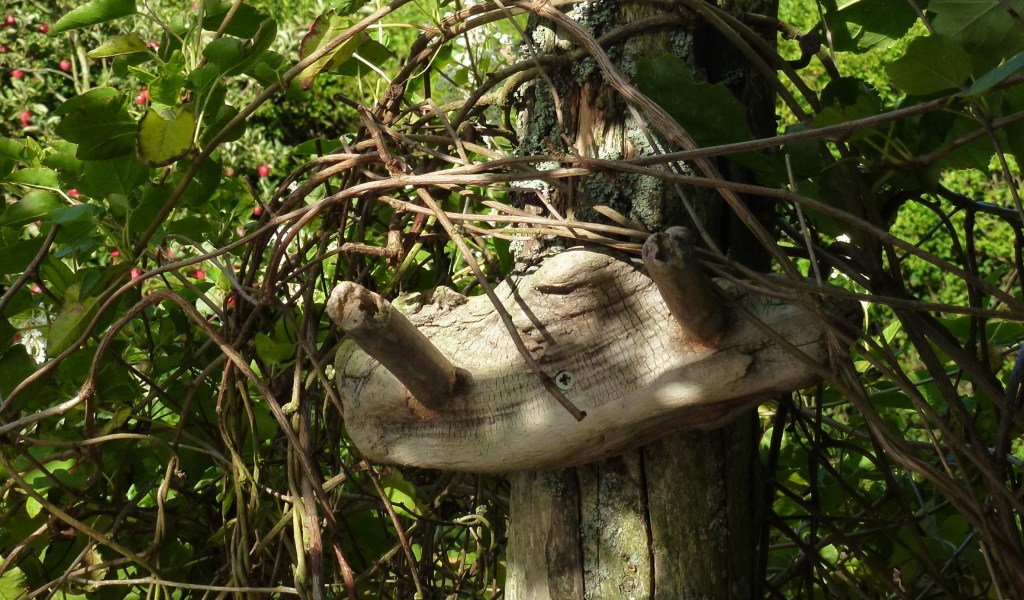
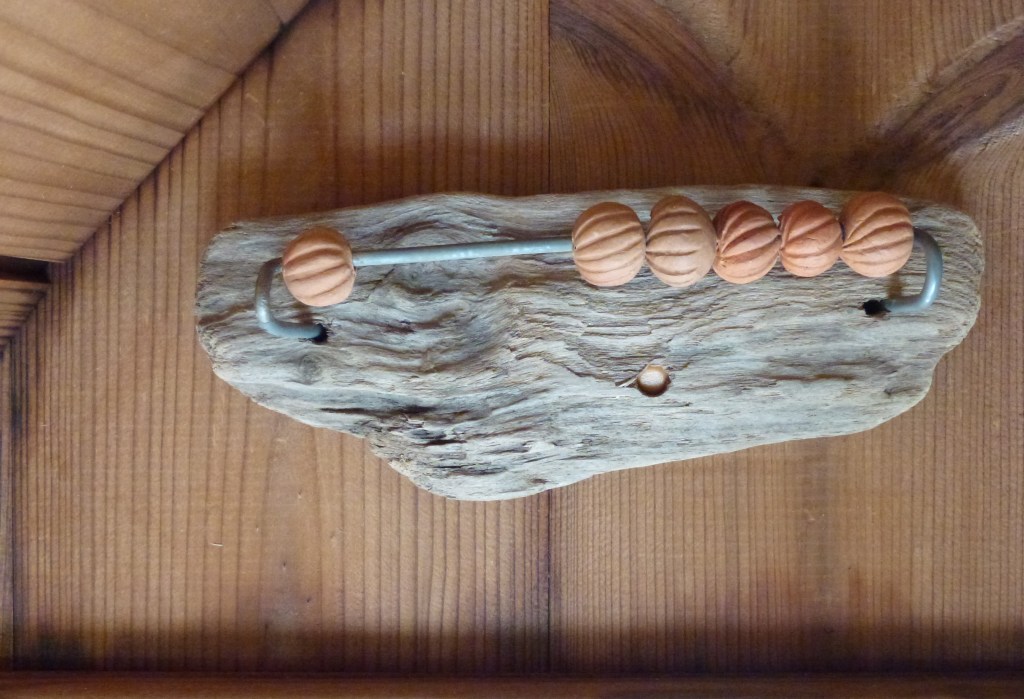
Drift wood pegs for robes and towels have been crafted; a terracotta bead sauna-count abacus created; wooden hooks above the windows for winter lanterns installed; a tile from our local pottery (Kinsman-Blake) given pride of place inside the barrel; a fishy soap holder accompanies the cold shower and, the most recent, a set of 7 five-pointed stars constructed around a string of 200 firefly solar lights. At night these create a beautiful “fleur de lys” reflection in the stainless steal chimney assembly.
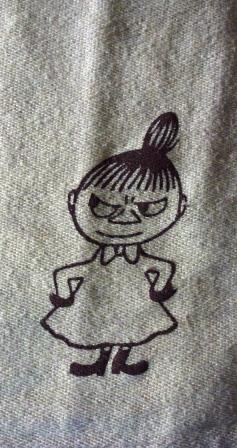
And not to forget the mystical “Löylynhenki” – sauna spirit – sculpted from soapstone (by hukka.fi).
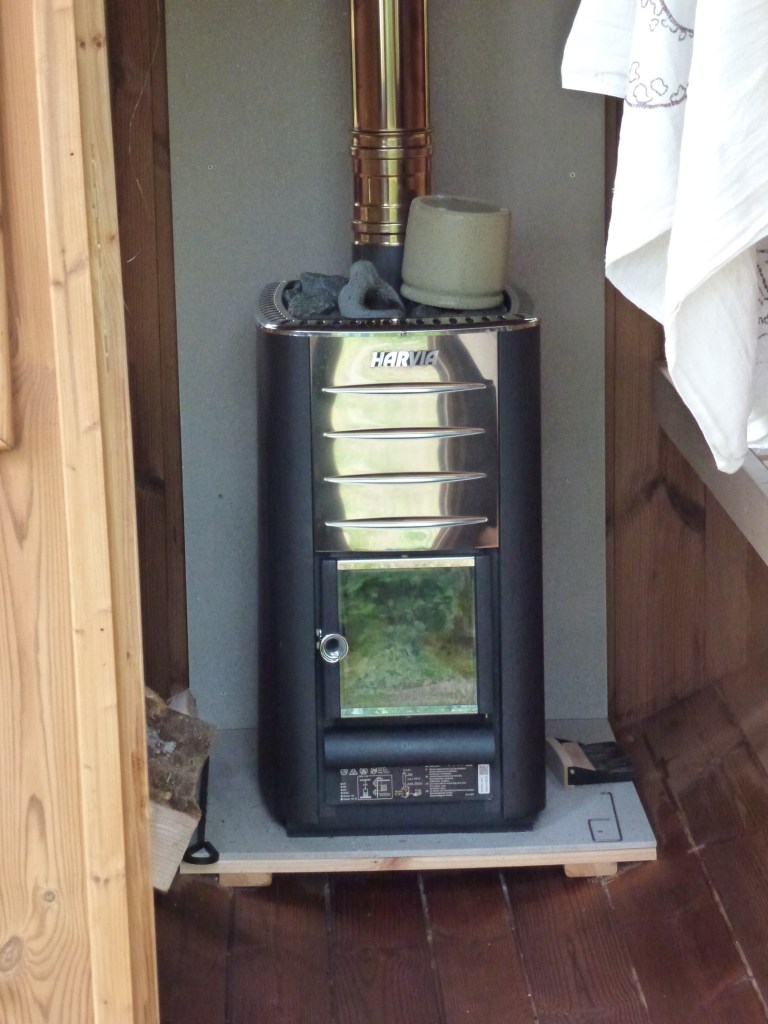
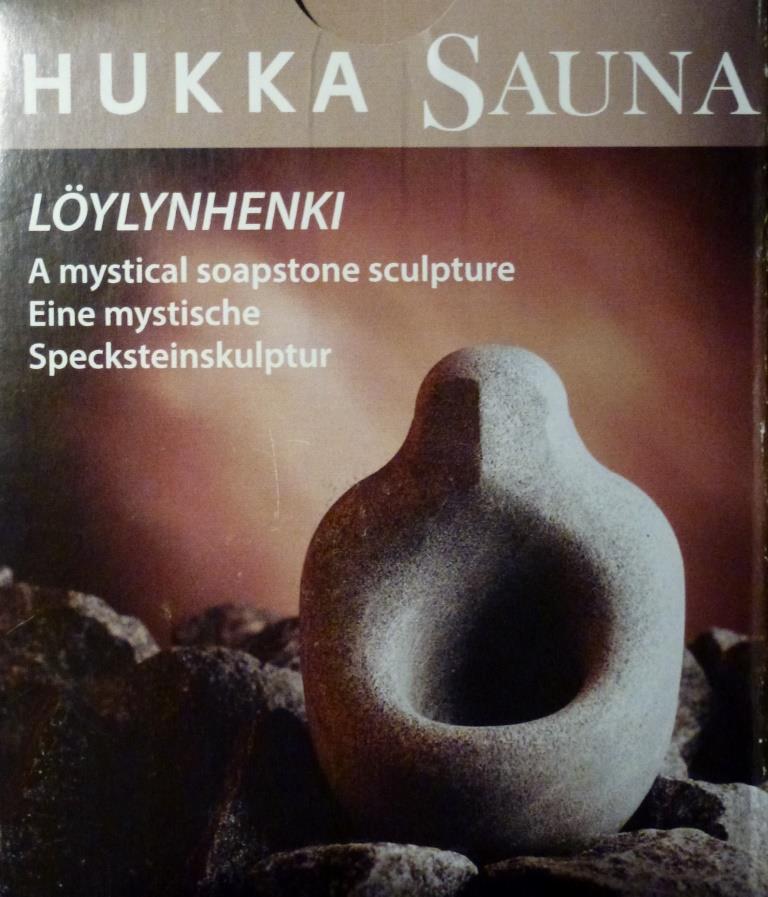
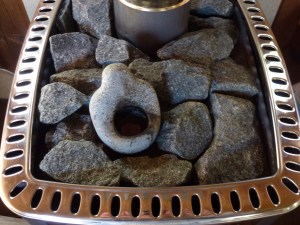
She sits on the igneous rocks (olivine diabase) that fill the chamber above the firebox of the woodburner. Her little hollow lap is filled with water and a few drops of an essential oil, which slowly evaporates with the heat.
I’ve made a short recording capturing the contrast therapy: water ladled onto the stones inside the barrel sauna, forming a wave of steam; cold outdoor shower and then cold emersion in the dip tank – all with the background of a gusty day! Listen on headphones if you can.
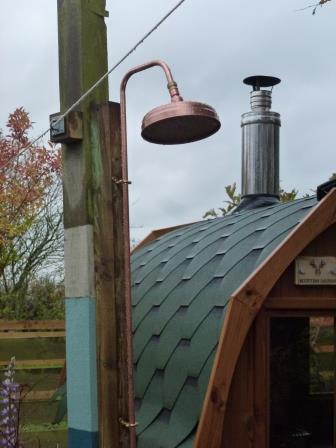
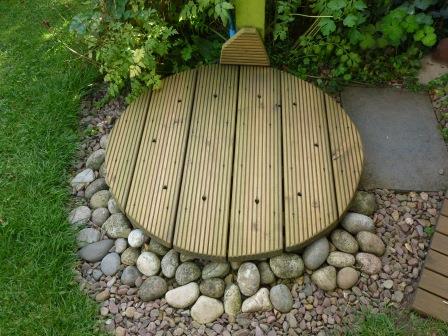
Sauna sounds: Steam/Shower/Dip tank

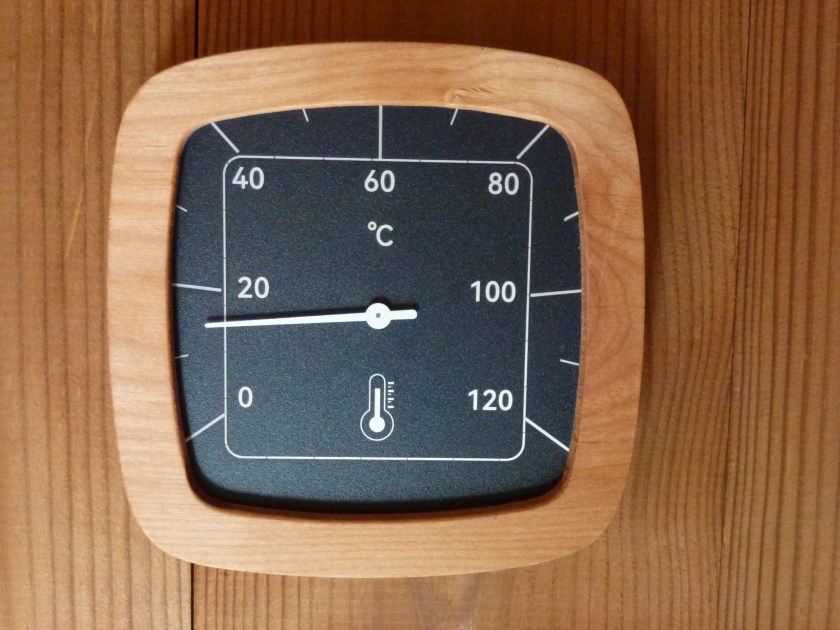
The regular repetition of saunas for a full year has enabled us to value the process as a ritual – stacking wood in the sauna store, preparing the woodburner, lighting and waiting for the space to gently heat to 50-60oC; the (often) 2 hours dedicated to 4 or 5 sauna sessions of 15 min with 5-10 min outside (cold shower, cold emersion and rest); even the closing down time (dip tank covered, sauna buckets emptied, towels hung ….) is part of the whole experience; each time followed by the delightful tingling feeling returning into the house.
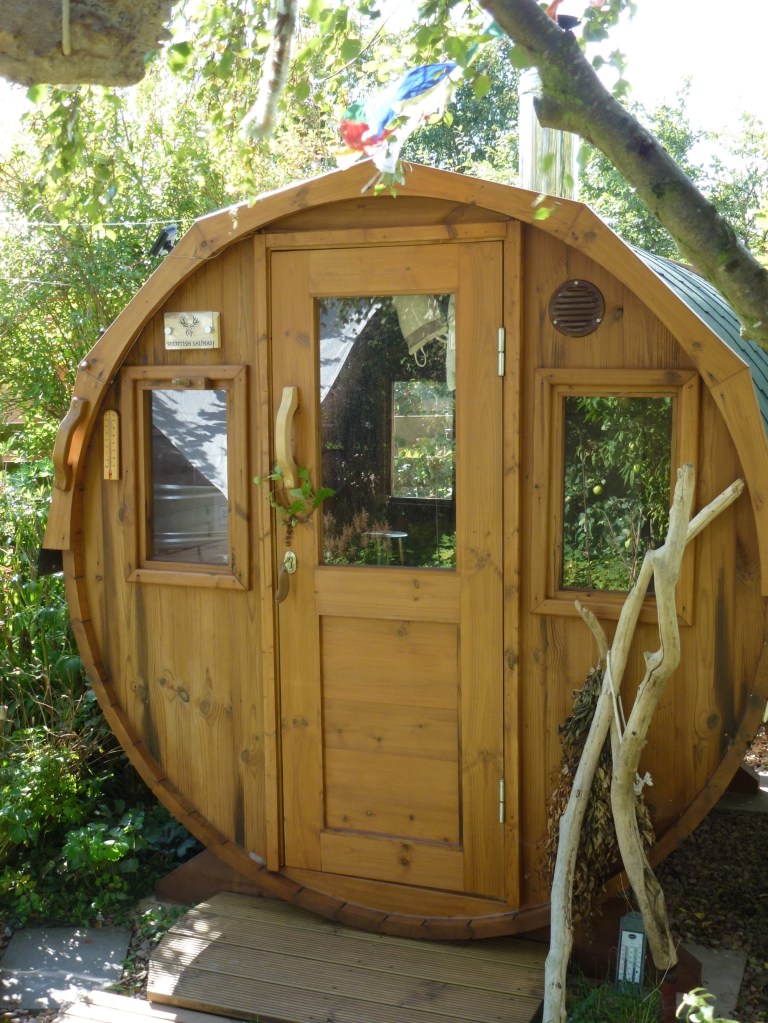
Thank you sauna spirit for your gentle relaxing presence throughout the last 12 months.

68 great löylys – Iso kiitos !
Sound of Alchemy

Singing to the Sound of Jura

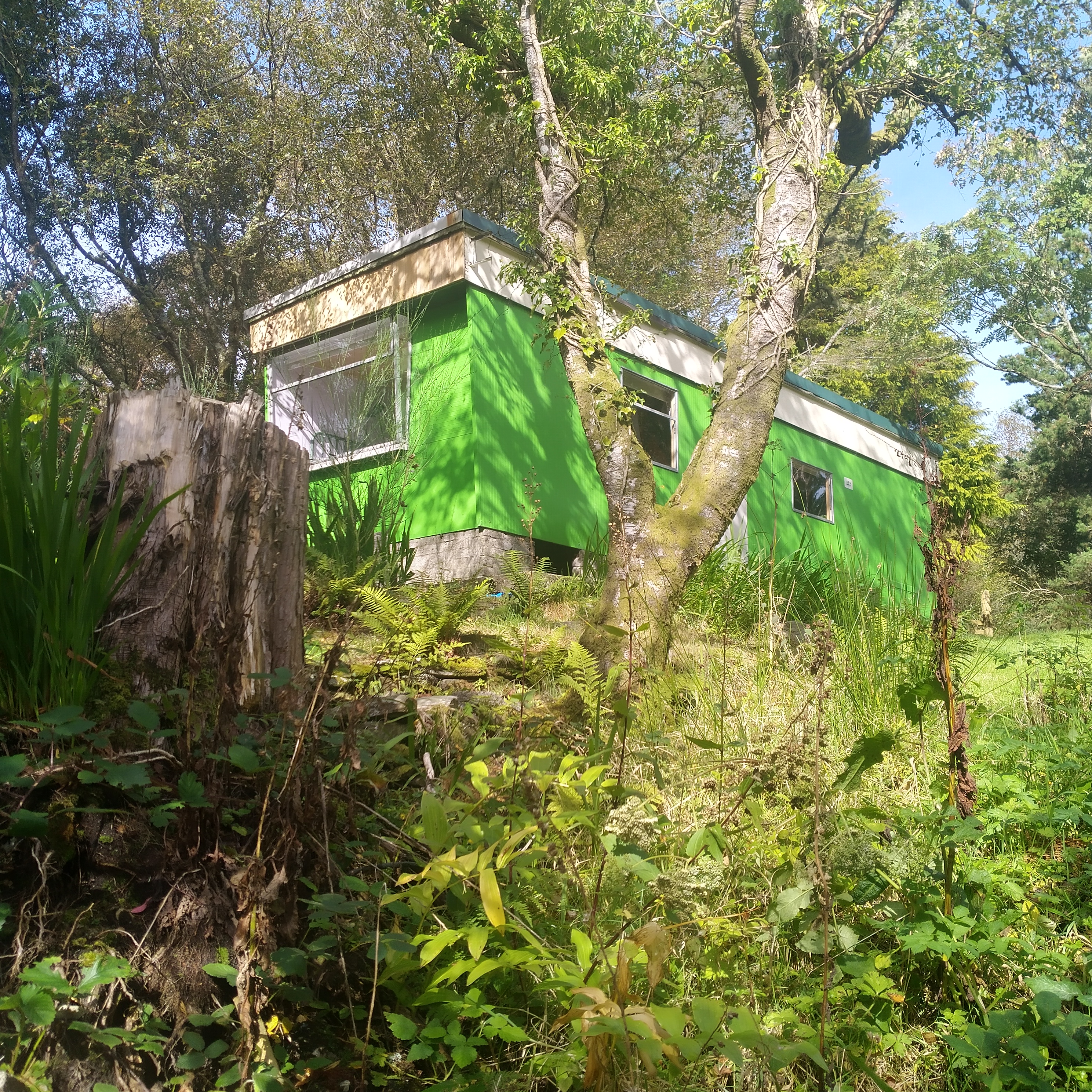
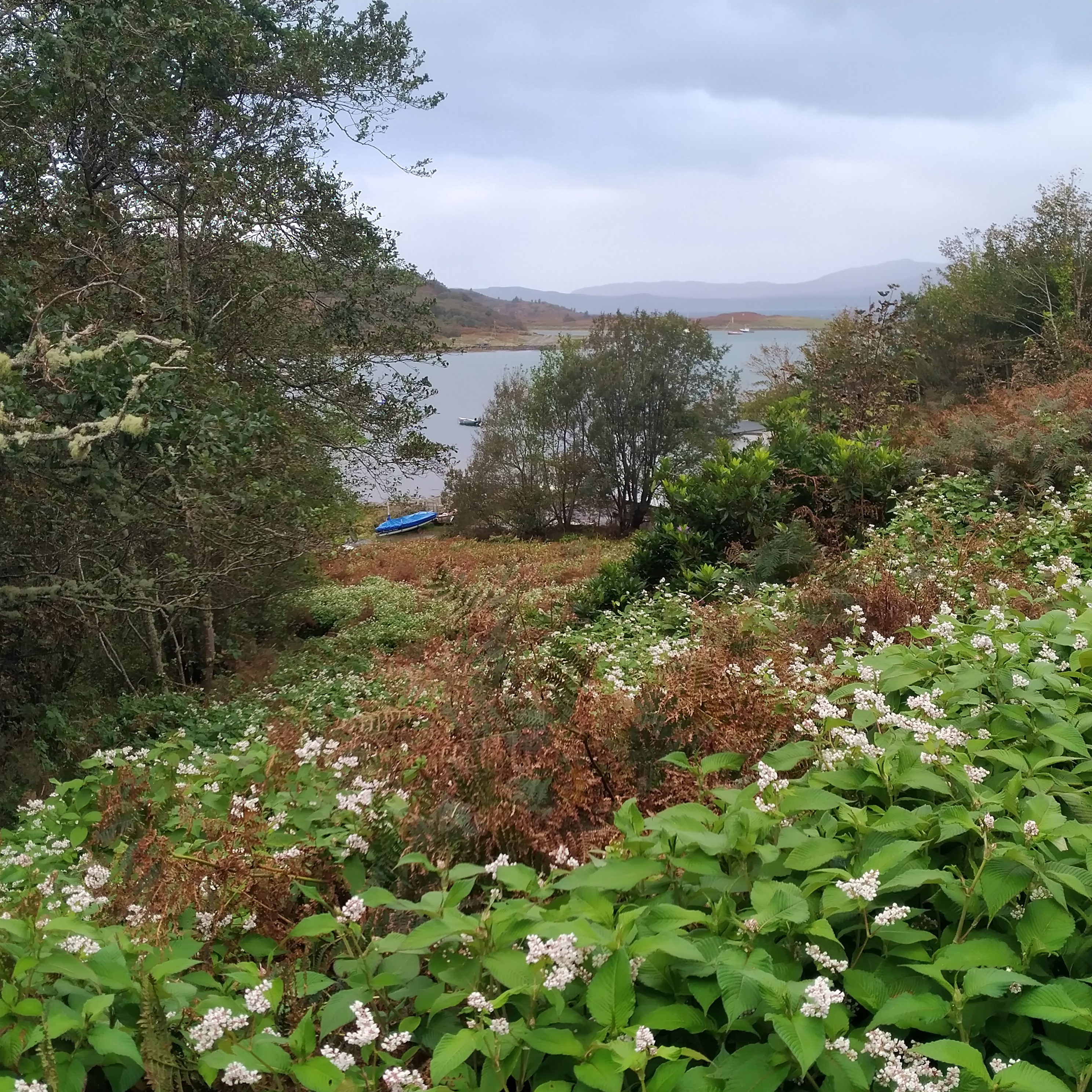
We have just returned from a fabulous immersive 4 day sound residency in Argyll, hosted by John Wills (www.positiveambisonics.org / Instagram – john.wills.ambisonics).  Staying in a cosy 1960’s, beautifully converted caravan off Carsaig Bay (in John and Pinkie’s 1.5 acre woodland garden), we experienced the landscape around the Sound of Jura socially, visually and sonically.

Cosy 1960’s caravan in woodland garden

Carsaig Bay overlooking the Sound of Jura

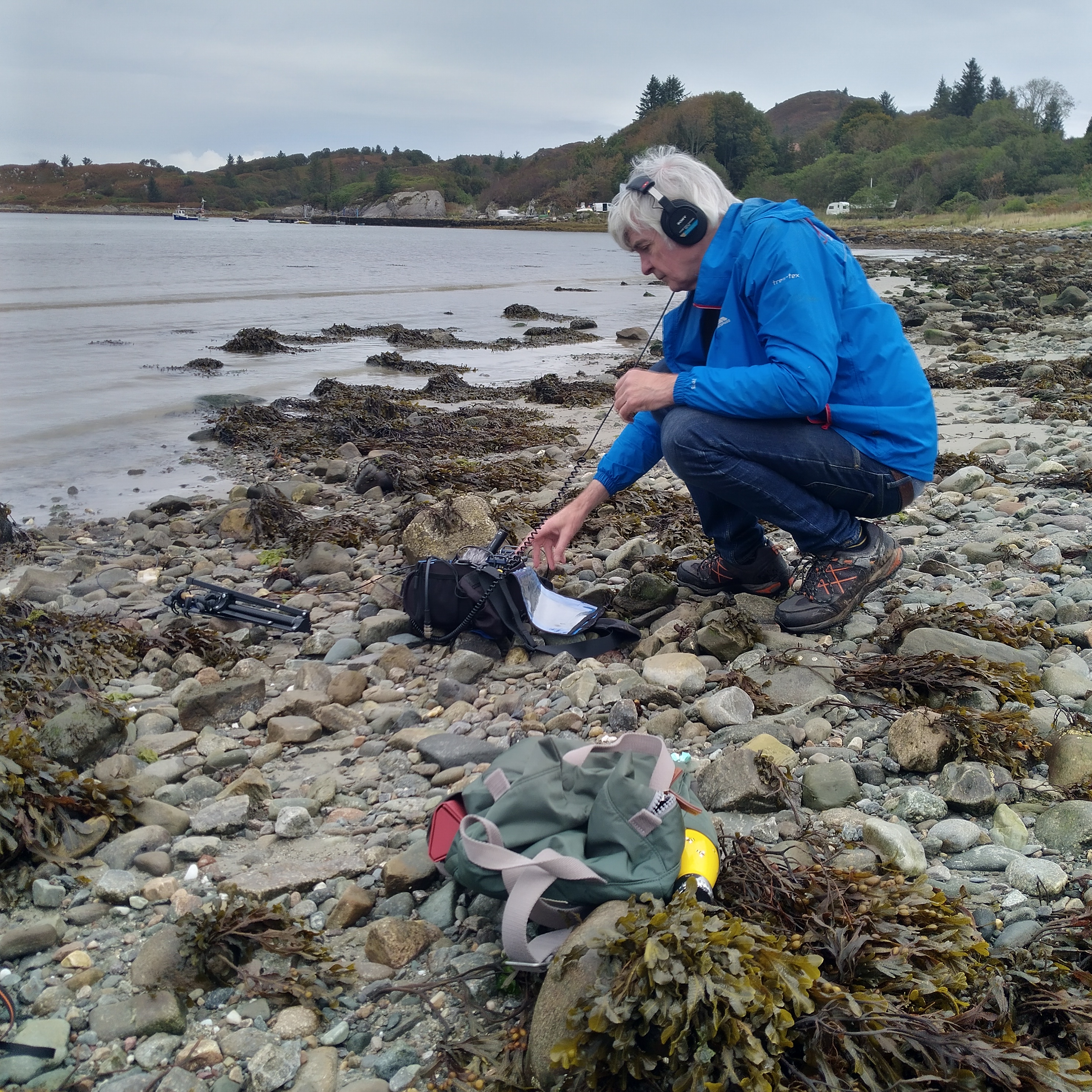
Lapping of waves using Zoom H5 with inbuilt XY stereo mic capsule (recorded at Carsiag Bay)
Argyll shoreline near Keills chapel
Recordings

Gently guided by John into the field of ambisonics (capturing 360° sound using a special 4 channel spacial configuration of microphones) we ventured out to experiment with field recordings. This unique full ambient surround sound was supplemented with recordings using a hydrophone, a contact mic and my own H5 stereo field recorder, as well as a condensor mic in the studio.

Sonic landscape

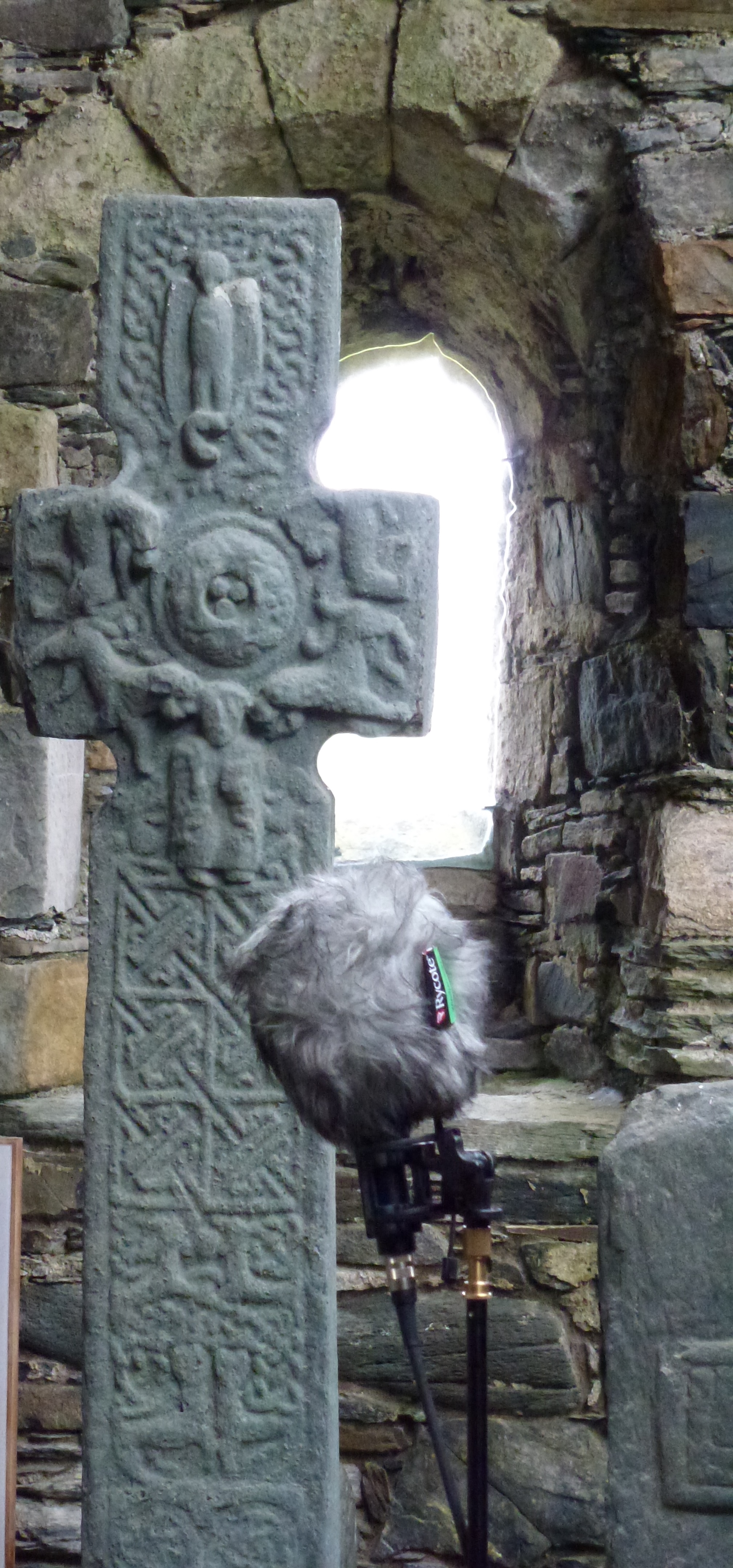
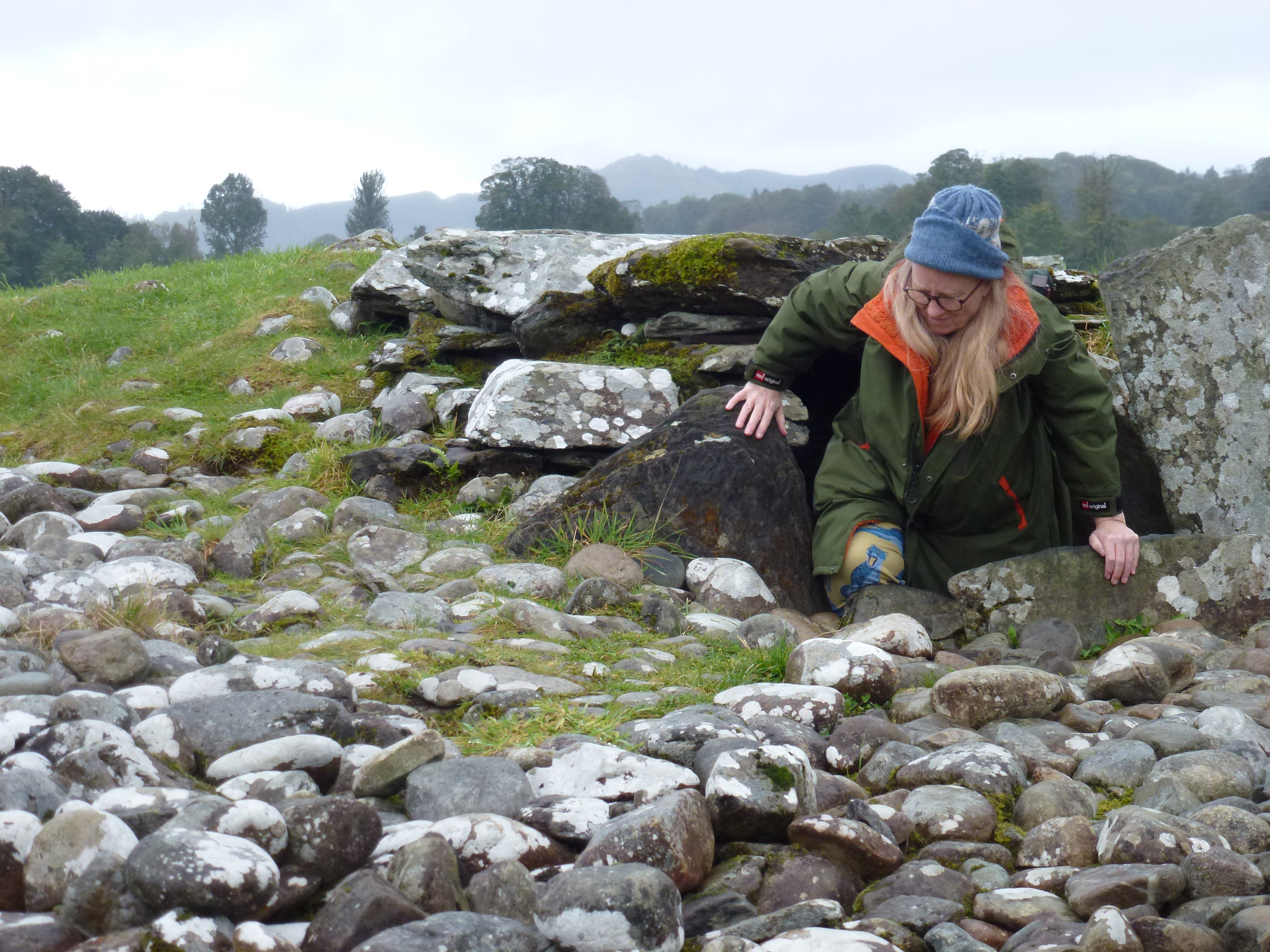
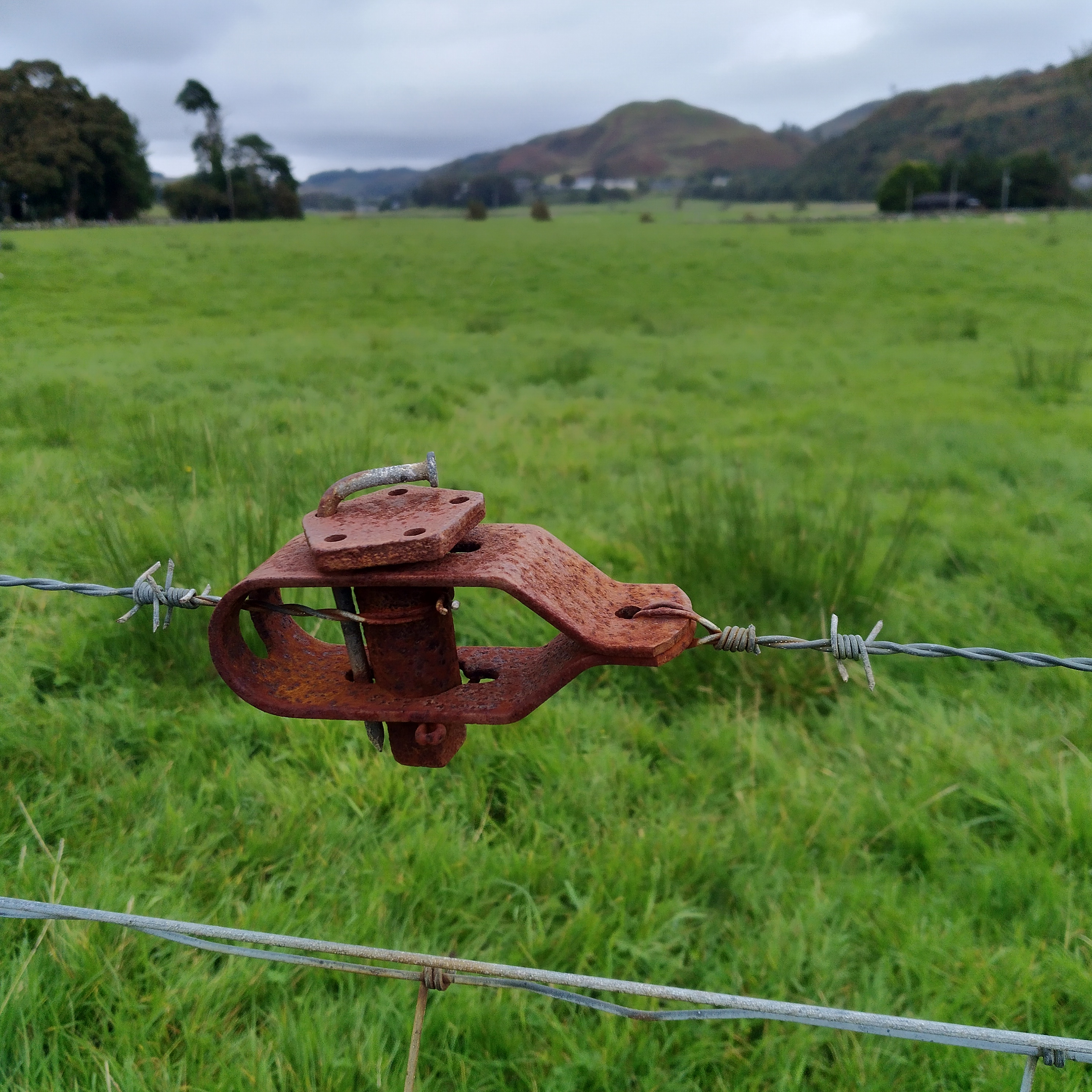
In this rare, sonically unpolluted environment we were able to listen deeply to the sounds of the environment at Taynish nature reserve Nature Scotland; experience the acoustics of an 11th century chapel Historic environment Scotland; record inside a cairn (Nether Largie South) at one of the many local Neolithic and Bronze age sites Kilmartin-glen: Nether Largie South Cairn and dive into the “hidden” acoustic territory of fungi, moss, wood, reeds and, amongst others, wire fences.  I even found myself befriending the sound of the wind – something, as a field recordist, I thought I’d never do!

A couple of field recordings using Zoom F8 with a Jez Riley French contact mic with probe

Wire fence –probe in rotten fencing post (recorded at Nether Largie)
Moss – probe buried in thick moss (recorded in the wooded garden at +VE ambisonics)
Deep listening
Deep listening to the ripples of the tide
Deep listening to the “sound of stone”
Anticipatory listening to moss!
Inspiration

Inspired by the first days ambisonic recordings, particularly when played back in John’s studio using an 8 speaker array (Left-Right, Front-Back, Up-Down), Clare and I were enthused to explore a recurrent theme we’ve encountered in various ways in our lives – the 4 elements.   

Linked, as they are, to the 4 or perhaps 5 stages/processes and colours associated with alchemy:

Black – negrado; White – solutio; Green- coagulato; Red – rubado and ultimately Gold, this audio residency seemed like a great opportunity for investigating the “Sound of Alchemy

Facilitated by John’s expertise as a musician and sound engineer we spent 3 further days “playing” sonically with the concepts of Earth, Water, Air and Fire and their metamorphic transitions.  A studio full of instruments (bodhrán, lyre, guitars, electronic drum kit, a synth and more) – as well as Clare’s bamboo pipe and our voices – enabled us to match and meld our various field recordings with instrumental and vocal accompaniments. 

Ambisonic recording of the Bamboo pipe using Zoom F8 with Sennheiser Ambeo Ambisonic mic

Bamboo pipe played by Clare (recorded in Keills 11th century chapel)

Perhaps the highlight of this journey came when we listened back to our Hebridean lament, sung in Keills chapel.   The combination of our two voices bouncing across the ancient stone walls created a lovely subtle reverb. 

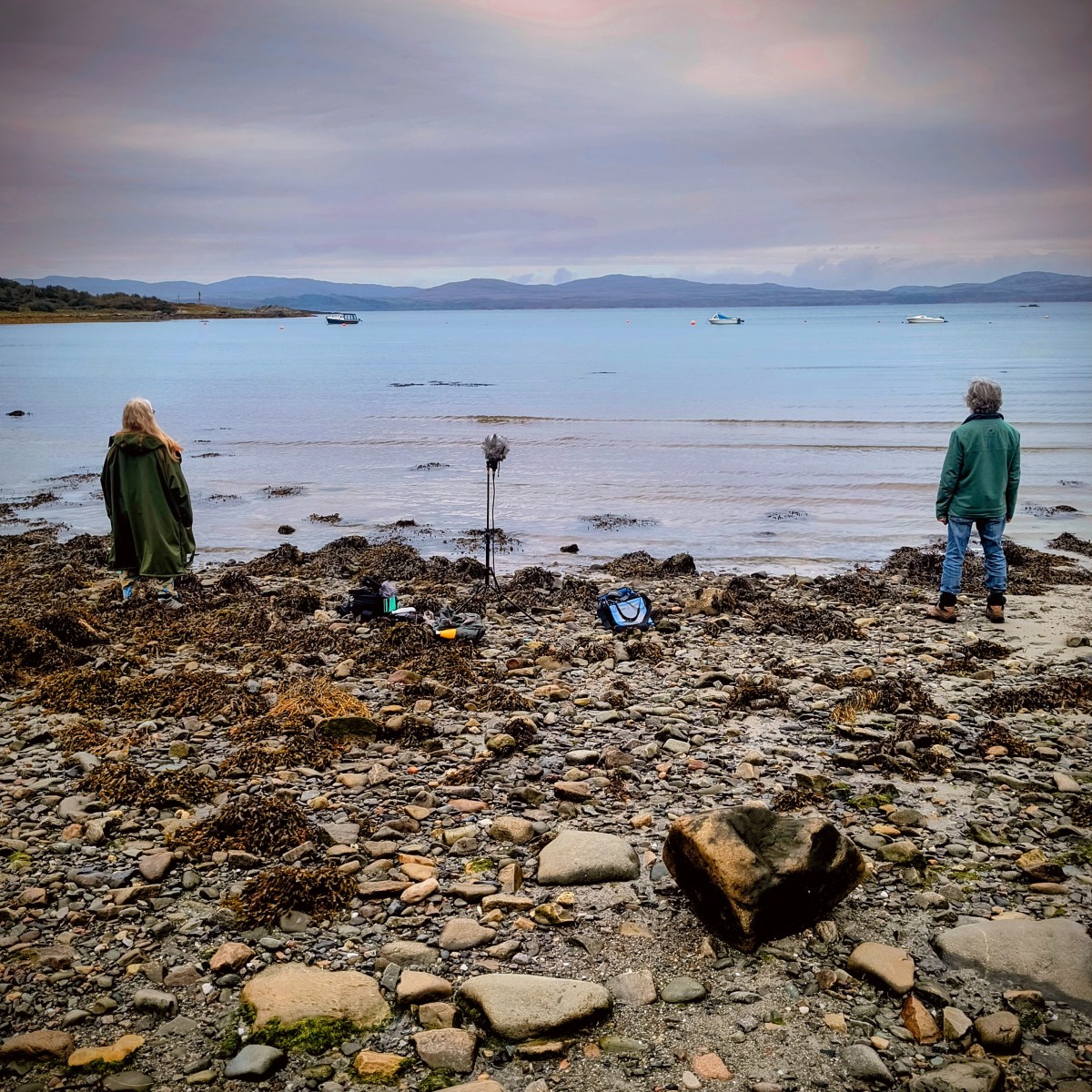
We wanted a distinct contrast to this, recording the same chant outside accompanied by lapping waves.  So on our last day we “sang” to the Sound of Jura, capturing the unique atmosphere on Carsaig beach using John’s Sennheiser Ambeo Ambisonic mic –featured image. Offsetting these two vocal recordings in the studio created another dimension for this lament and we decided to incorporate it into our now almost complete soundscape.

Four very exciting days spent with an amazing tutor enabled us to create and complete an 18 minute soundscape.  The “Sound of Alchemy” morphs from the earthy sounds of stone with drumming on rock, through watery elements of lapping waves, trickling streams and the gentle sound of an “untuned” lyre (bluesy), into the airy element of whistling wind accompanied by a breathy bamboo pipe, merged with the mysterious sounds from a contact mic in the reeds.  The final crackling element of fire (moss) incorporates a crescendo of cymbals leading into the choral “Nay Hey” – a layered polyphonic Hebridean lament. 

More details of our journey through each of the four elements in sound will follow shortly.

Thanks again to John Wills for his amazing and inspiring residency (Positive Ambisonics Residencies)

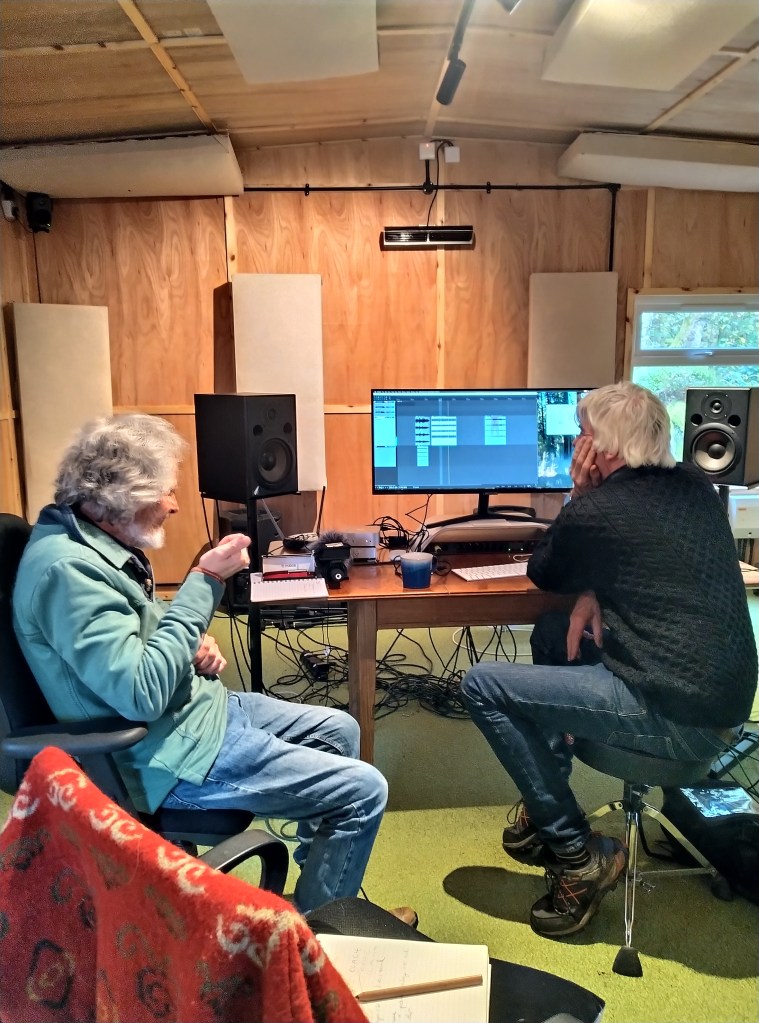
A view from the sound desk

Dress rehearsal – Can I be a butterfly?

Wednesday saw our final rehearsal of “Can I be a butterfly” in the local village hall, with a small audience in the round.

Using my vintage Sony amp (bought in July 1977) and 4 speakers, dismantled from our hi-fi system at home, we created a “sound in the round” effect for the 11 SFX audio files that are now part of the show.

The 6 audience members gave us very complementary feedback after the performance. This was extremely encouraging for the last few days before the play receives its debut on Sunday 28th April at Duns Play Fest.

A short audio clip, that did find its way into one of the final sound effects, brings together the voices of 3 of the 4 interviewees. This forms part of a sequence towards the end of the show, as Briar Rose wakes from her long sleep and “hears something new”.

From SFX 9 – “shift”

If you are in the Scottish Borders this Sunday (28th April) come along to Duns Play Fest at 6.15pm to see the show. Duns Play Fest Tickets – Can I be a butterfly?

In collaboration

A solo play about Chronic Fatigue and its possible message to a fast world

During the last 6 weeks I’ve been busy creating the soundscape for a devised solo show that my partner, Clare at Clare’s Many Threads, has been working on since January.

Clare will be performing Can I be a butterfly at the local Duns Play Fest here in the Scottish Borders on 28th April at 6.15pm Duns Play Fest 2024

Can I be a butterfly? is a semi-autobiographical, part imagined, solo play about Chronic Fatigue Syndrome and its possible message to a fast world.

Using movement, poetry, sound, song and text, Clare weaves her own story around the fairytale of Briar Rose accompanied by the voices of others who have experienced ME and Chronic Fatigue Syndrome.

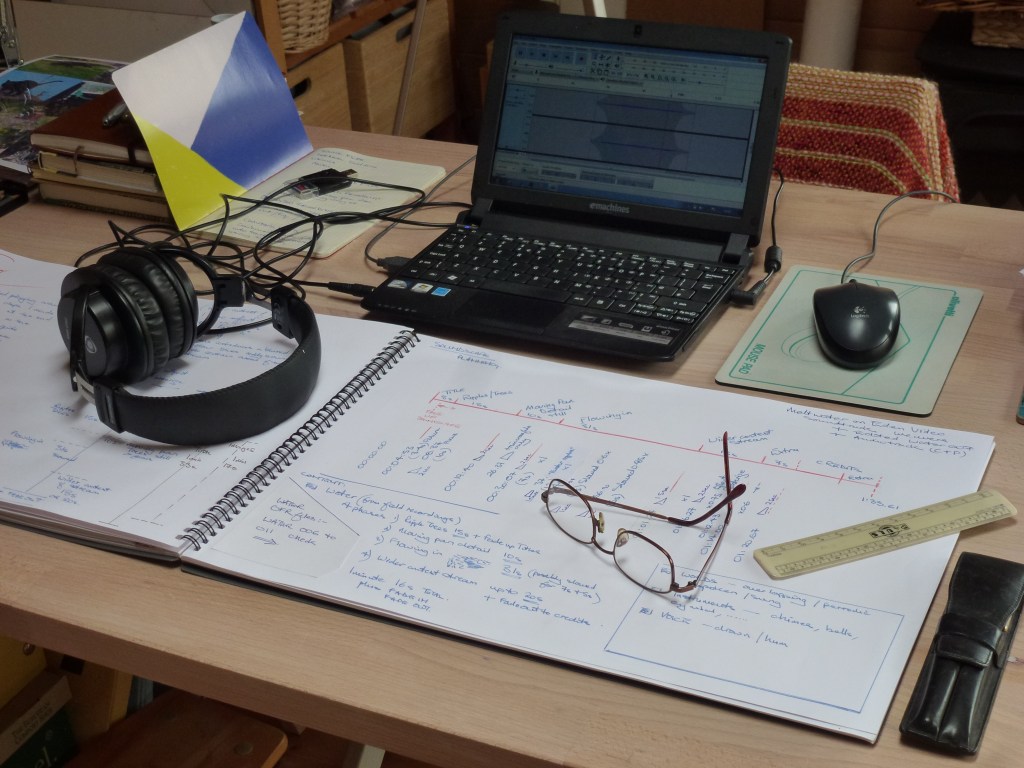
Creating the soundscape has been a collaborative project that has accompanied Clare’s devising process. We have been working with 4 very profound recorded interviews. Each of the interviewees gave us permission to use their voices as part of the play.

It has involved a lot of intense listening and a painstaking process of cutting and weaving together their stories and experiences – often similar and sometimes very different. Trying all the time to honour the uniqueness of what each person expressed when they spoke to Clare during the interview/conversations.

As well as the voices from the 4 interviewees, the collaboration has gone wider, incorporating into the soudscape recordings of the singing groups in Duns and Smailholm, performing a song Clare composed for the show.

A full run through this week at the local village hall went well, but was not without its fair share of technical glitches.

Some of the early sound editing work has not made its way into the final play. “Colour of Fatigue” is one such clip. We couldn’t find a place for it, despite the fact that it encapsulates the gravity and humour expressed in the interviews:

What’s the colour of fatigue?

In the final stages of rehearsing and refining the play, we’d both like to acknowledge the collaboarative contributions of the 4 people who were interviewed (Gill, Lucy, Adrian and Eula), the poems Lucy recorded for the show and the singing groups in Duns and Smailholm.

If you are in the area on 28th April come along to Duns Play Fest to see the show. Duns Play Fest Tickets – Can I be a butterfly?

Clare’s Many Threads is the Artist name of Clare Watson. She is an interdisciplinary practitioner living in the Borders, who works with theatre practice, walking, creative writing, textiles and song. 

Sounds of October

Dreich & Hygge!

Autumn leaves – veiling watercolour 2021

Light changes, weather shifts as autumn takes hold of the year. The greens and yellows of summer gradually turn into warm reds and oranges. Often wet and windy with intermittent days of calm, soft sunlight.

My soundscape this month tells a short story of transition. It parallels the change that can also occur in our relationship to the world at this time of year; from outer to inner focus – our desire for warmth and comfort, as we experience the cold and wet outside. At an onomatopoeic level – from dreich to hygge.

Listen on headphones for the best effect.

A sound story – Dreich to Hygge

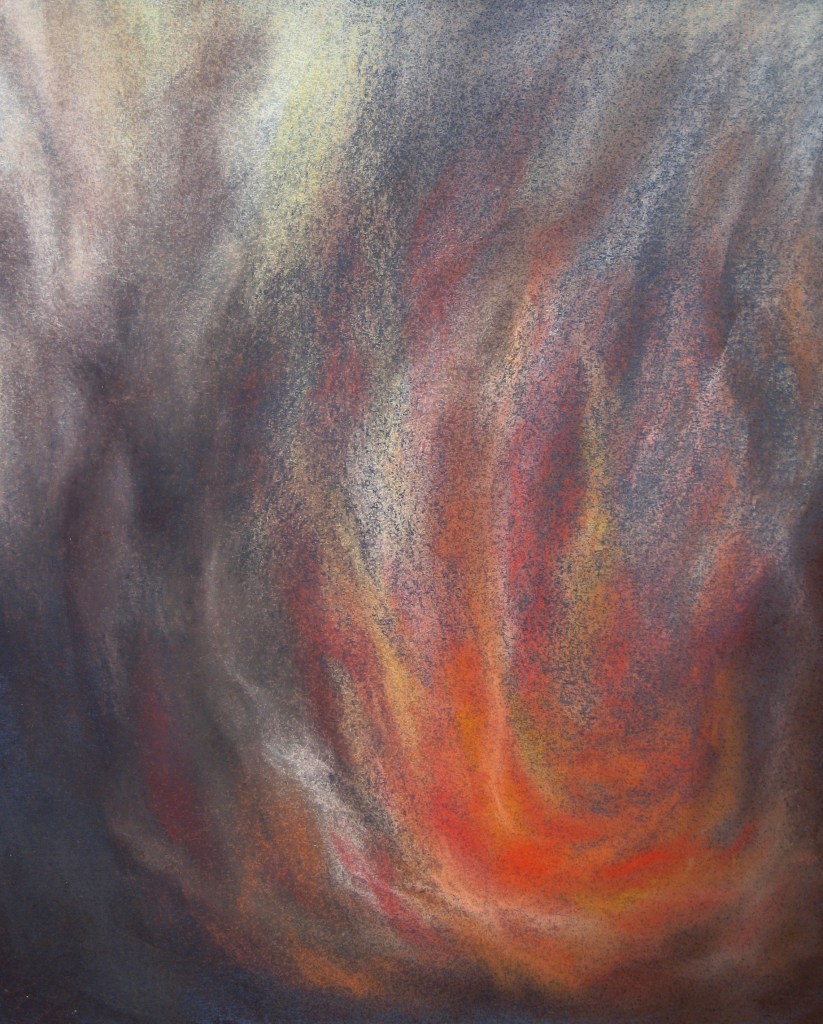
The warm colours of autumn moving into earthy rich browns, and the glow of fire embers in the dark chamber of the woodburner, remind me of the colours and contrasts often seen in many Rembrandt paintings.

A free study of Rembrandt colours – chalk pastel on black paper

Sounds of September

Honks, barks, and cackles – heralding autumn

Cooler days have arrived and there is a definite autumnal feel in the air. The regular sight and sound of skeins of geese has now started. It is an indication that summer is truly over. These flypasts will become a more frequent occurrence, louder and with greater numbers, as we enter into October. Sometimes the geese fly in their characteristic V formation at a distance, to the north or south of our house, and occasionally (if we are lucky) immediately overhead.

Skein of Geese – watercolour sketch 2021

I have wanted to record the very particular “calling” sound of these birds for some time now, and was fortunate enough to have my sound gear at the ready this year.

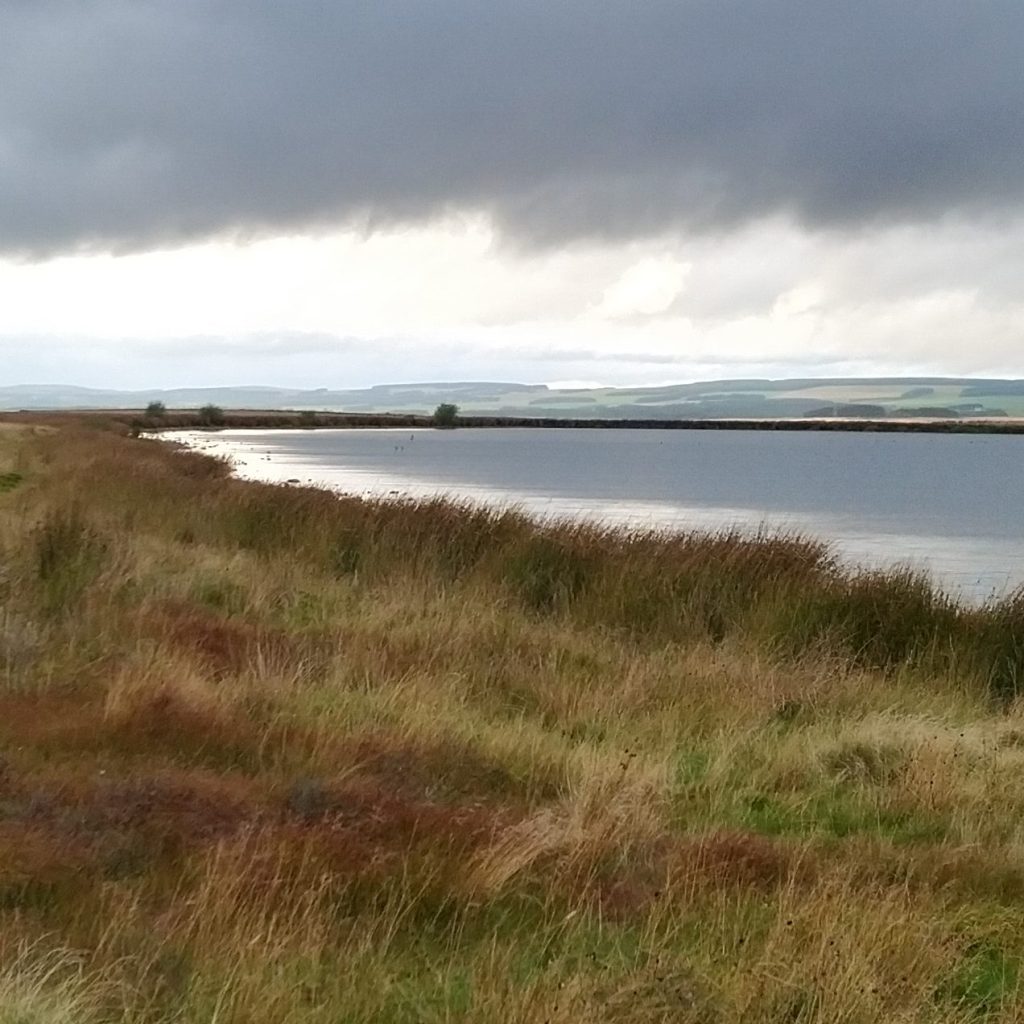
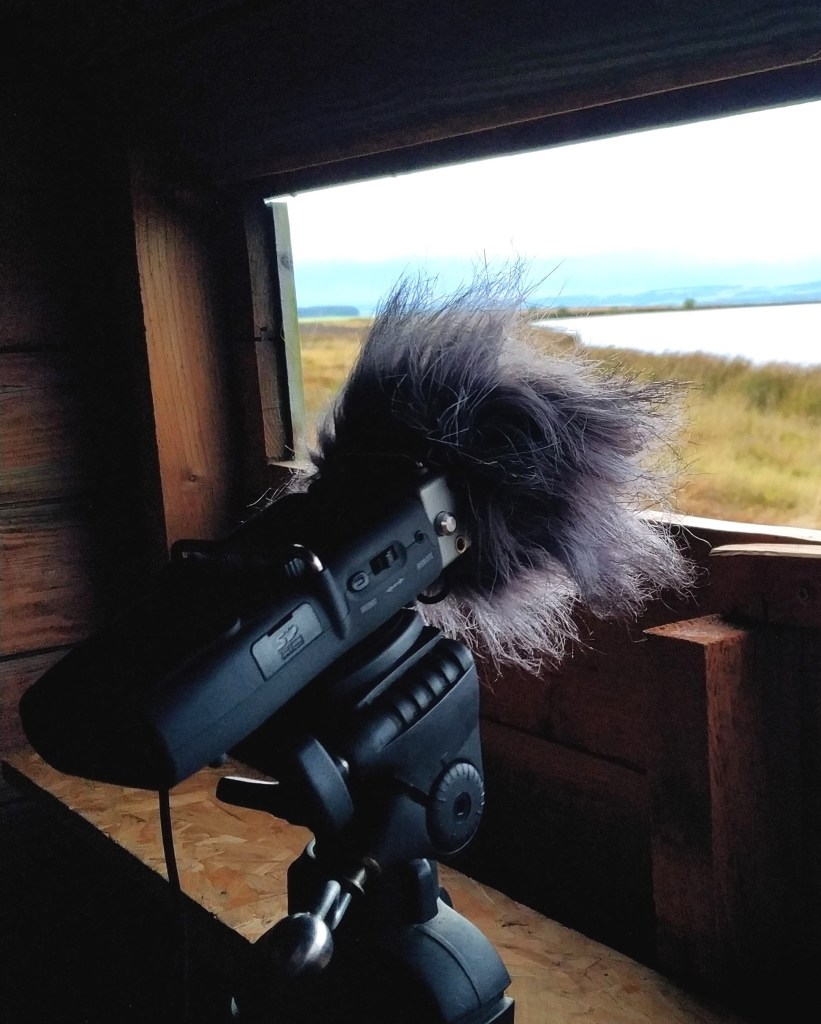
I was also interested to visit a local loch where, I was told, the geese often congregate in the evening. So at the weekend we walked to Hule Loch, located on exposed moorland between Greenlaw and Duns. Sitting in the small hide we were able to take in the panoramic view of the loch, its multiplicity of birds and the surrounding hills. The colours and light changed so dramatically during the short time we were there, as the wind blew, the rain came in from the west and cleared again.

Although the sound of the wind was quite dominant inside the hide, I was able to capture several minutes of audio to bring back to Studio Hundy.

I have created a September sound piece encompassing 3 phases: over our house – a large skein flying in from the east and away to the west; from the hide – a small group of birds on the loch taking flight; and finally (also from the hide) – a large skein of geese coming in to land.

Geese soundscape

The latter was a fascinating occurence as the large cluster of birds seemed to ungainly drop down onto the surface of the water in a random manner, like some kind of precipitation out of the sky! As they landed onto the water their “cries” diminished, until eventually the loud cacophony of sound gave way to an occasional “squawk” or honk.

It’s a sharp sound to listen to, and at the same time incredibly beautiful – also so unmistakable!

Geese in flight (pastel) – sketchbook 2012

Sounds of August

Gathering grain

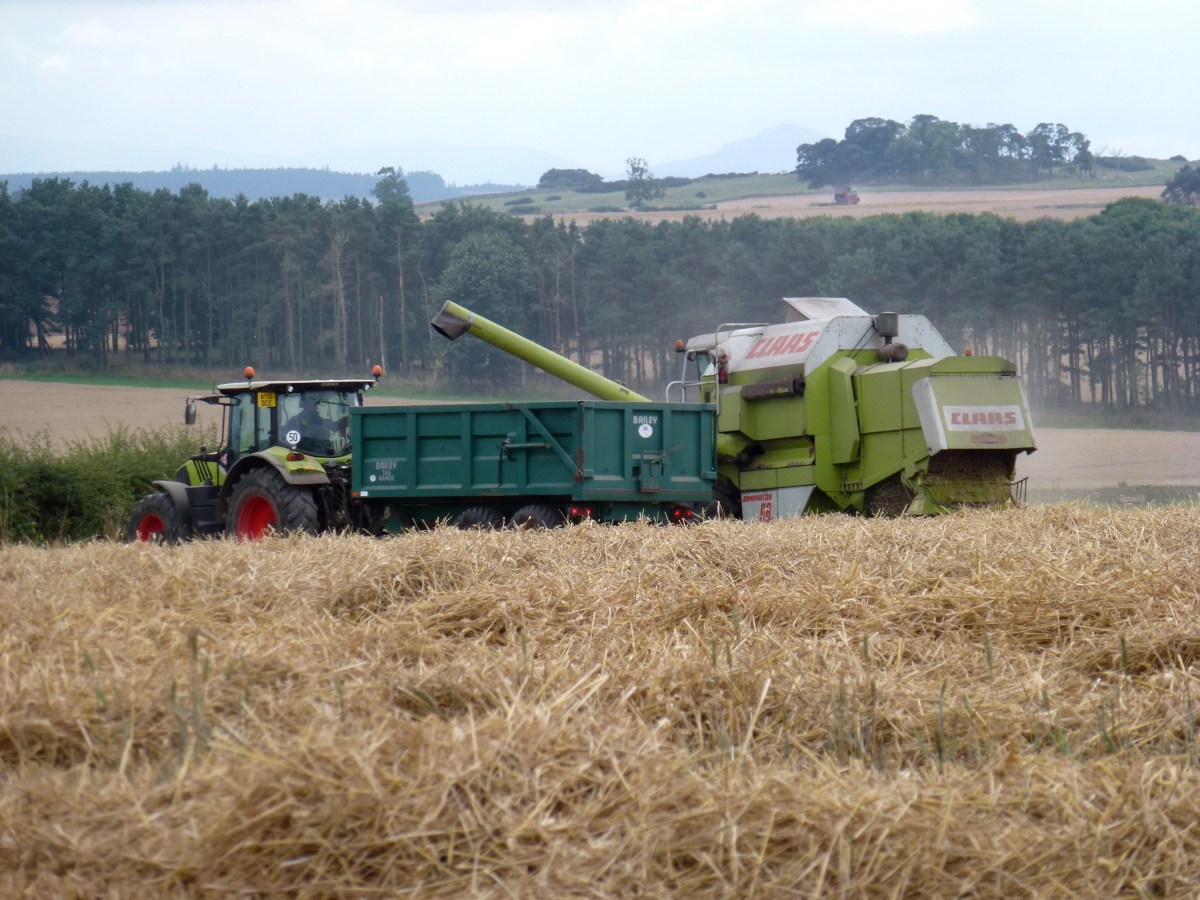
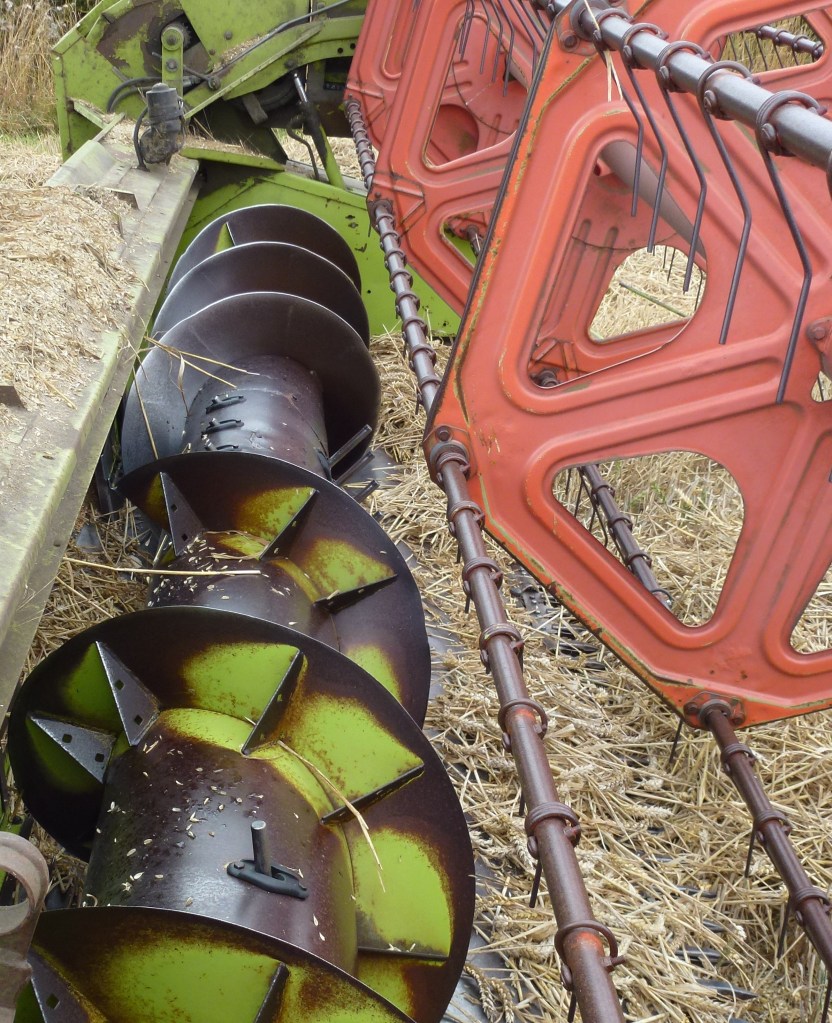
Here in the Borders it is almost impossible to go out during the month of August without being aware, through sight, sound or smell, of the harvest taking place. Wheat fields with plumes of dust rising from the harvesters on a hot, dry day. The iconic sound of the combine as it emerges over the horizon, getting louder and louder ….. and yet LOUDER– no wonder that even the smaller models have been named to match!

I couldn’t let the month go by without recording some of the evocative grain gathering sounds in our own locality of Girrick. Not only the harvesting itself, but also the (perhaps less familiar) elaborate drying process of the grain that follows in very quick succession.

Harvesting

The sounds captured in the “grain processing soundscape” that follows have a wonderful breadth and diversity. Ranging from the reverberation of the trailer gate closing in the grain barn, through the soft sound of the grain filling the dryer chambers, to the dynamic start-up of the burner and fan, and onto the rattling of the cork-screw auger, transferring the dry grain into the store.

Listen and enjoy the textures of the sounds and imagine the aroma of freshly harvested wheat! But be prepared for a few sonic surprises.

Grain processing soundscape

Sounds of June

A change of tone …… Slurry!

Intrigued by the sounds coming from the local farm, I spent time this month recording various audio clips that I have used to create an edited piece called “Slurry“. It not only features sounds from nature, but also includes some more unusual “noises” from mechanical devices on the farm. All part of the soundscape at Girrick in June.

Slurry

My fascination with the quality of the various sounds was perhaps matched by an equal measure of curiosity from those working on the farm; puzzled by the bizarre sight of me (with my recording equipment) – standing by the roadside as cattle were herded along the lane, following tractors into yards and keeping a very safe distance whilst slurry was being transferred.

The mechanical sounds of both slurry mixer and vaccum pump on the tanker were ideally suited to creating a more “abstract” sound piece in post-production. If you can, listen on headphones – a definite change of tone!

Slurry Abstraction

Thanks to all those at Girrick farm for allowing me to capture an aspect of their busy schedule in June.

Sounds of May

Birdsong at dawn – choral gladness

For a few weeks in early May, drifting in and out of sleep during the wee small hours, I had been listening to the sound of birdsong in the comfort of my warm bed. I decided (a little reluctantly) to rise very early and record the dawn chorus in all its full magnitude. Setting my alarm for 3.30am I emerged sleepily from my bed……but was disappointed to find that the showers of April were downpours in May:

May downpour

A second try a few days later was thwarted by the wind:

A very windy dawn

On my third early morning I was in luck. The weather was perfectly still and dry.

I recorded a full 20 minutes with only the occassional interuptions by distant cars or a plane flying overhead. I have condensed this into a 5 minute clip, with minimal editing – just extracting key phases of the chorus and crossfading the clips.

Listen and enjoy without the need to be out of bed at dawn!

Dawn chorus at Girrick

Nest of moss in Birch tree

The daylight hours of May have also seen a lot of bird activity in the garden, including an intriguing little nest high up in the Birch tree. I think it is a Chaffinch, but hard to tell from below.

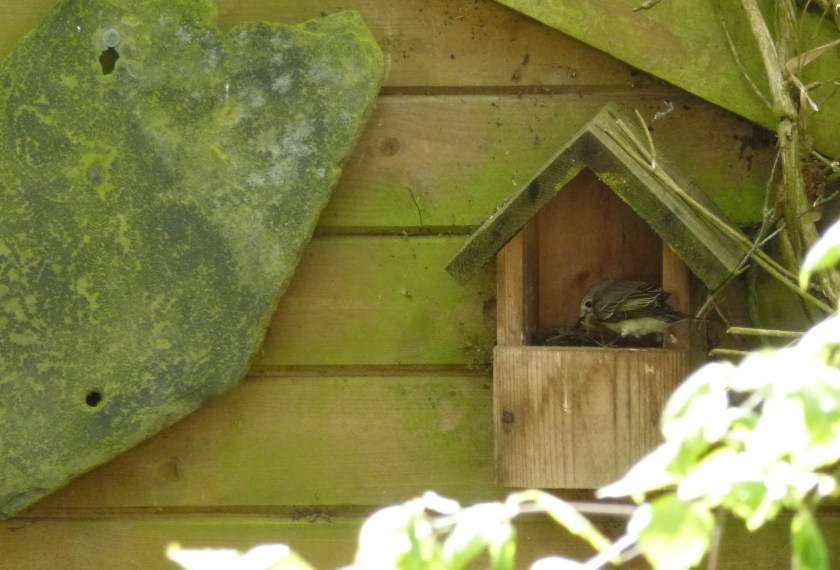
A Spotted flycatcher has been investigating the birdbox, but doesn’t seem to have taken up residence as yet …….

Spotted Fly catcher bringing moss into bird box

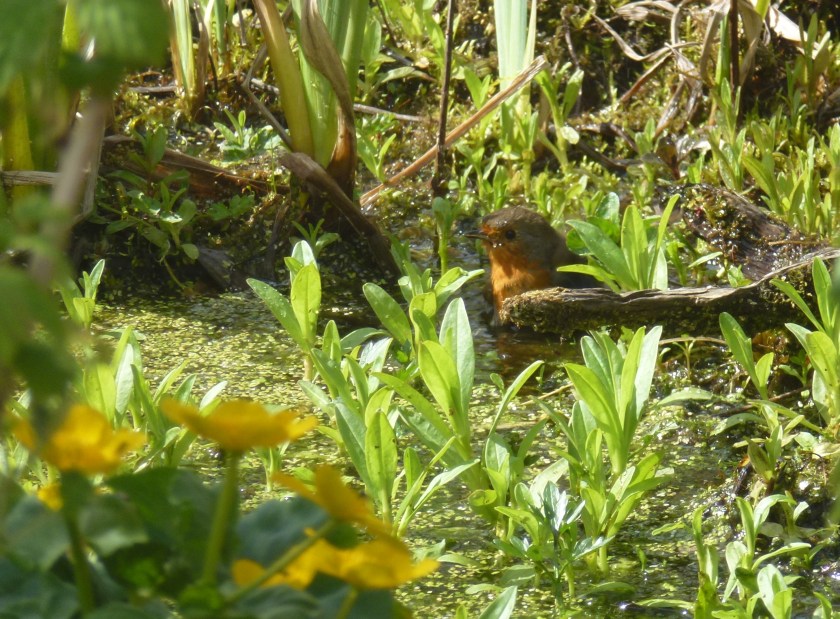
… and various birds have been bathing in the pond or the shallow birdbath on the decking.

Blue tit splashing around in the bird bath – watercolour sketch
Robin bathing in the pond

There were also a few rare moments of dramatic lighting this month.


Sounds of April

Nature emerges from its winter quietness

April seems to be the month that nature really begins to emerge from the “quietness” of its winter shell. Plant life responds with new life and the budding process abounds. Bees visit early blossoms and birds sing out their varied songs.

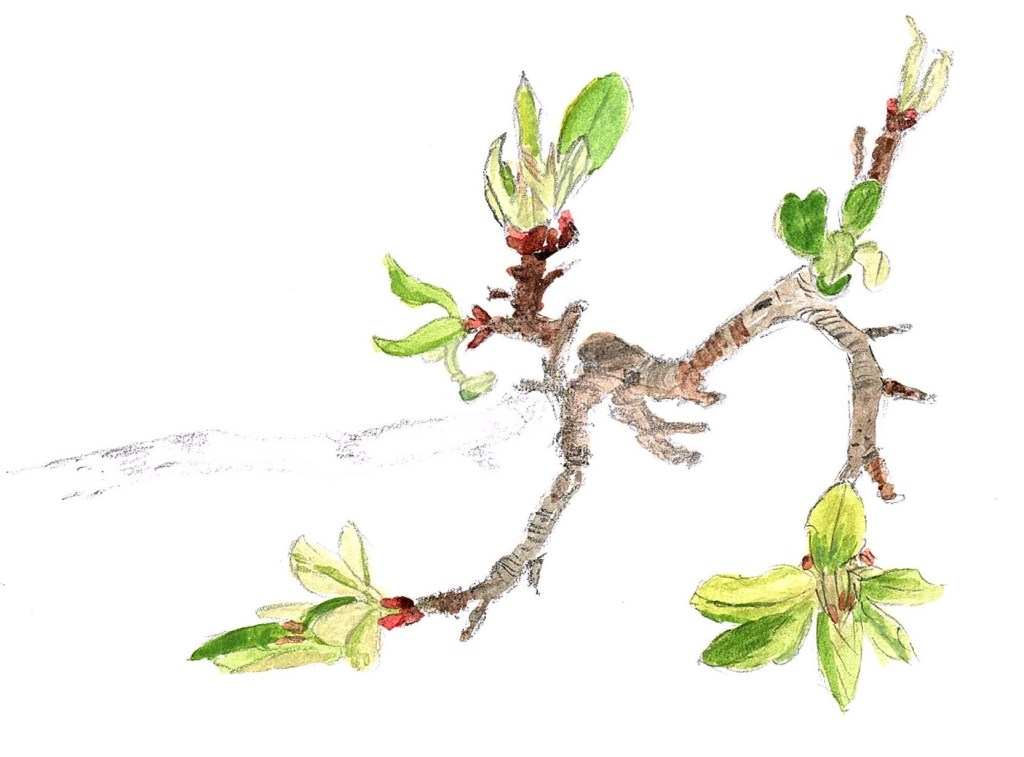
Last year in early April, at the start of lockdown, I began the practice of sketching one emerging bud in the garden each day.

Sketches of emerging buds - Pencil with watercolour wash

This year I have been busy listening to the range of sounds that fill the air. Some, that really represent this month, have proved difficult to capture. I didn’t have my recording equipment the day I sat quietly by the fence and heard the sound of cows munching on fresh grass, having returned to the fields with their new calves. Next time I went out with my recorder, the cows were far away in the valley!

I did, however, create a small soundscape, in an attempt to encapsulate some of the other sounds that typify April. Listening on headphones will give you the full effect, hopefully immersing you in the sense of Spring.

Soundscape of Spring
Apple Tree buds opening – pencil with watercolour wash

See also Photogallery: Buds in Spring