Spotted fly catcher

Nested, nutured and fledged

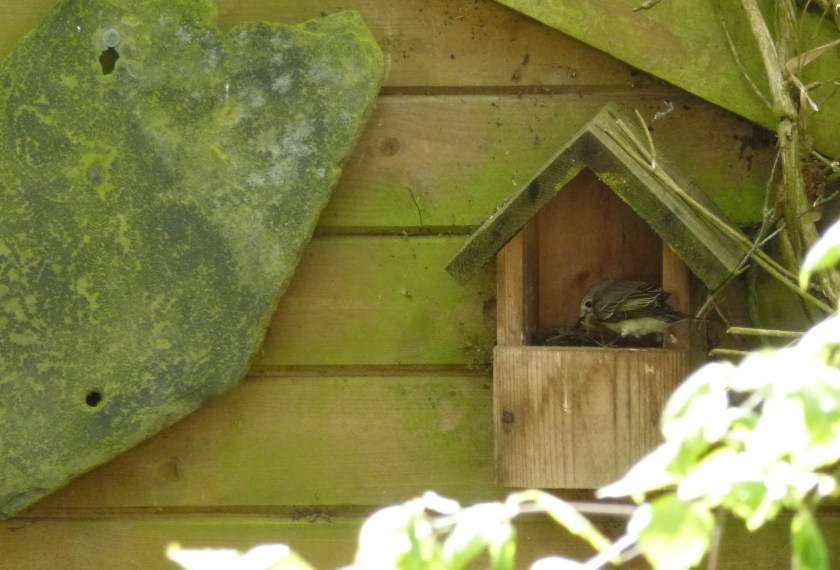
Following a short period of reticence, the Spotted fly catcher returned and finished its nest towards the end of June. It could be seen keeping its beady eye on surrounding activity, as it lay on the eggs.

By early July the 2 adults were in and out of the nesting box, feeding the young. Perhaps 3 or 4; difficult to see without causing a commotion.

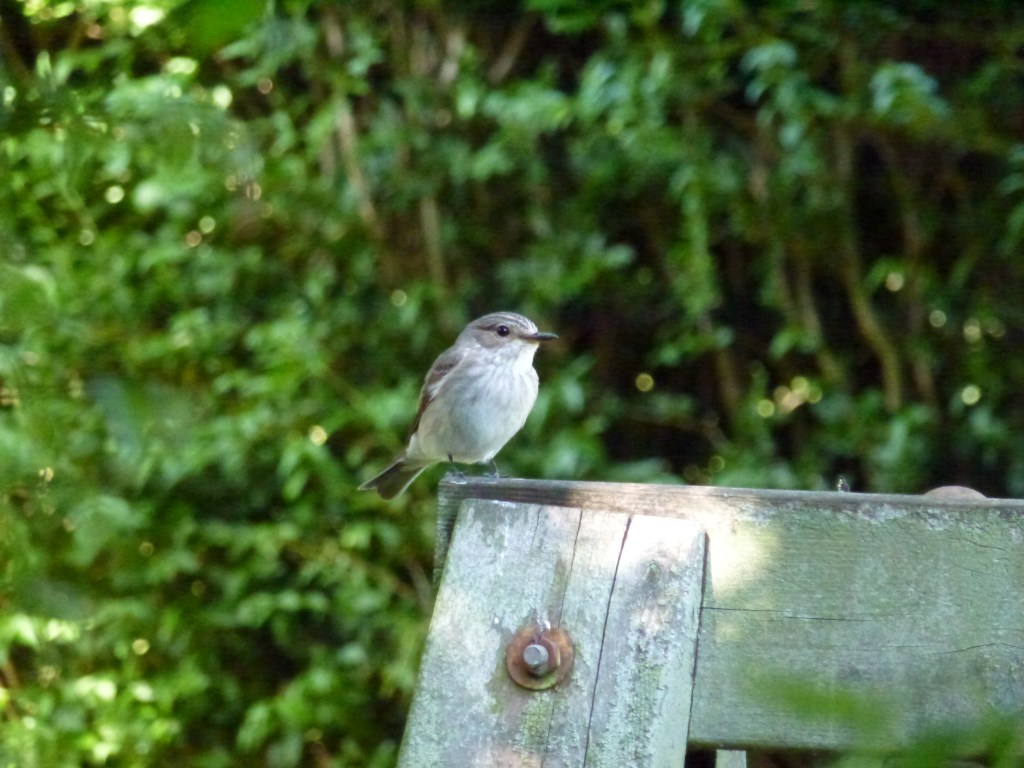
We’d catch sight of the adults here and there throughout the garden, with their characteristic flying patterns; circling rapidly in mid-flight and returning to their original perch.
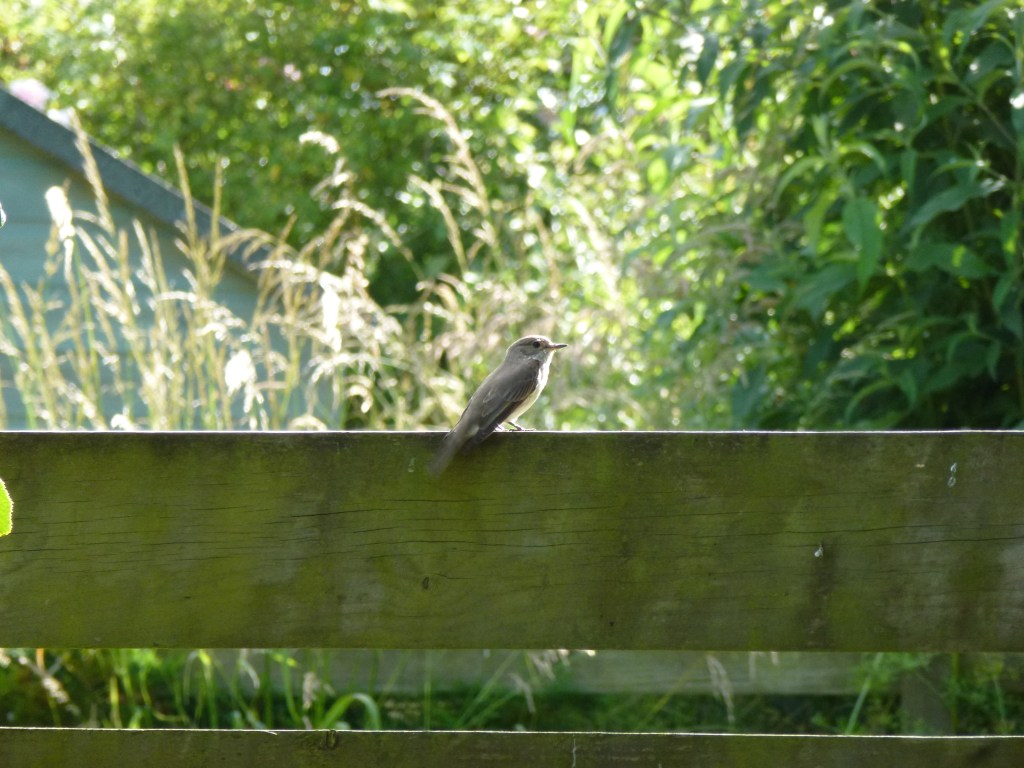
By the end of the day on 16th July the chicks had all fledged. The last one to leave can be seen “hovering” on the edge of the box, as it was encouraged by the adults in the nearby birch tree.

What an absolute delight to encounter, for the second year running, such a beautiful little bird raising its family in our garden.
Sounds of May

Birdsong at dawn – choral gladness

For a few weeks in early May, drifting in and out of sleep during the wee small hours, I had been listening to the sound of birdsong in the comfort of my warm bed. I decided (a little reluctantly) to rise very early and record the dawn chorus in all its full magnitude. Setting my alarm for 3.30am I emerged sleepily from my bed……but was disappointed to find that the showers of April were downpours in May:

May downpour

A second try a few days later was thwarted by the wind:

A very windy dawn

On my third early morning I was in luck. The weather was perfectly still and dry.

I recorded a full 20 minutes with only the occassional interuptions by distant cars or a plane flying overhead. I have condensed this into a 5 minute clip, with minimal editing – just extracting key phases of the chorus and crossfading the clips.

Listen and enjoy without the need to be out of bed at dawn!

Dawn chorus at Girrick

Nest of moss in Birch tree

The daylight hours of May have also seen a lot of bird activity in the garden, including an intriguing little nest high up in the Birch tree. I think it is a Chaffinch, but hard to tell from below.

A Spotted flycatcher has been investigating the birdbox, but doesn’t seem to have taken up residence as yet …….

Spotted Fly catcher bringing moss into bird box

… and various birds have been bathing in the pond or the shallow birdbath on the decking.

Blue tit splashing around in the bird bath – watercolour sketch
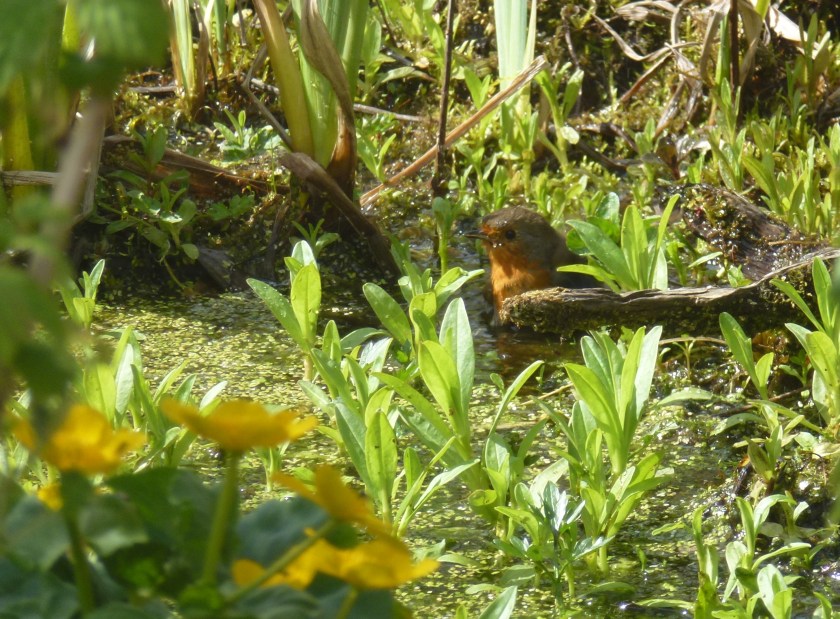
Robin bathing in the pond

There were also a few rare moments of dramatic lighting this month.


Sounds of March

Croaking chorus

A regular occurence in March – a gang of frogs appear from nowhere and, for a few weeks, “occupy” the pond in front of Studio Hundy. Their characteristic “croaking” can be heard from afar, as you walk down the garden approaching the pond. As they pick up your presence, this transforms into a multitude of “plopping” sounds as all the frogs dive below the surface. For a few minutes, until they gradually emerge again, the only visual evidence of their presence is the large clumps of spawn laying on, or just below the surface.

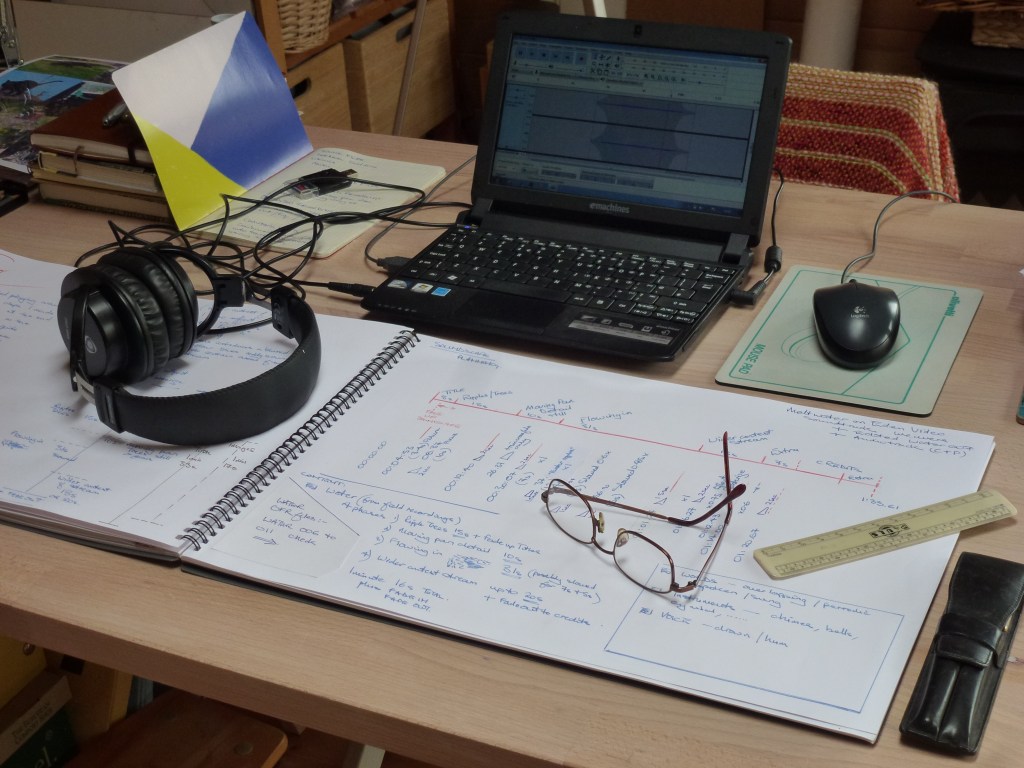
I managed to capture the croaking chorus by placing my field recorder on the edge of the pond, hiding in the studio, and using a remote extension. It also captures other characteristic Sounds of March in the background!

Croaking away
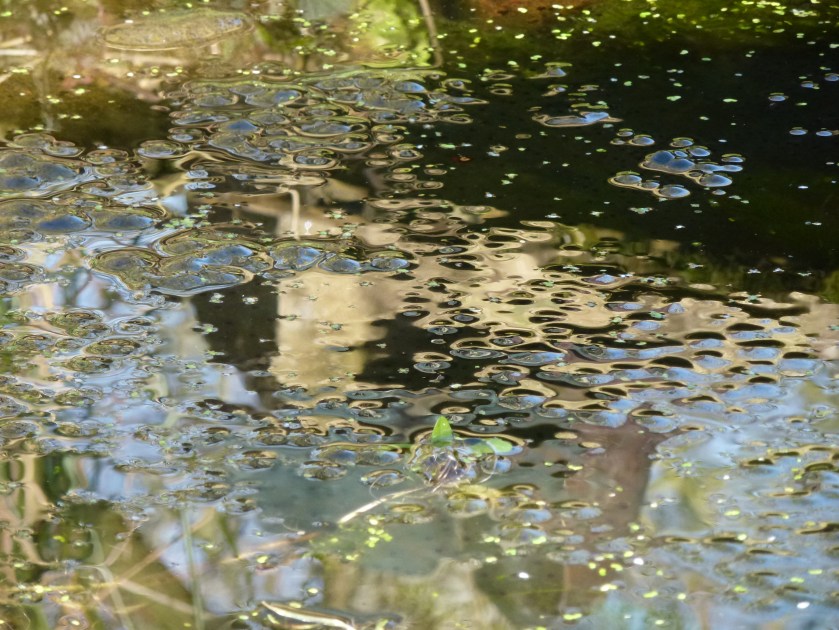
The surface tension with the spawn reminds me of mercury

Mists & mellow fruitfulness

Days grow short now

September is well underway.  Harvested golden fields shine out across the landscape.  Early morning mists and dew fall on cobwebs like glistening jewels.
Bird song has changed – the robin and the blue-tit seem to sing a different tone; or perhaps I’m just noticing them more?  An occasional skein of geese fly over our house, with their evocative calls, echoing in the still cool air.   And the fruiting process in our garden abounds.

The abundance of summer is gradually drawing to a close – so wonderfully depicted in Keats’ poem:

To Autumn

Season of mists and mellow fruitfulness,
  Close bosom-friend of the maturing sun;
Conspiring with him how to load and bless
  With fruit the vines that round the thatch-eves run;
To bend with apples the moss’d cottage trees,
  And fill all fruits with ripeness to the core;
   To swell the gourd, and plump the hazel shells
  With sweet kernel; to set budding more,
And still more, later flowers for the bees,
  Until they think warm days will never cease,
For summer has o’er-brimmed their clammy cells.

Verse 1 of 3
John Keats 1819

Rowan - giving in bounteous plenty Oil-on-paper
Rowan in autumn  – Bounteous plenty        Oil-on-paper

Rowans are often stripped of their berries by this time of year, but those that remain “glow” against the gradually turning foliage.

337

And the late flowering Rudbekia shines out in the darkening evening light.

For me autumn flowers bring a sense of hope and promise of the Spring to come, as the days grow short and the earth prepares to “close down” inwardly for winter.

Welcome arrivals

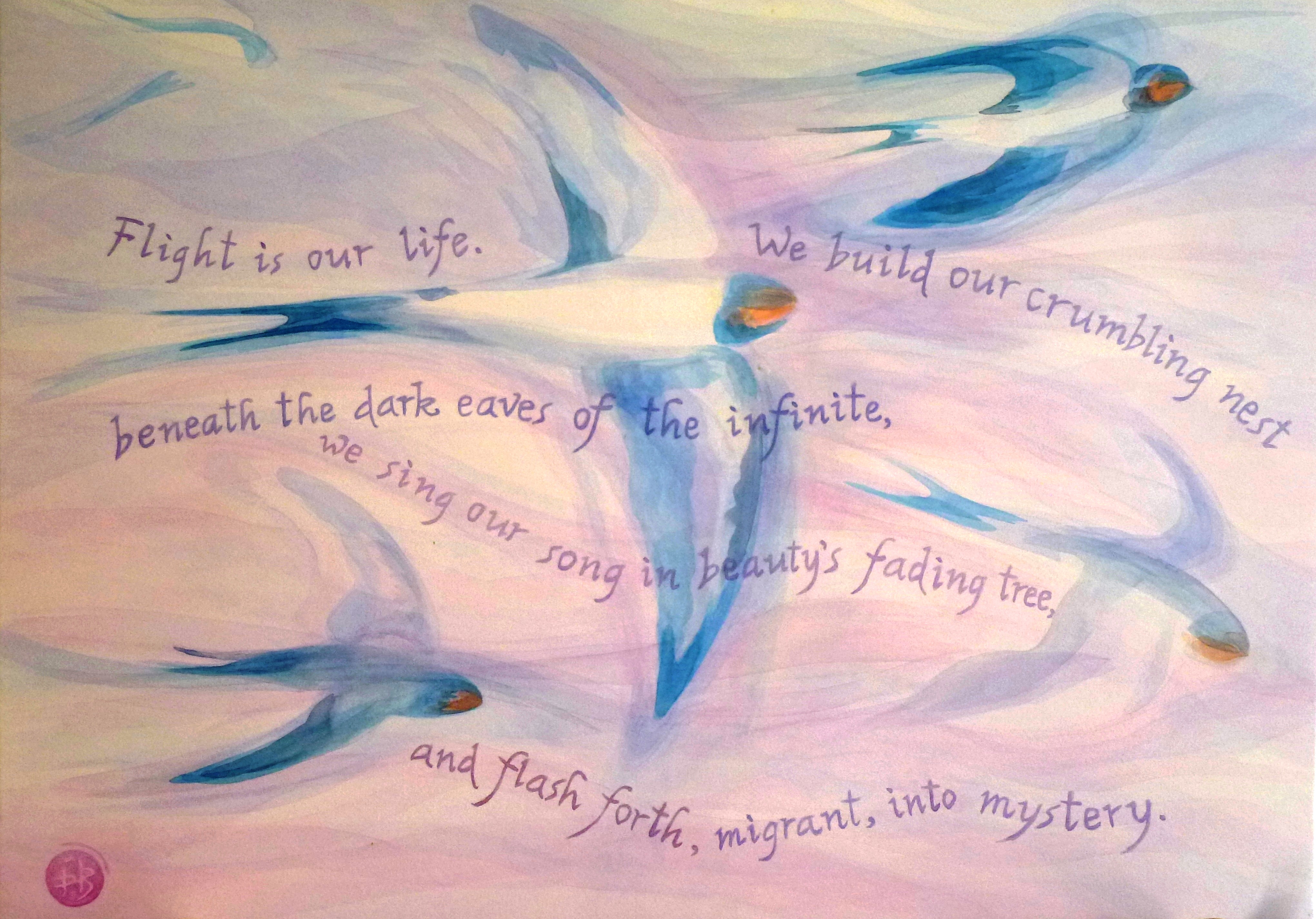
Flight is our life

The new beginnings associated with Easter are always accompanied in April/May by a sense of anticipation in nature; awaiting the sighting of the first House Martins or Swallows.   I say sighting, but sometimes it is the awareness of their excitable “chatter”.   It never fails to bring a feeling of jubilance, in the knowledge that these migrants have returned to build or re-build their homes for the summer. 

It is a profound feeling that resonates deeply.  This year it was on Good Friday that I was aware the blue sky had received those welcome dark shadows, flying rapidly in apparent purposeful endeavour.   The depth of this event is, for me, beautifully encapsulated in the poem by Mary Webb published in 1928.

Swallows

The swallows pass in restless companies.
Against the pink-flowered may, one shining breast
Throbs momentary music – then, possessed
With motion, sweeps on some new enterprise.
Unquiet in heart, I hear their eager cries
And see them dart to their nests beneath the eaves;
Within my spirit is a voice that grieves,
Reminding me of empty autumn skies.
Nor can we rest in Nature’s dear delight:
June droops to winter, and the sun droops west.
Flight is our life. We build our crumbling nest
Beneath the dark eaves of the infinite,
We sing our song in beauty’s fading tree,
And flash forth, migrant, into mystery.

by Mary Webb

Reference: Webb, M. (1930)  The collected works of Mary Webb.  Poems and The Spring of Joy. London:  Jonathon Cape, 1928.

Veil painting - swallows (2)
Veil painting watercolour 2018

Buds will blow

Joy of new beginnings

Birdsong in spring

CHESTNUT BLOWN

Three and a half weeks on from the Spring Equinox, the clocks have changed and the light is gradually increasing.  Signs of new life are abundant and buds in all shapes and forms are beginning to “blow”.    An old English word:

blow/bləυ/v. & n. archaic. v.intr. burst into or be in flower. n. blossoming, bloom (in full blow). [OE blõwan f. Gmc]

Whilst not often found today, this word – for me – encapsulates nature at this time of year (Photo-gallery: Buds in Spring).

I came across its use in a song at our regular Thursday a capella singing group:

You have to believe that buds will blow,
Believe in grass in days of snow,
That’s the reason a bird can sing,
On its darkest day it believes in spring
ROWAN UNFURLING 3
ROWAN UNFURLING -charcoal

As spring unfolds and buds burst into bloom, bird song also brings the joy of new beginnings.

A sound recording I made in our local valley in 2017 brings something of that joyous spring calling to life.

With the gentle sound of the Eden water flowing in the background, the light was slowly fading and the various songs being sung resonated, as if in preparation for another new day.

Spring arrived and Winter returned

Our seasons are fickle

After Candlemas the first two weeks of February saw the skies clear, the sun bring warmth and the crocuses bloom.   

Crocus 1

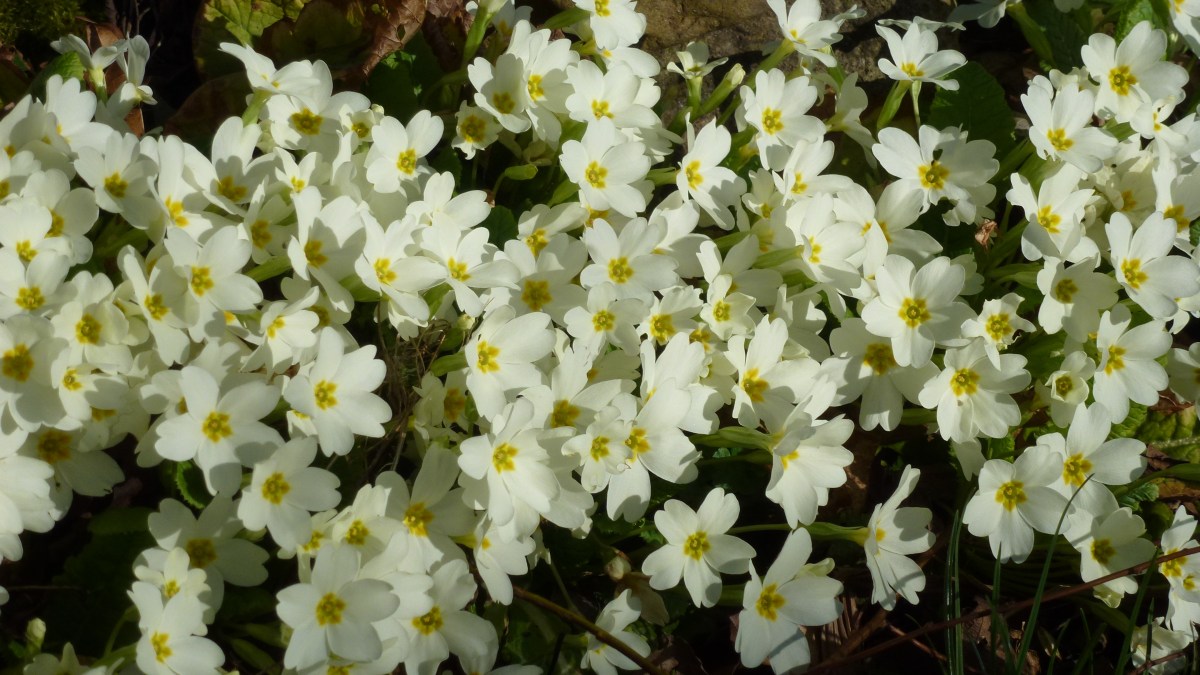
Primroses, that had started to flower even in January, shone brightly in their profusion.

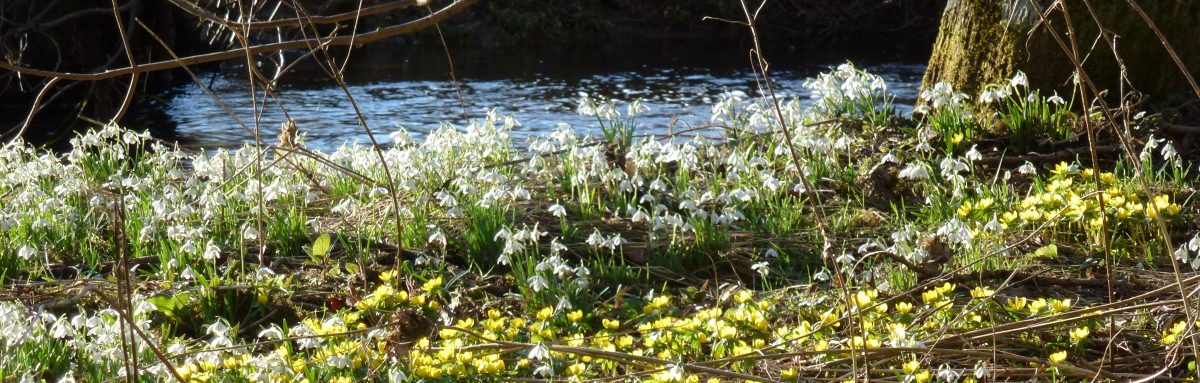
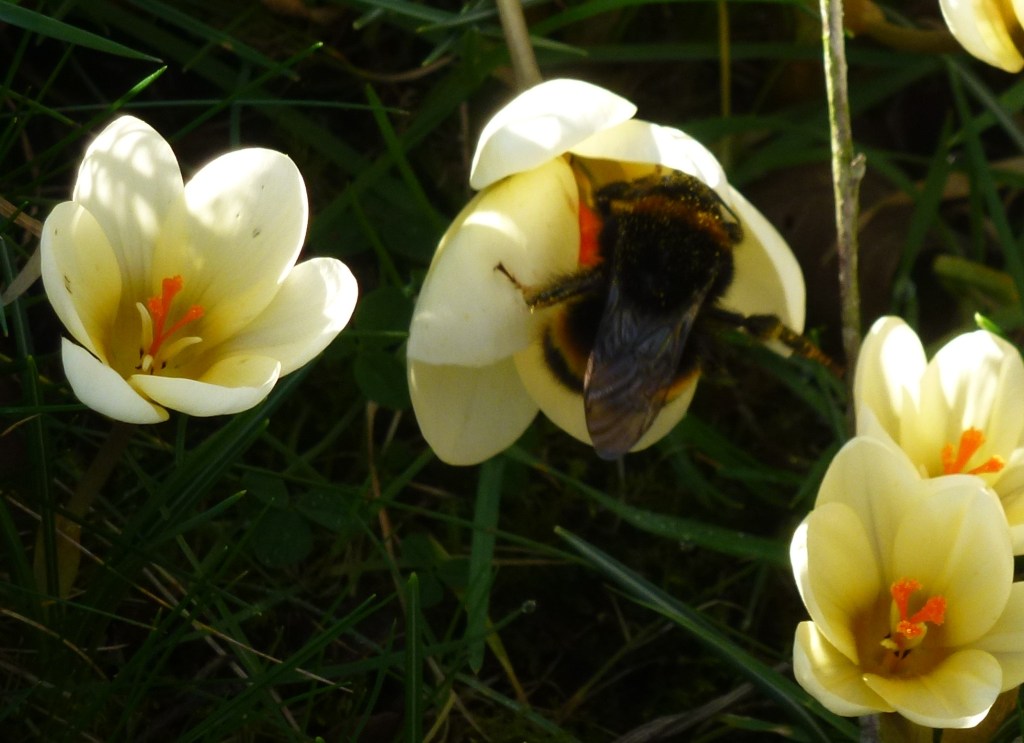
The icy scenes we’d seen on the Eden water on 1st and 2nd of February (Photo-gallery: Ice on Eden water) melted away in a moment and it seemed the reluctant winter had been pushed away – Spring had arrived.  Even the bumble bees agreed!

Bumble bee

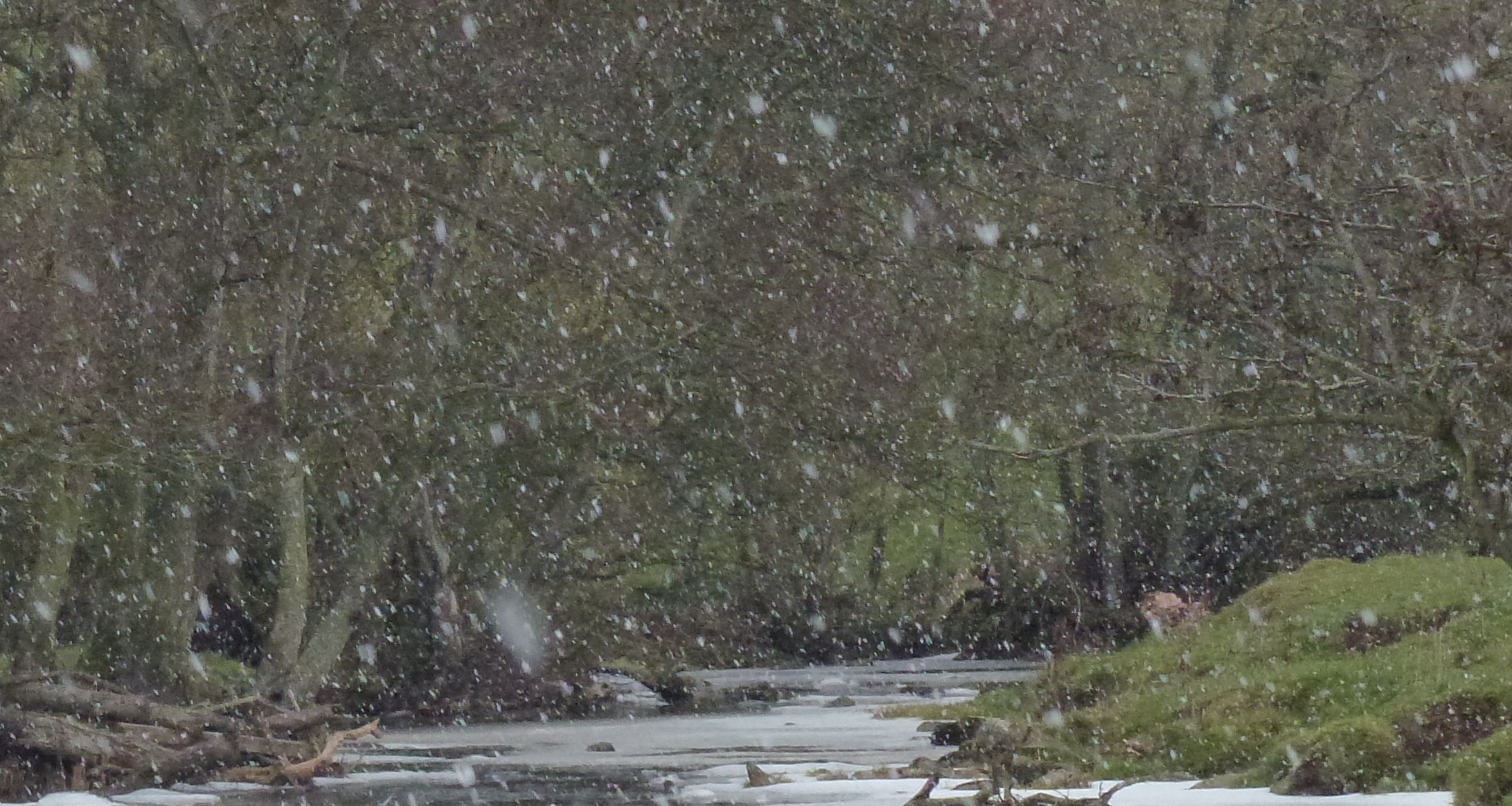
Not the case; early March has seen the return of cold, windy and wintery weather.  Not like 2018, with heavy falls of snow and drifts 6ft deep in places, but the temperatures have dropped dramatically and today light wet snow is falling from a grey sky.

SNOW IS FALLINGOur seasons are fickle these days and keep us guessing what may arrive next.