We have just returned from a fabulous immersive 4 day sound residency in Argyll, hosted by John Wills (www.positiveambisonics.org / Instagram – john.wills.ambisonics). Staying in a cosy 1960’s, beautifully converted caravan off Carsaig Bay (in John and Pinkie’s 1.5 acre woodland garden), we experienced the landscape around the Sound of Jura socially, visually and sonically.
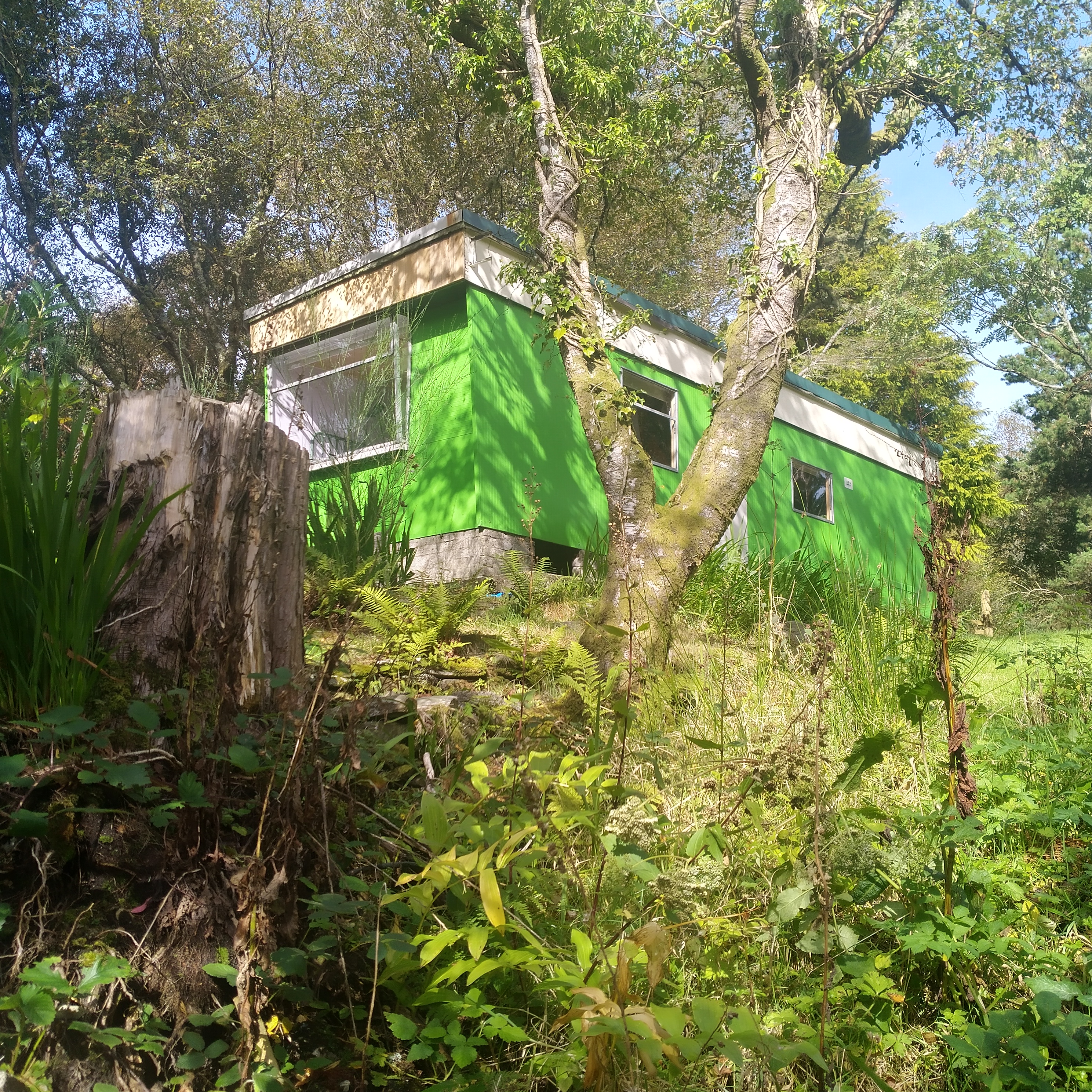
Cosy 1960’s caravan in woodland garden
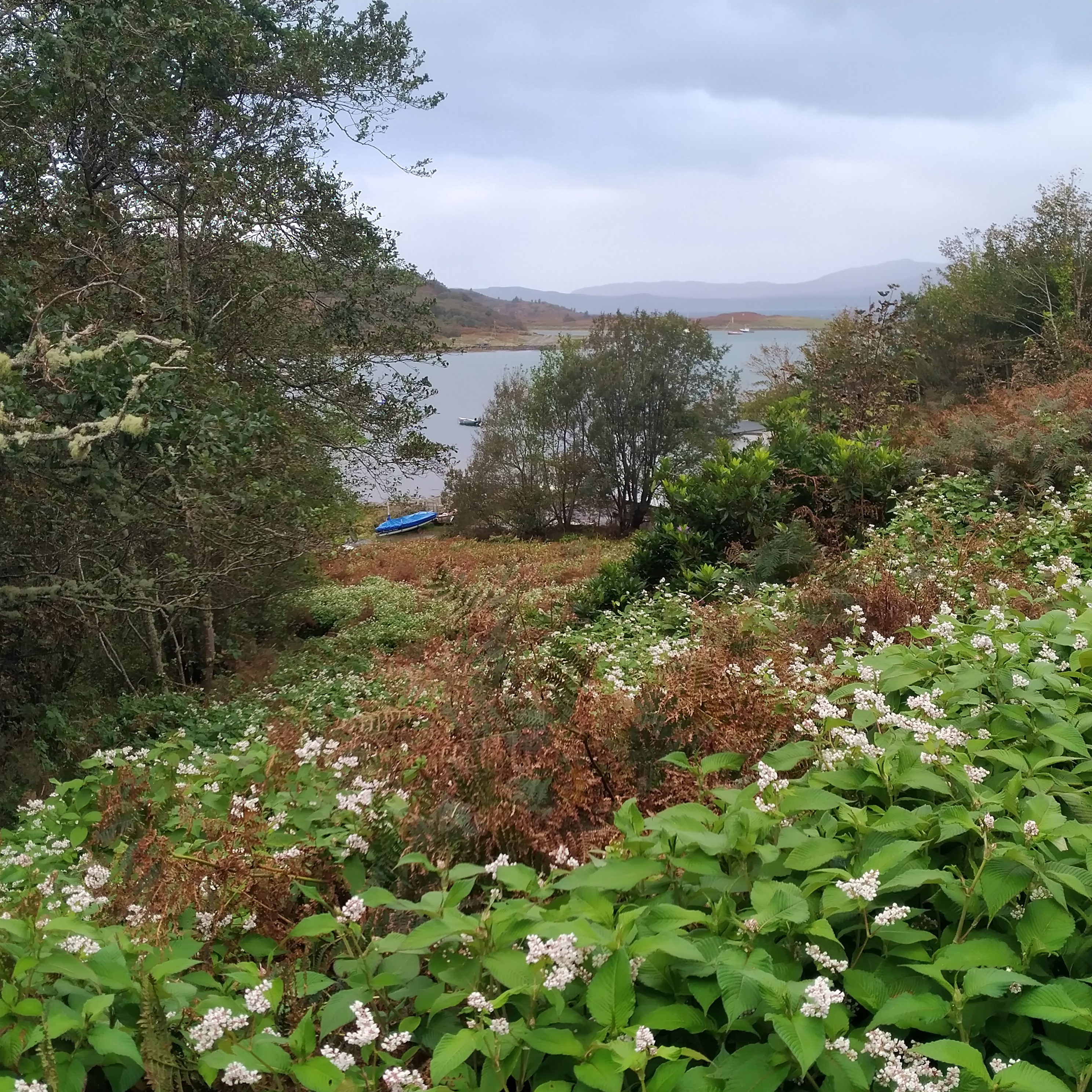
Carsaig Bay overlooking the Sound of Jura

Recordings
Gently guided by John into the field of ambisonics (capturing 360° sound using a special 4 channel spacial configuration of microphones) we ventured out to experiment with field recordings. This unique full ambient surround sound was supplemented with recordings using a hydrophone, a contact mic and my own H5 stereo field recorder, as well as a condensor mic in the studio.
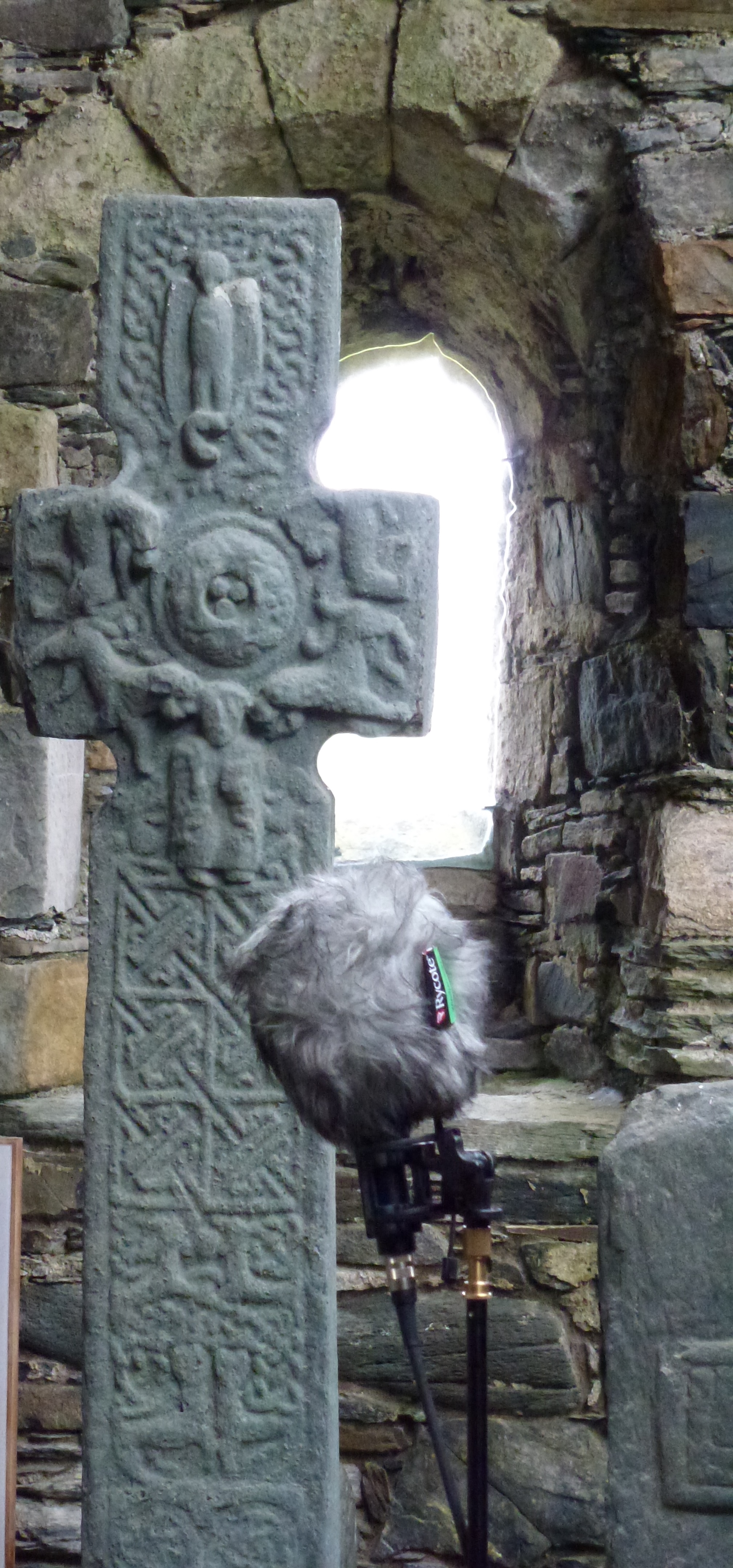
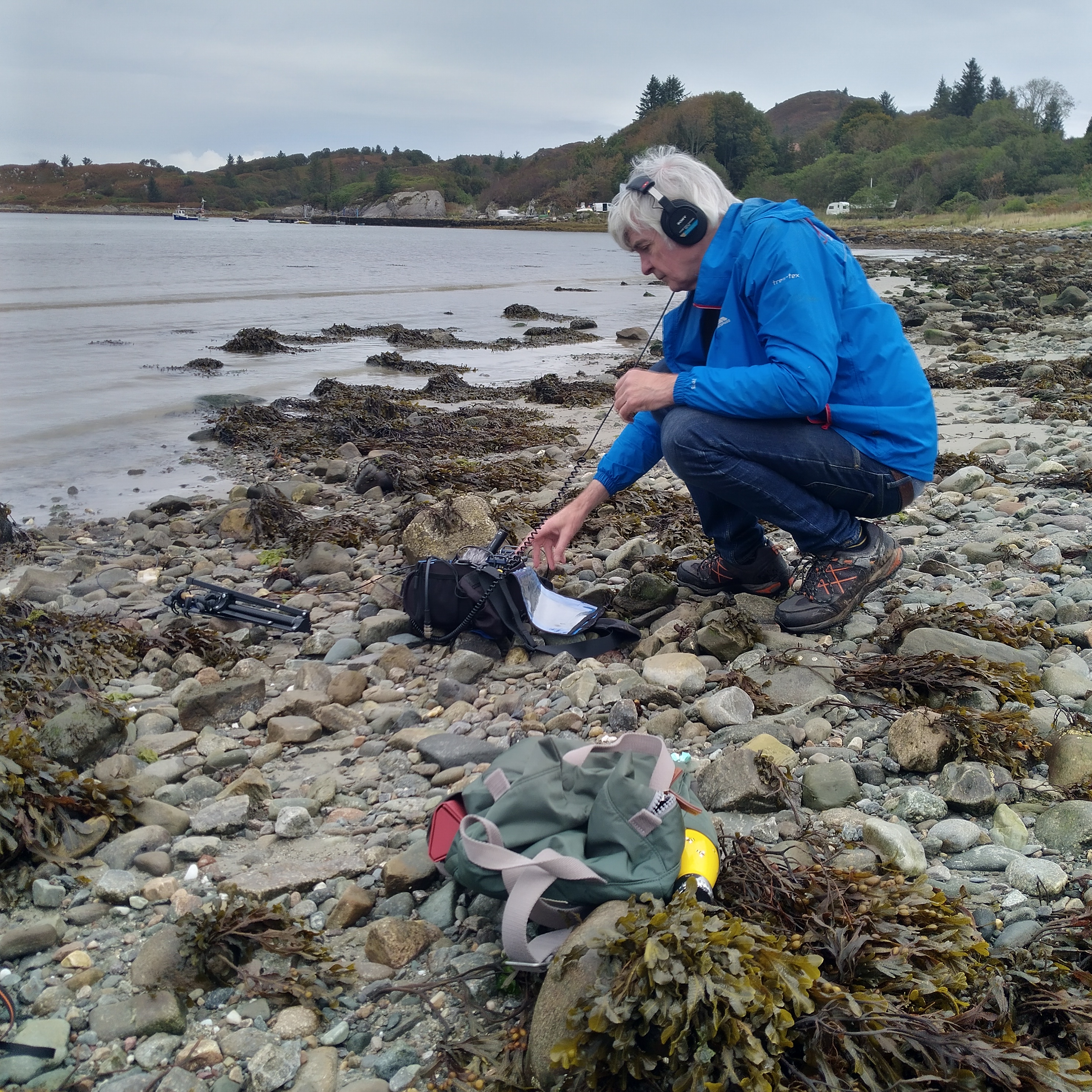

Sonic landscape
In this rare, sonically unpolluted environment we were able to listen deeply to the sounds of the environment at Taynish nature reserve Nature Scotland; experience the acoustics of an 11th century chapel Historic environment Scotland; record inside a cairn (Nether Largie South) at one of the many local Neolithic and Bronze age sites Kilmartin-glen: Nether Largie South Cairn and dive into the “hidden” acoustic territory of fungi, moss, wood, reeds and, amongst others, wire fences. I even found myself befriending the sound of the wind – something, as a field recordist, I thought I’d never do!

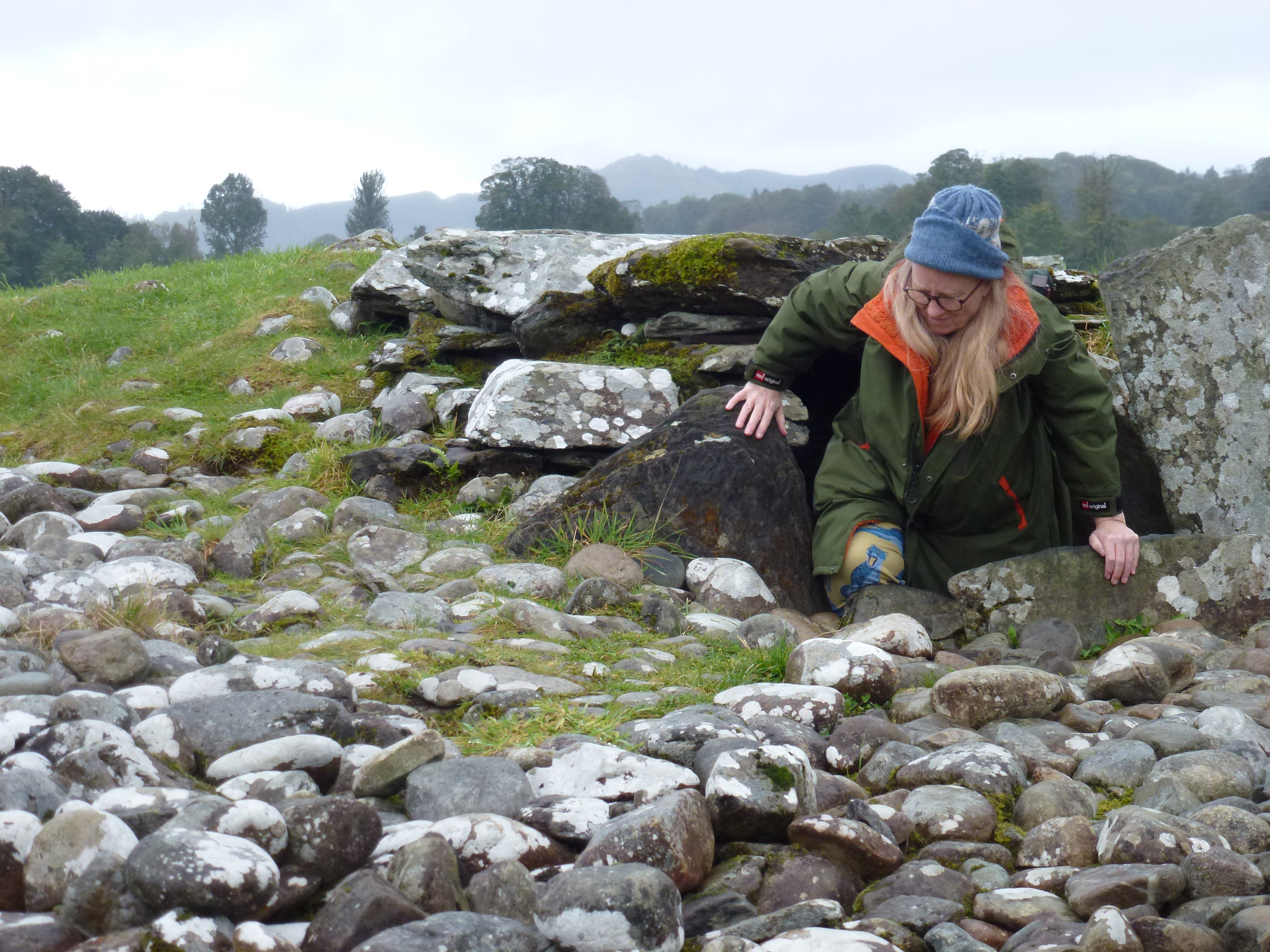


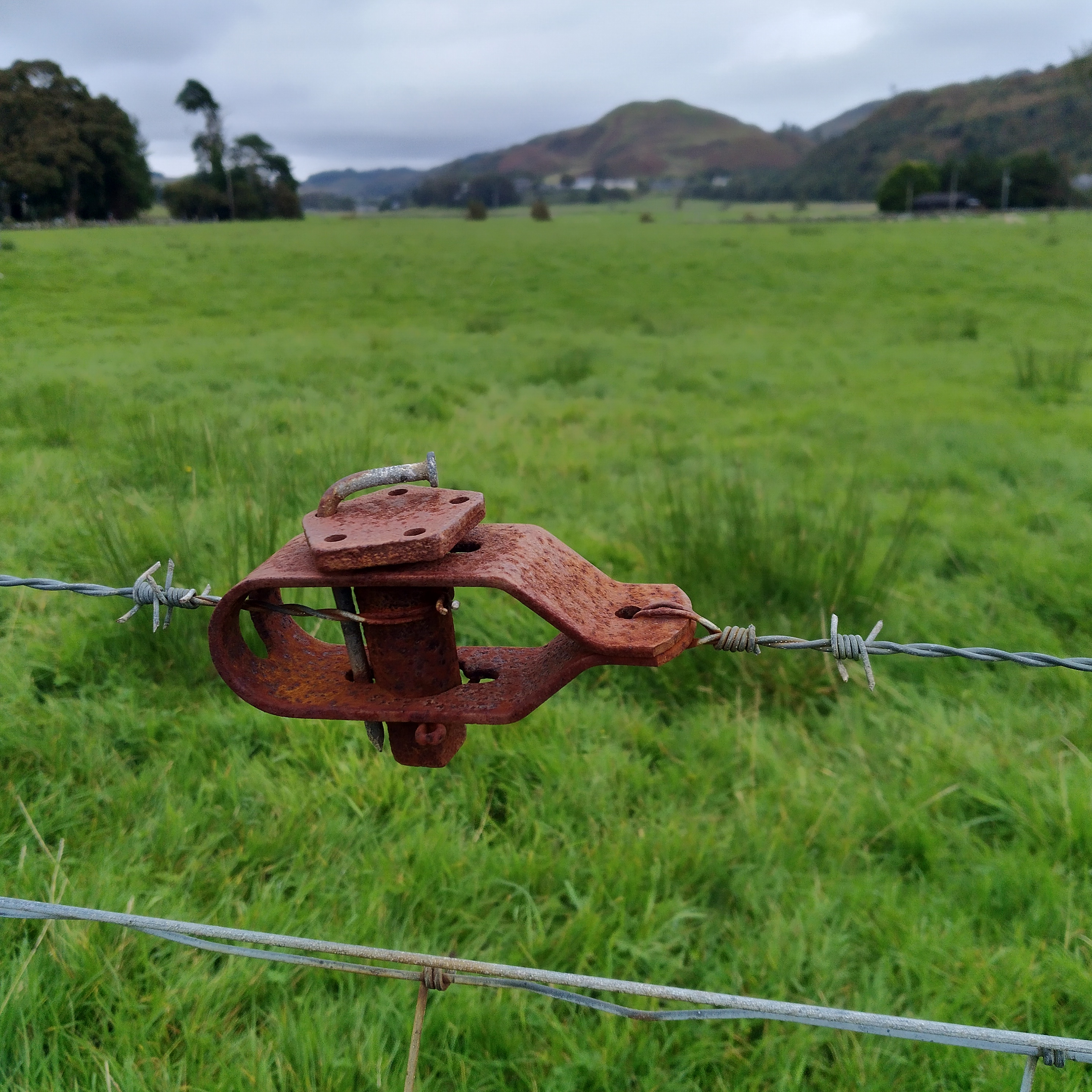
A couple of field recordings using Zoom F8 with a Jez Riley French contact mic with probe
Deep listening


Inspiration
Inspired by the first days ambisonic recordings, particularly when played back in John’s studio using an 8 speaker array (Left-Right, Front-Back, Up-Down), Clare and I were enthused to explore a recurrent theme we’ve encountered in various ways in our lives – the 4 elements.
Linked, as they are, to the 4 or perhaps 5 stages/processes and colours associated with alchemy:

Black – negrado; White – solutio; Green- coagulato; Red – rubado and ultimately Gold, this audio residency seemed like a great opportunity for investigating the “Sound of Alchemy”
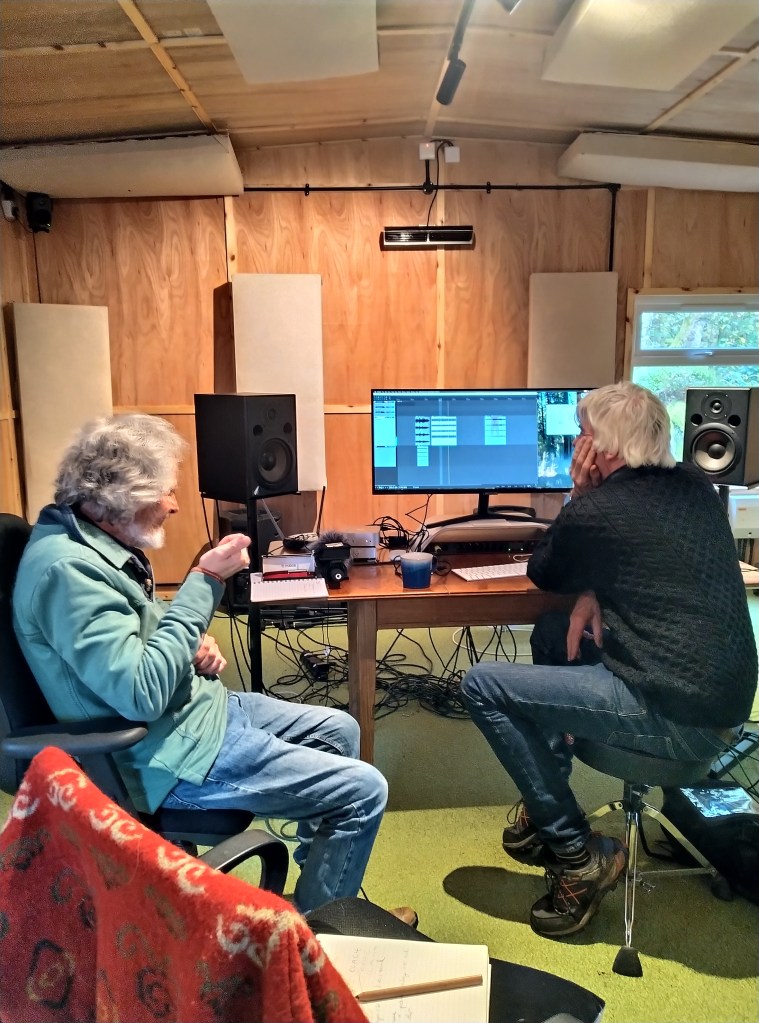
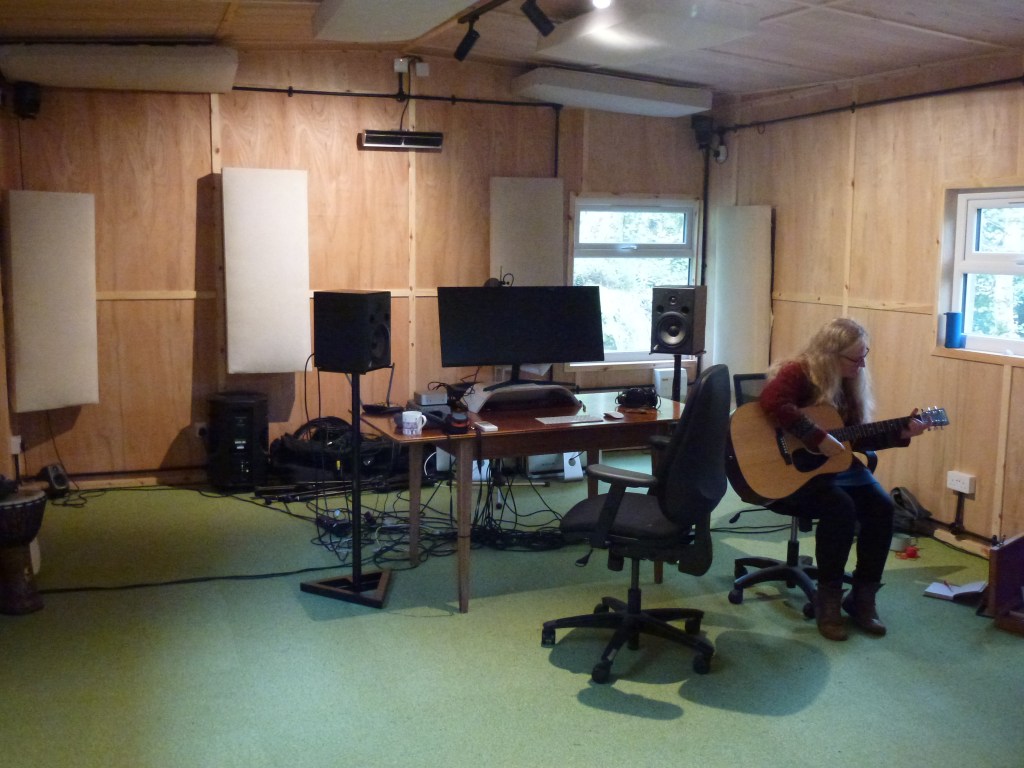
Facilitated by John’s expertise as a musician and sound engineer we spent 3 further days “playing” sonically with the concepts of Earth, Water, Air and Fire and their metamorphic transitions. A studio full of instruments (bodhrán, lyre, guitars, electronic drum kit, a synth and more) – as well as Clare’s bamboo pipe and our voices – enabled us to match and meld our various field recordings with instrumental and vocal accompaniments.


Ambisonic recording of the Bamboo pipe using Zoom F8 with Sennheiser Ambeo Ambisonic mic

Perhaps the highlight of this journey came when we listened back to our Hebridean lament, sung in Keills chapel. The combination of our two voices bouncing across the ancient stone walls created a lovely subtle reverb.
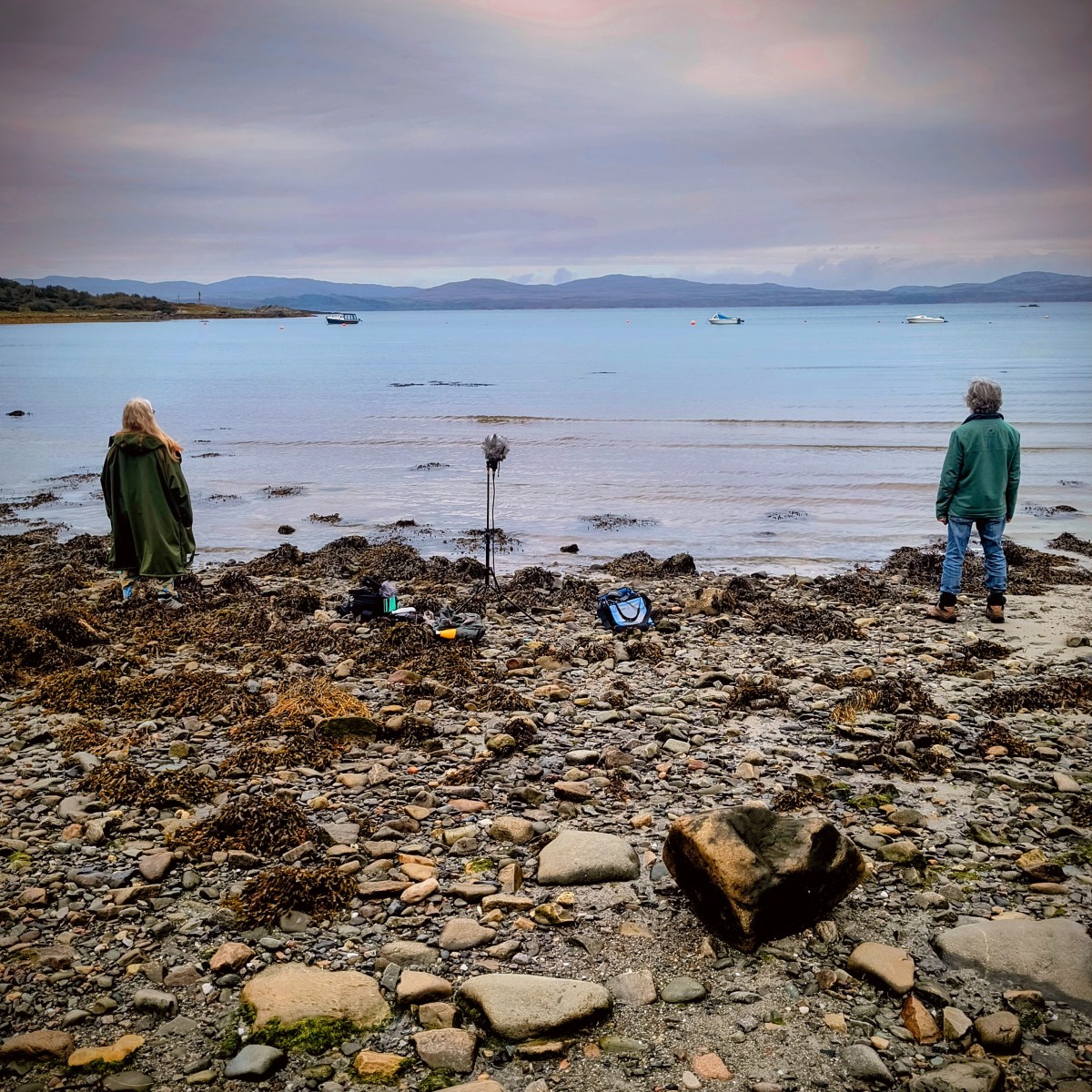
We wanted a distinct contrast to this, recording the same chant outside accompanied by lapping waves. So on our last day we “sang” to the Sound of Jura, capturing the unique atmosphere on Carsaig beach using John’s Sennheiser Ambeo Ambisonic mic –featured image. Offsetting these two vocal recordings in the studio created another dimension for this lament and we decided to incorporate it into our now almost complete soundscape.
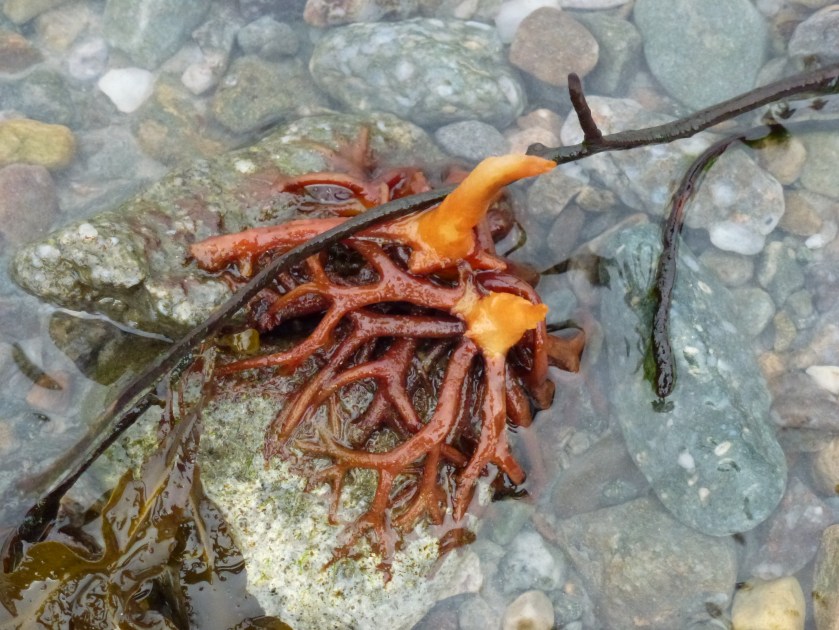
Four very exciting days spent with an amazing tutor enabled us to create and complete an 18 minute soundscape. The “Sound of Alchemy” morphs from the earthy sounds of stone with drumming on rock, through watery elements of lapping waves, trickling streams and the gentle sound of an “untuned” lyre (bluesy), into the airy element of whistling wind accompanied by a breathy bamboo pipe, merged with the mysterious sounds from a contact mic in the reeds. The final crackling element of fire (moss) incorporates a crescendo of cymbals leading into the choral “Nay Hey” – a layered polyphonic Hebridean lament.
More details of our journey through each of the four elements in sound will follow shortly.
Thanks again to John Wills for his amazing and inspiring residency (Positive Ambisonics Residencies)
 The Artist in Studio Hundy