Secrets, Trees and Stars

Stillness

The addition of light – that feels so essential in advent – has, this year, been characterised by trees and stars.

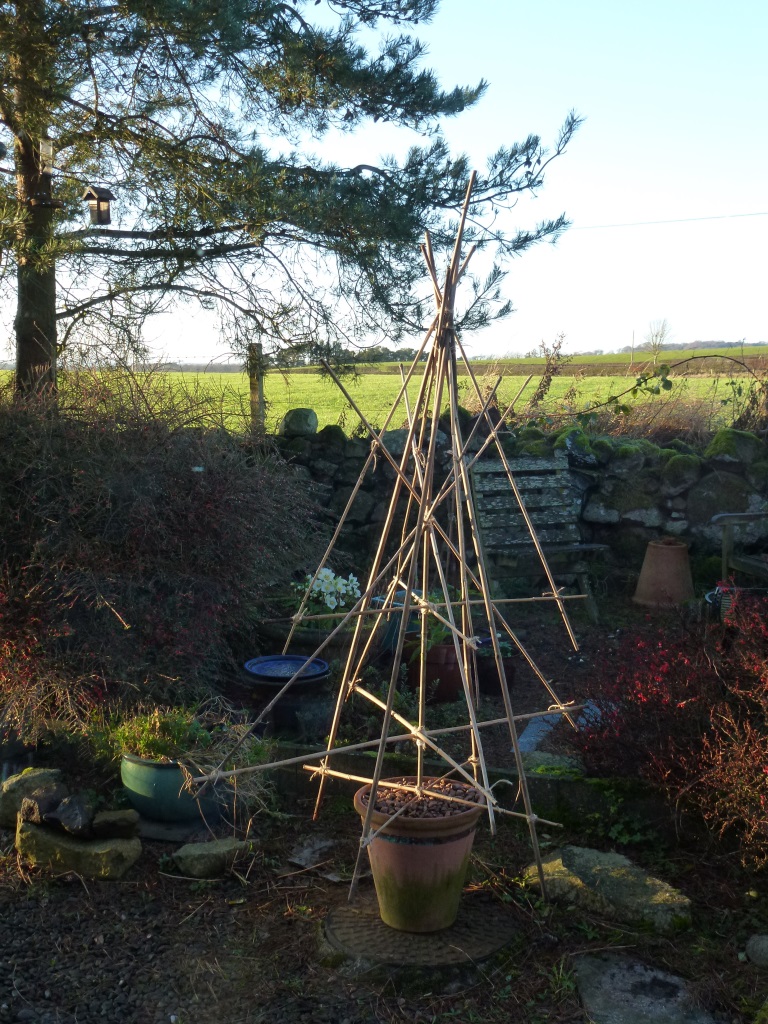
As well as illuminated stars in Studio Hundy and our Girrick cottage window, this week I created a “sustainable” tree from garden bamboo canes. Whilst making the structure, as if on cue, a “Christmas” Robin visited to investigate and then drink from the bird-bath.
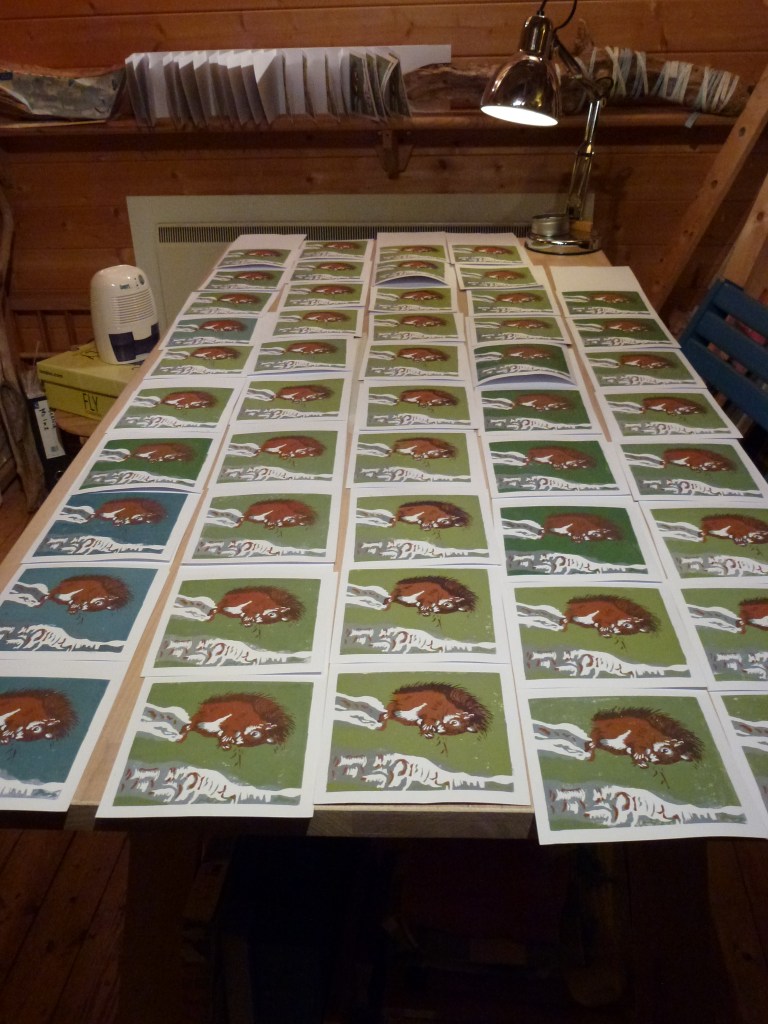
November had been a busy time in Studio Hundy, fulfilling a commission for 150 lino-printed Christmas cards. As soon as these were complete and we turned to December, I started to sketch out a new design for my own card this year – a Heron.

The stillness of the Heron in the lino print was inspired by a chapter in a wonderful book we are currently reading – an anthology of weekly contempations and practices for spirituality through the lens of psychology, inspired by the culture and mythology of the Celts in Britain and Ireland and their connection with nature.
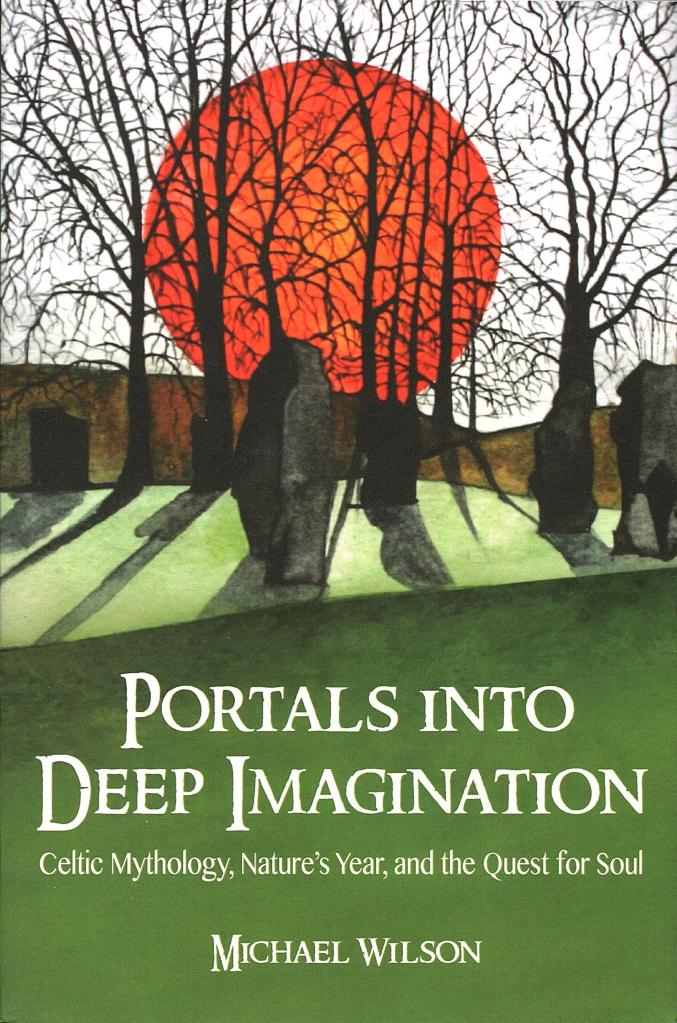
“Psychologically, the heron represents a part of us who longs to penetrate below the surface of life into its Mystery for the long-forgotten memory of who we are, which we begin to discern in times of stillness”.

Wilson, Michael.  Portals into Deep Imagination.   Celtic Mythology, Nature’s Year, and the Quest for Soul.  Aeon, 2025

Finding stillness at this time of year seems all the more important as the outer pressures of the lead-up to Christmas mount.

This includes taking time to reflect on the year that is coming to a close.
Quite an eventful year.

And the “secrets” in the title of this post?

Firstlly it refers to the mystery that lies “below the surface of life” (quote above); and secondly it takes me back over 12 years when Clare devised and performed her other solo show as part of LTP (Landscape Theatre Project). Clare’s Many Threads. Part exhibition, part theatre piece, it painted an intimate portrait of a landscape.

What really lies out there in the hills and valleys? What lives in the trees and by the stream. Come along to LOOK, LISTEN and DISCOVER!!”

It was 5 years earlier, whilst collaborating with Clare in developing the methodology for LTP, that my interest in field recording was really sparked.

During a 2 week, immersive study of a local valley (Muckle Thairn) I experimented with my 1980’s Aiwa stereo cassette walkman, two basic plug in mics, mounted on an adapted paint roller on the end of a extended umbrella!! Very DIY!

I used this kit to record the soundscape for our first LTP scratch performance at the local village hall.

Who’d have thought 17 years on I’d be at an amazing ambisonic sound residency in Argyll! Sound of Alchemy

A year (and much more) to remember.
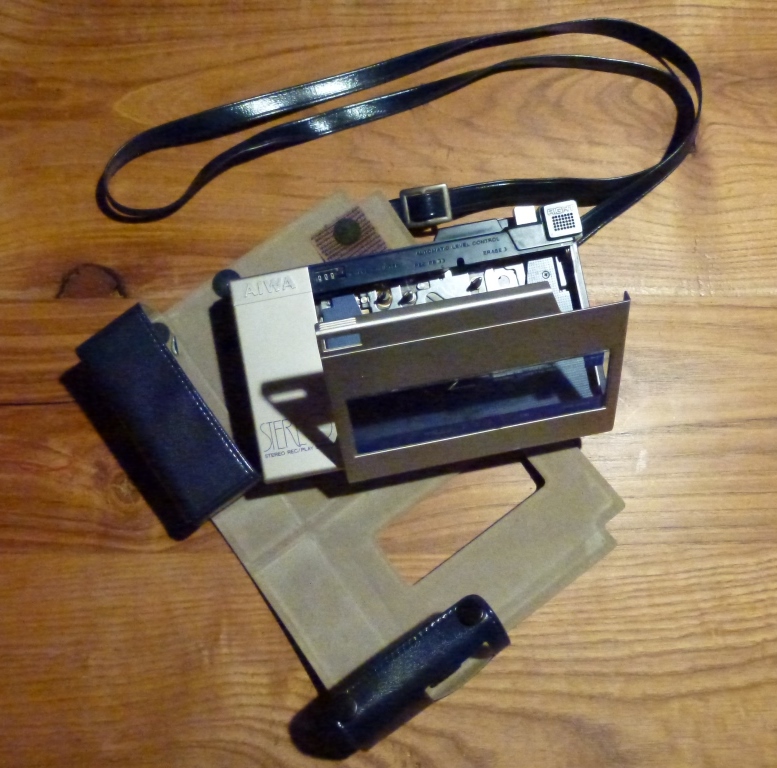
1980’s Aiwa Stereo cassette recorder – nostalgia
Sound of Alchemy

Singing to the Sound of Jura
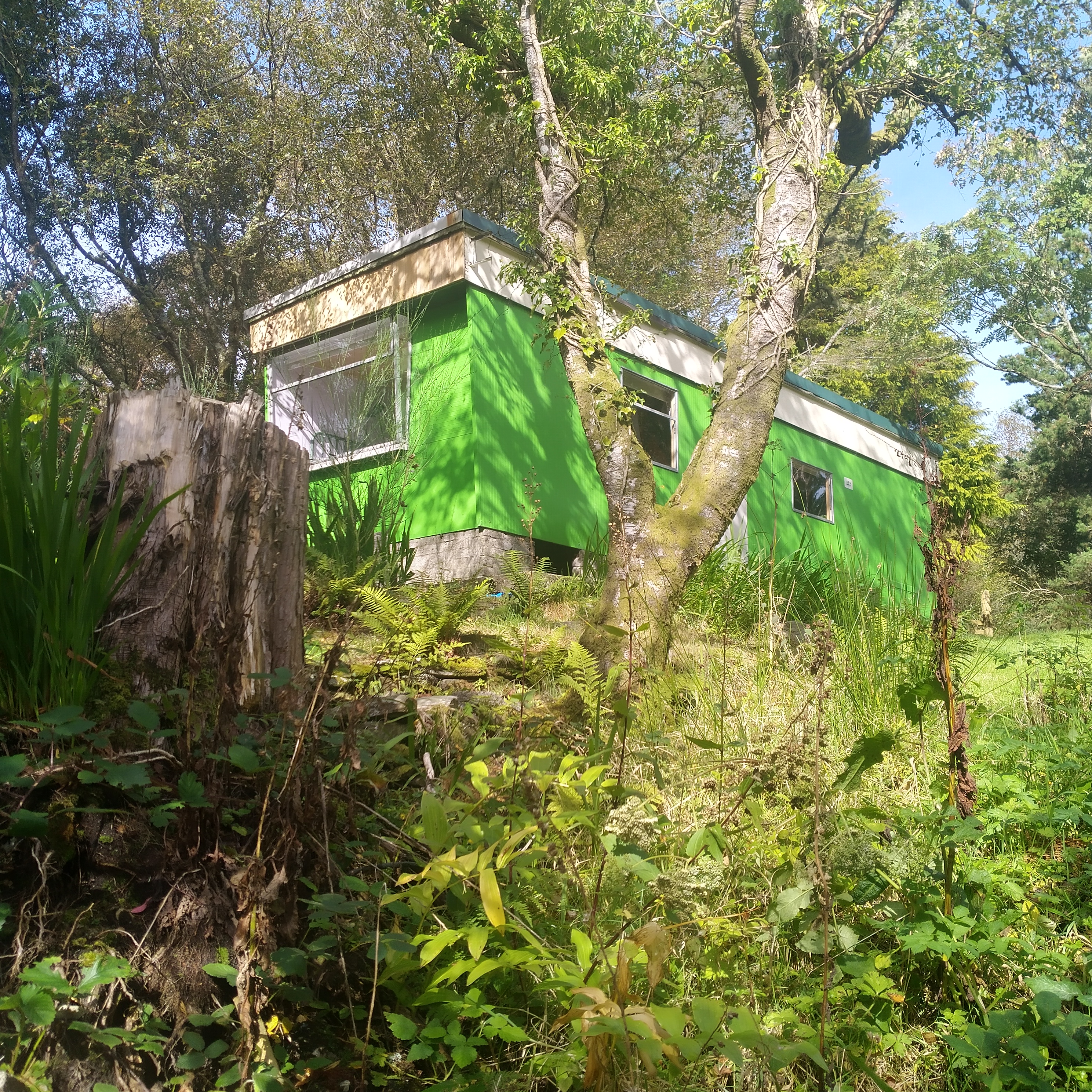
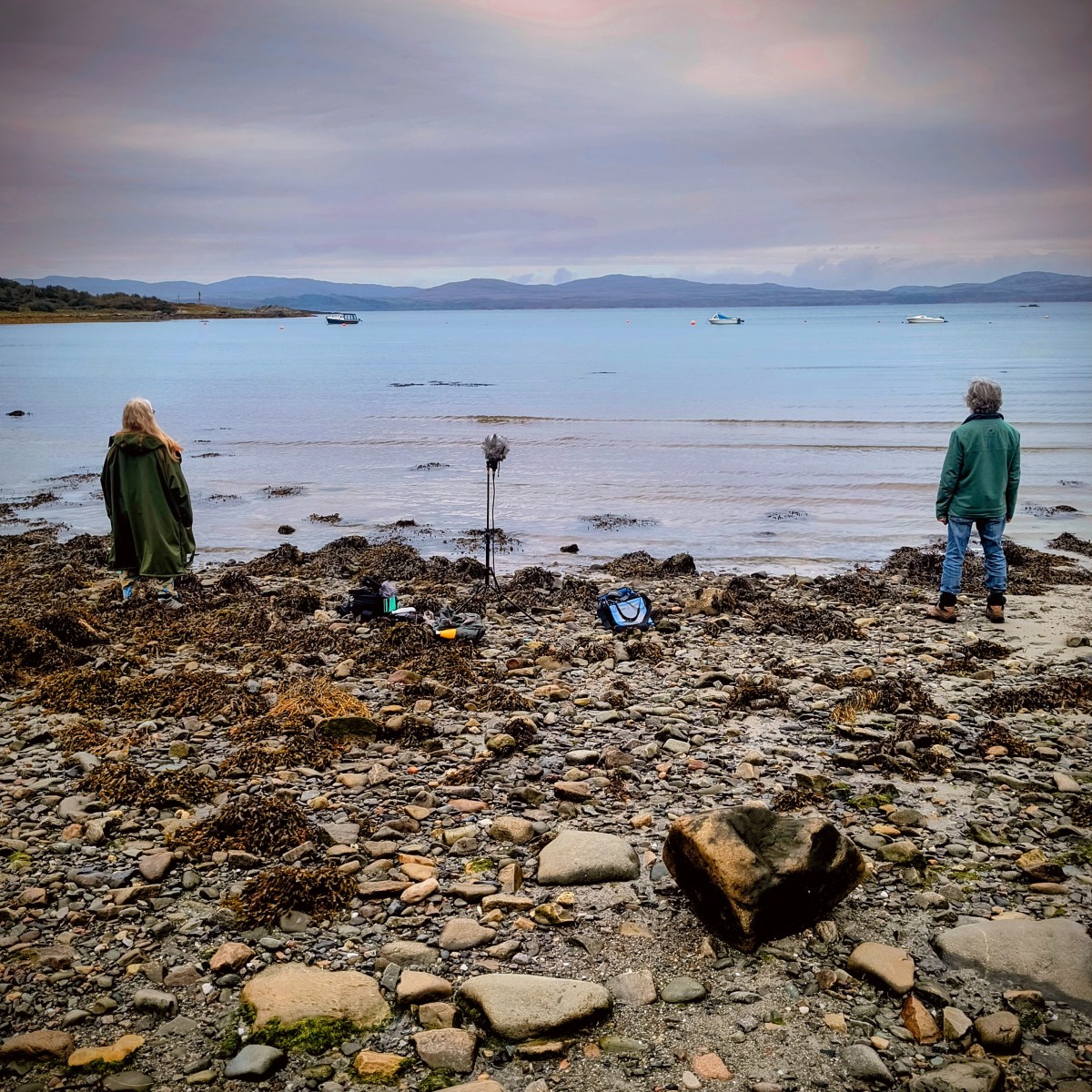
We have just returned from a fabulous immersive 4 day sound residency in Argyll, hosted by John Wills (www.positiveambisonics.org / Instagram – john.wills.ambisonics).  Staying in a cosy 1960’s, beautifully converted caravan off Carsaig Bay (in John and Pinkie’s 1.5 acre woodland garden), we experienced the landscape around the Sound of Jura socially, visually and sonically.

Cosy 1960’s caravan in woodland garden

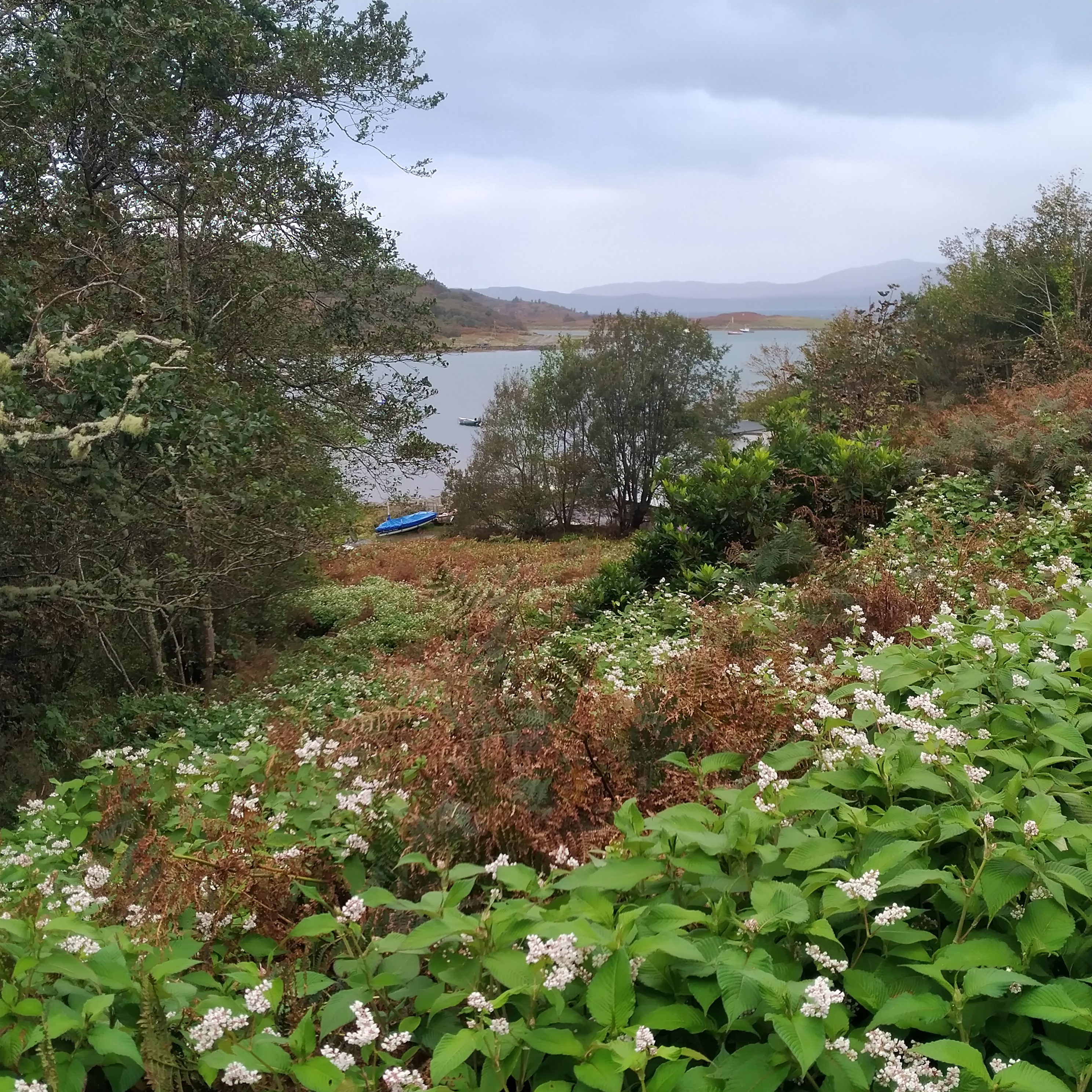
Carsaig Bay overlooking the Sound of Jura

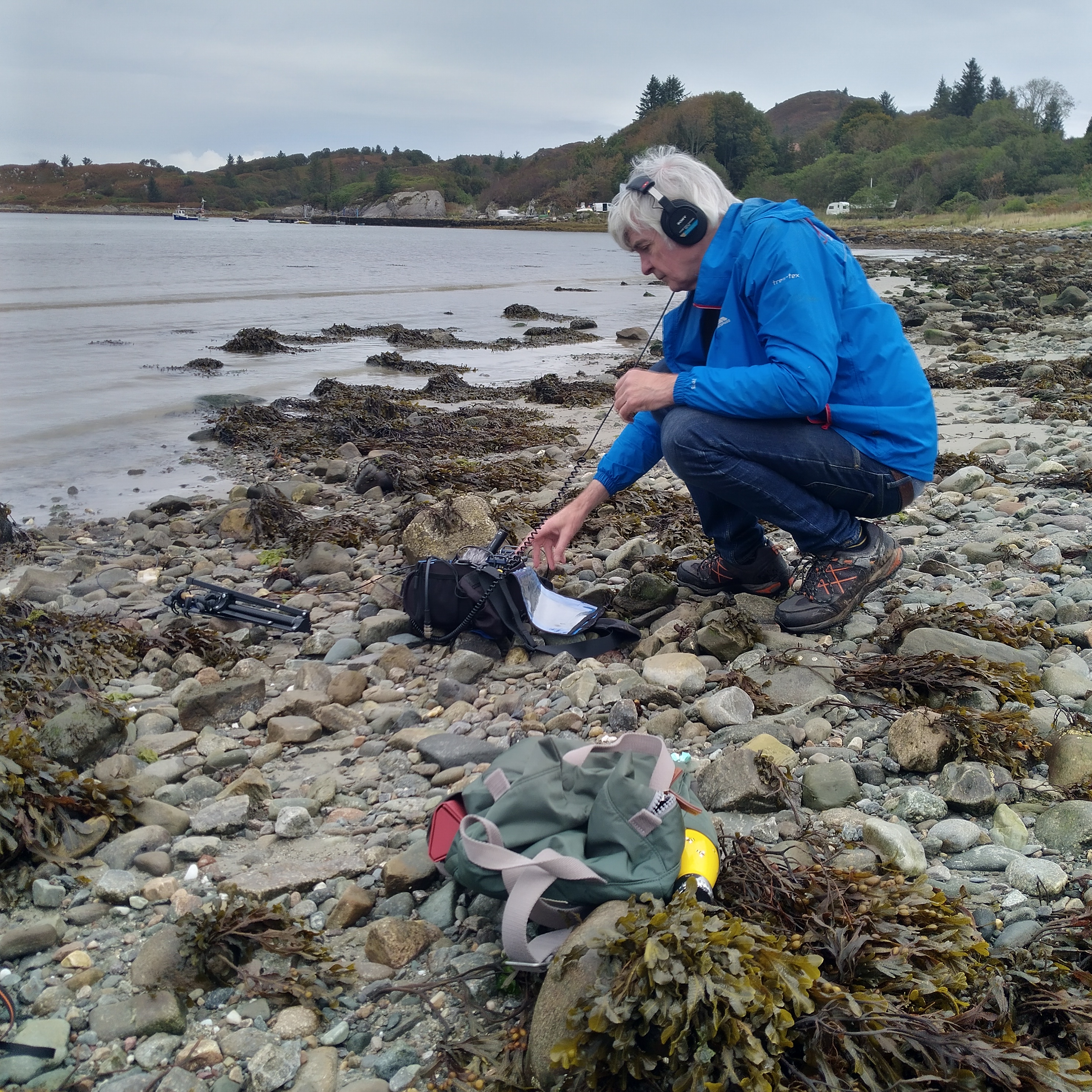
Lapping of waves using Zoom H5 with inbuilt XY stereo mic capsule (recorded at Carsiag Bay)
Argyll shoreline near Keills chapel
Recordings

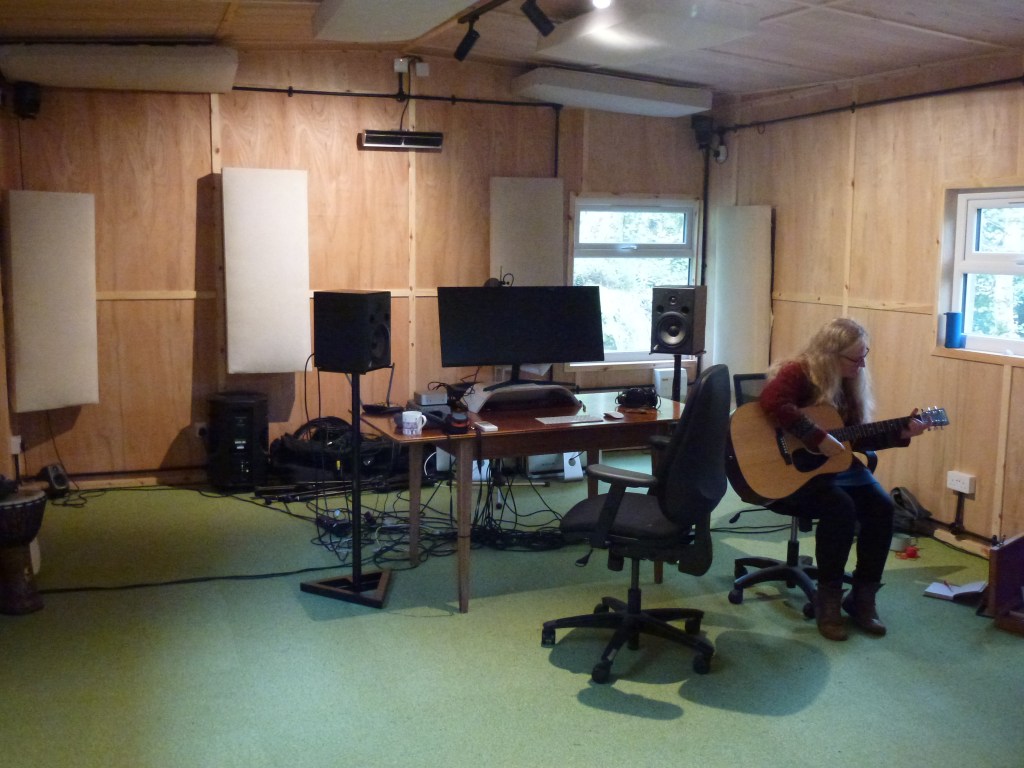
Gently guided by John into the field of ambisonics (capturing 360° sound using a special 4 channel spacial configuration of microphones) we ventured out to experiment with field recordings. This unique full ambient surround sound was supplemented with recordings using a hydrophone, a contact mic and my own H5 stereo field recorder, as well as a condensor mic in the studio.

Sonic landscape

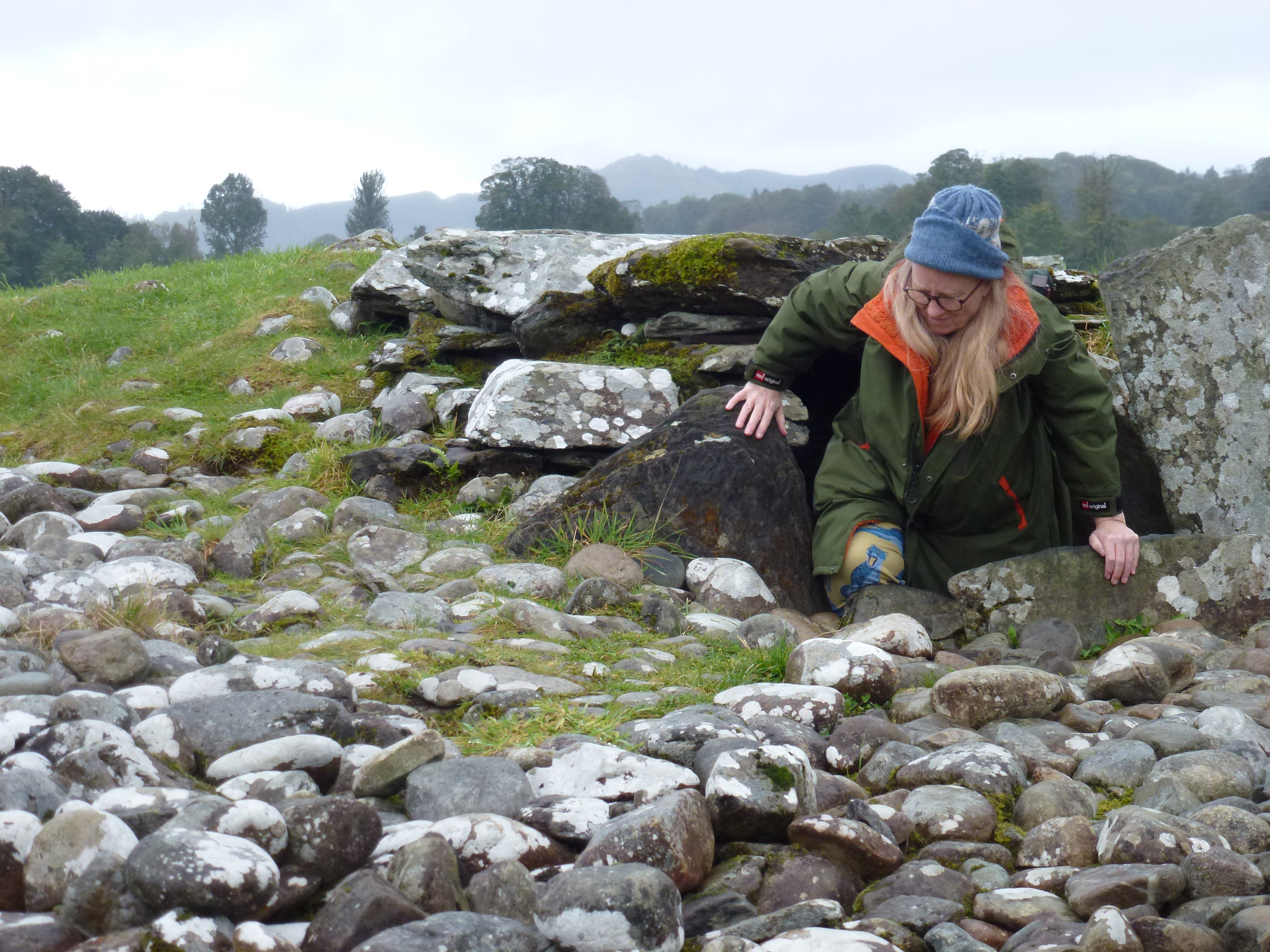
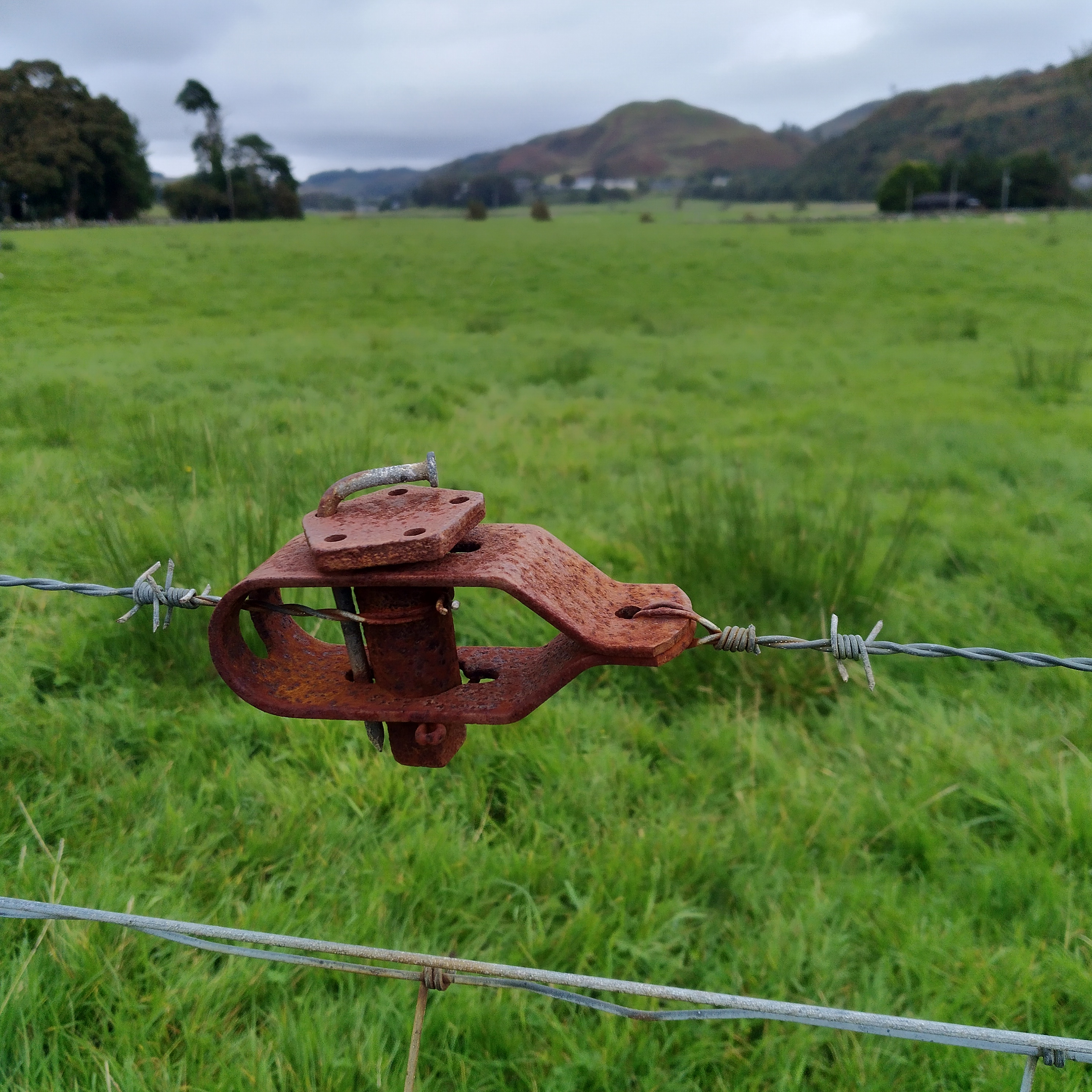
In this rare, sonically unpolluted environment we were able to listen deeply to the sounds of the environment at Taynish nature reserve Nature Scotland; experience the acoustics of an 11th century chapel Historic environment Scotland; record inside a cairn (Nether Largie South) at one of the many local Neolithic and Bronze age sites Kilmartin-glen: Nether Largie South Cairn and dive into the “hidden” acoustic territory of fungi, moss, wood, reeds and, amongst others, wire fences.  I even found myself befriending the sound of the wind – something, as a field recordist, I thought I’d never do!

A couple of field recordings using Zoom F8 with a Jez Riley French contact mic with probe

Wire fence –probe in rotten fencing post (recorded at Nether Largie)
Moss – probe buried in thick moss (recorded in the wooded garden at +VE ambisonics)
Deep listening
Deep listening to the ripples of the tide
Deep listening to the “sound of stone”
Anticipatory listening to moss!
Inspiration

Inspired by the first days ambisonic recordings, particularly when played back in John’s studio using an 8 speaker array (Left-Right, Front-Back, Up-Down), Clare and I were enthused to explore a recurrent theme we’ve encountered in various ways in our lives – the 4 elements.   

Linked, as they are, to the 4 or perhaps 5 stages/processes and colours associated with alchemy:

Black – negrado; White – solutio; Green- coagulato; Red – rubado and ultimately Gold, this audio residency seemed like a great opportunity for investigating the “Sound of Alchemy

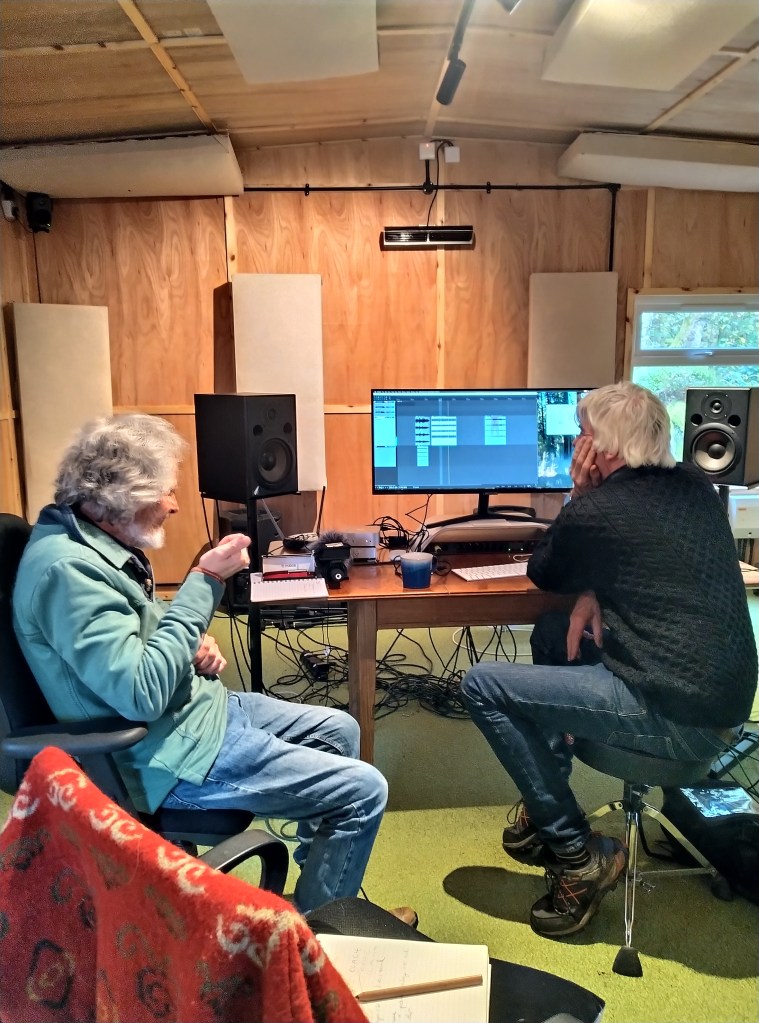
Facilitated by John’s expertise as a musician and sound engineer we spent 3 further days “playing” sonically with the concepts of Earth, Water, Air and Fire and their metamorphic transitions.  A studio full of instruments (bodhrán, lyre, guitars, electronic drum kit, a synth and more) – as well as Clare’s bamboo pipe and our voices – enabled us to match and meld our various field recordings with instrumental and vocal accompaniments. 

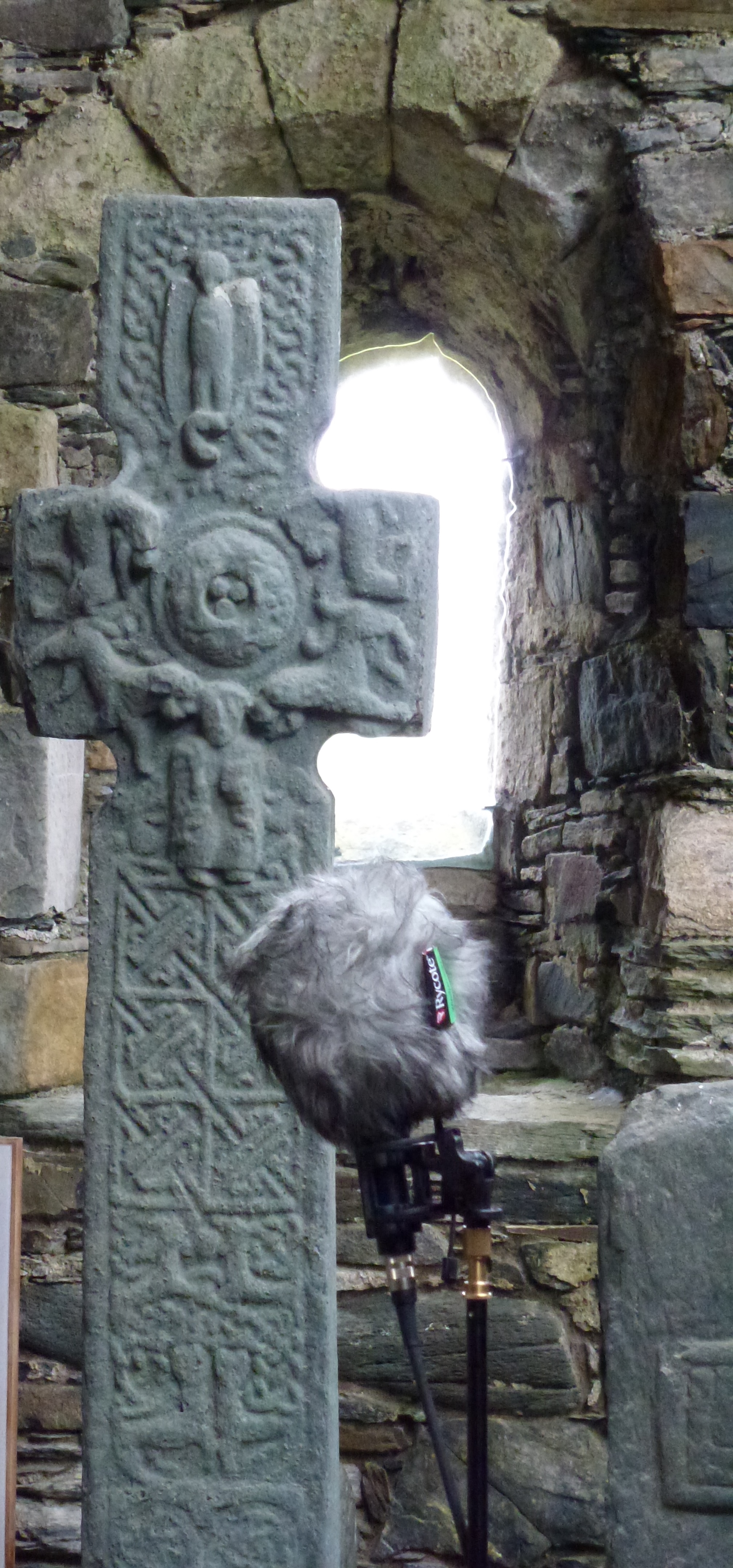
Ambisonic recording of the Bamboo pipe using Zoom F8 with Sennheiser Ambeo Ambisonic mic

Bamboo pipe played by Clare (recorded in Keills 11th century chapel)

Perhaps the highlight of this journey came when we listened back to our Hebridean lament, sung in Keills chapel.   The combination of our two voices bouncing across the ancient stone walls created a lovely subtle reverb. 

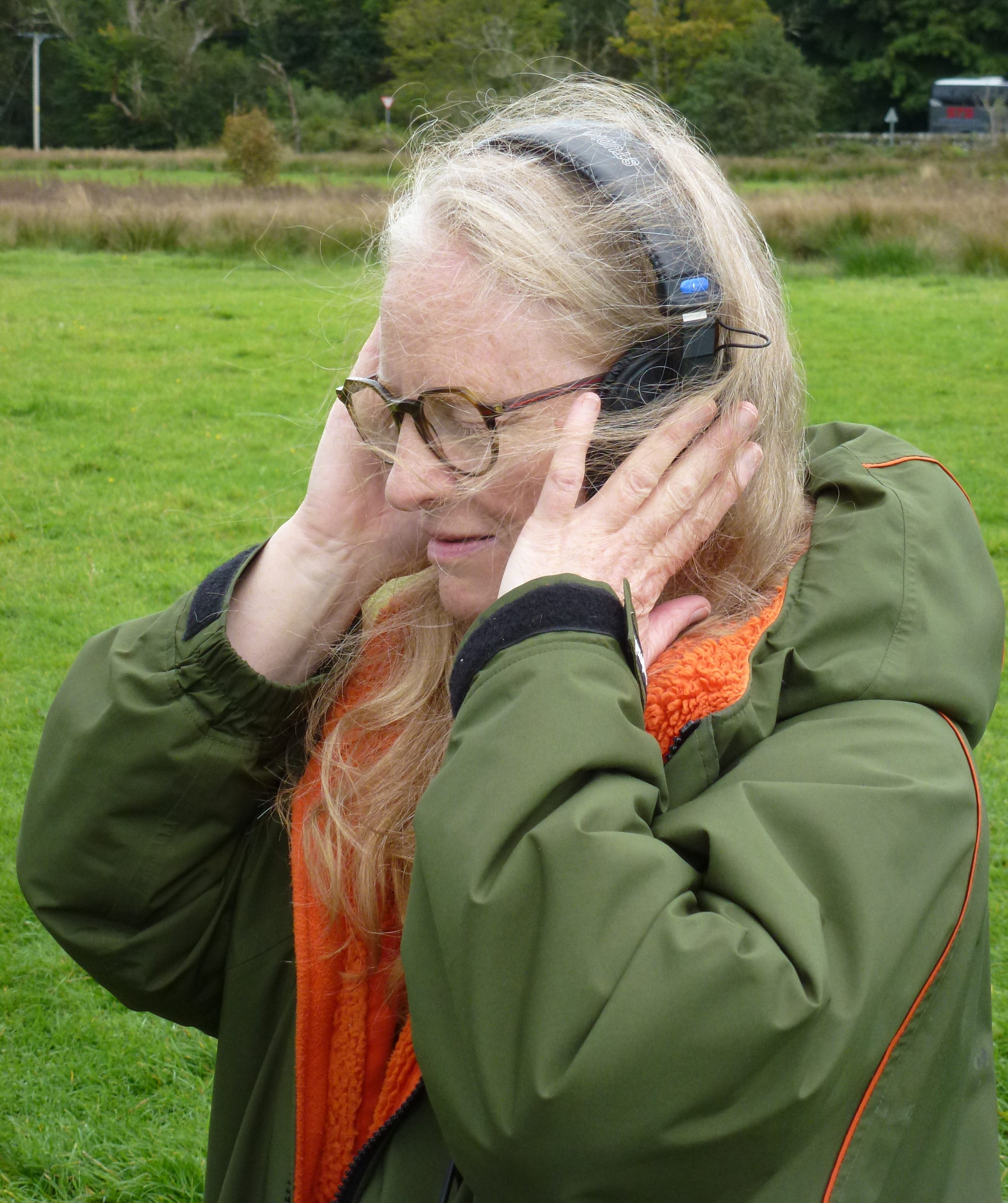
We wanted a distinct contrast to this, recording the same chant outside accompanied by lapping waves.  So on our last day we “sang” to the Sound of Jura, capturing the unique atmosphere on Carsaig beach using John’s Sennheiser Ambeo Ambisonic mic –featured image. Offsetting these two vocal recordings in the studio created another dimension for this lament and we decided to incorporate it into our now almost complete soundscape.

Four very exciting days spent with an amazing tutor enabled us to create and complete an 18 minute soundscape.  The “Sound of Alchemy” morphs from the earthy sounds of stone with drumming on rock, through watery elements of lapping waves, trickling streams and the gentle sound of an “untuned” lyre (bluesy), into the airy element of whistling wind accompanied by a breathy bamboo pipe, merged with the mysterious sounds from a contact mic in the reeds.  The final crackling element of fire (moss) incorporates a crescendo of cymbals leading into the choral “Nay Hey” – a layered polyphonic Hebridean lament. 

More details of our journey through each of the four elements in sound will follow shortly.

Thanks again to John Wills for his amazing and inspiring residency (Positive Ambisonics Residencies)

New Year – New Moon

New Beginnings

With the twelve days of Christmas past and 2024 now behind us, we have welcomed in a new year.

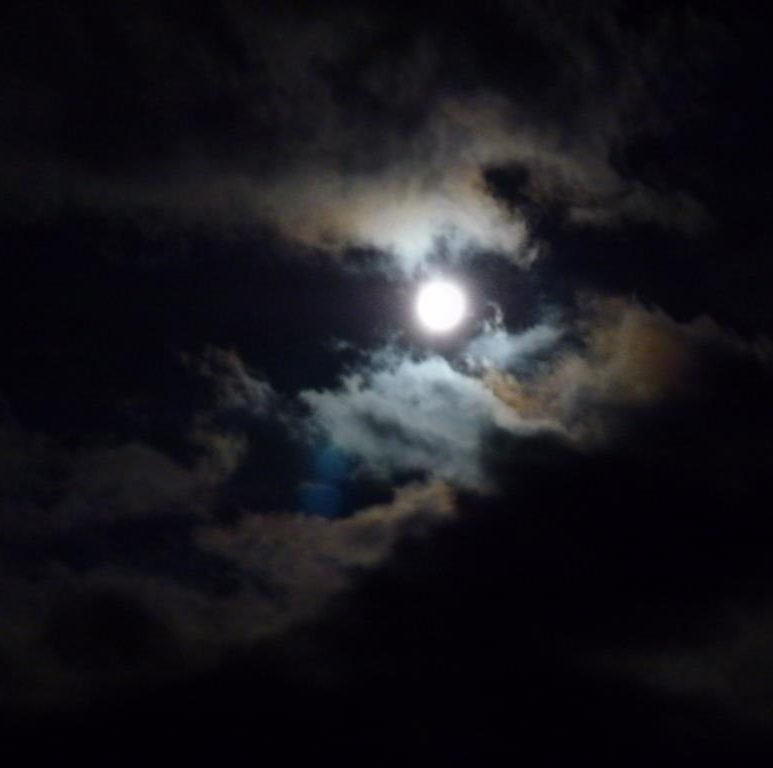
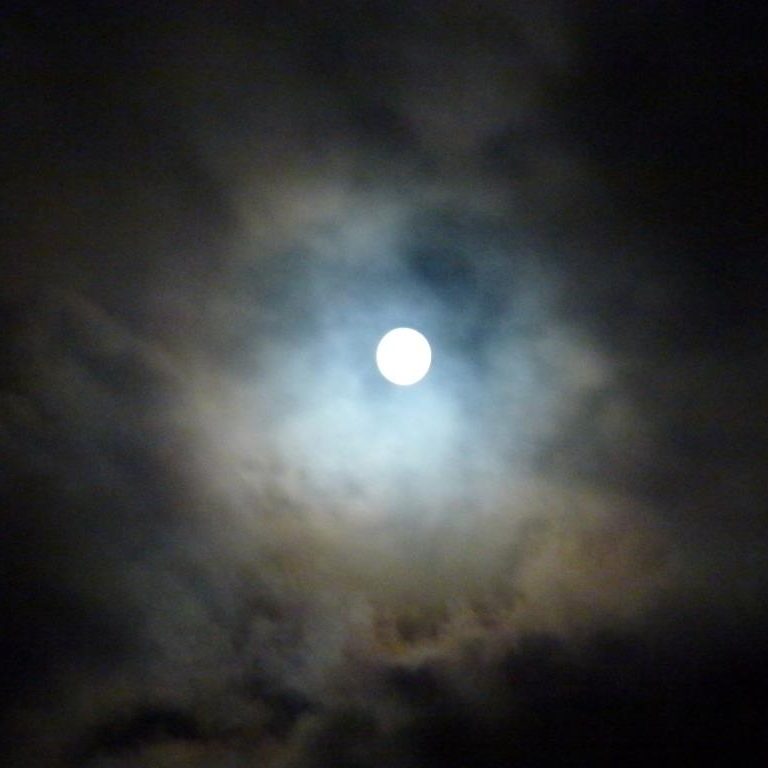
3rd January saw a fabulous new moon. A shining sliver appearing as dusk fell with just one solitary star above.

As darkness grew the image became more intense, with the face of the “man-in-the-moon” revealing itself more clearly.

A quietness descended on Studio Hundy after the hectic printing process that took place in advent came to an end.

4 colour reduction linocut print

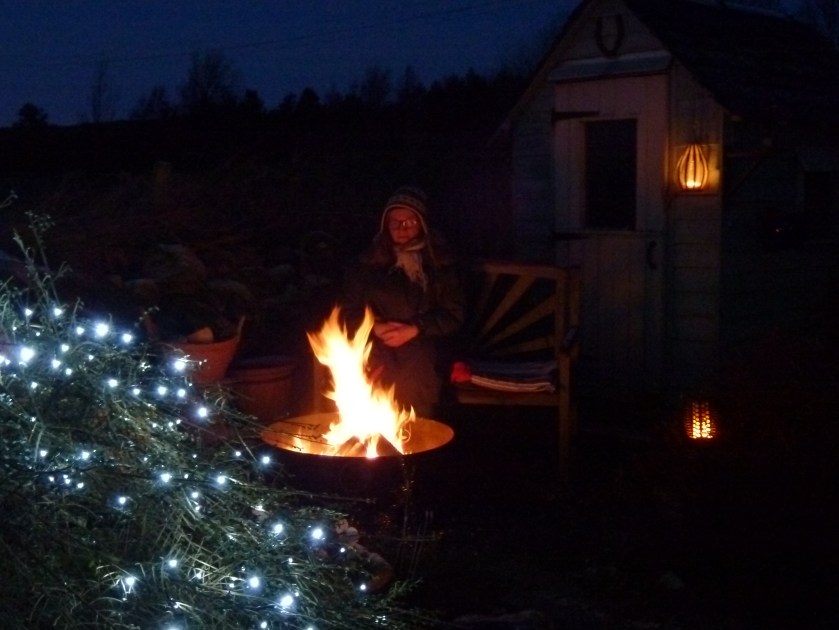
Cold clear nights in recent days encouraged us to light our firepit, heat up some glogg and reflect on the year gone by.

The flickering flames and glowing embers created an atmosphere ripe for remembering what has passed and what maybe is coming towards us from the future.

Christmas decorations have been dismantled and packed away. This too gave chance for reminiscing – within a wider time frame – considering when each adornment arrived in our lives, and from whom.

Some remain as mere magical shadows in the memory, softend by the gentle glow of winter light.

We are not the only ones that have been enjoying ourselves during this festive season. When the ice melted (sometimes with a little help from inside our kitchen) the bird bath became the focus of a great deal of fun:

And then there were three – “Sparrow Party

All good wishes to visitors to my website for 2025

Advent calling

Gathering inner light

A bright moon, clear nights, crisp frosts, blue sky days and intermittent grey rain – it is December.

Birds in the garden seek what they can. The Wren searches in the stone wall for insects, the Robin rules its territory, bouncing and flicking its tale to ward off intruders.  Buzzards wait patiently on telegraph poles – one such perch used on occasions also by a Kestrel.  Sparrows assemble in the hedgerow awaiting the bird seed or fat balls to be put out and then descend in great numbers, “squabbling” as they feed.  Blue tits seem to “fall” between branches within the pine tree to gain access to the nut feeder.   The 3 broods of Blackbirds that hatched in the summer nest by the shed are feasting on fallen apples.

The water bath outside our kitchen window, when not frozen, seems to be a welcome place to take a sip, a dip, or even a proper shower. 

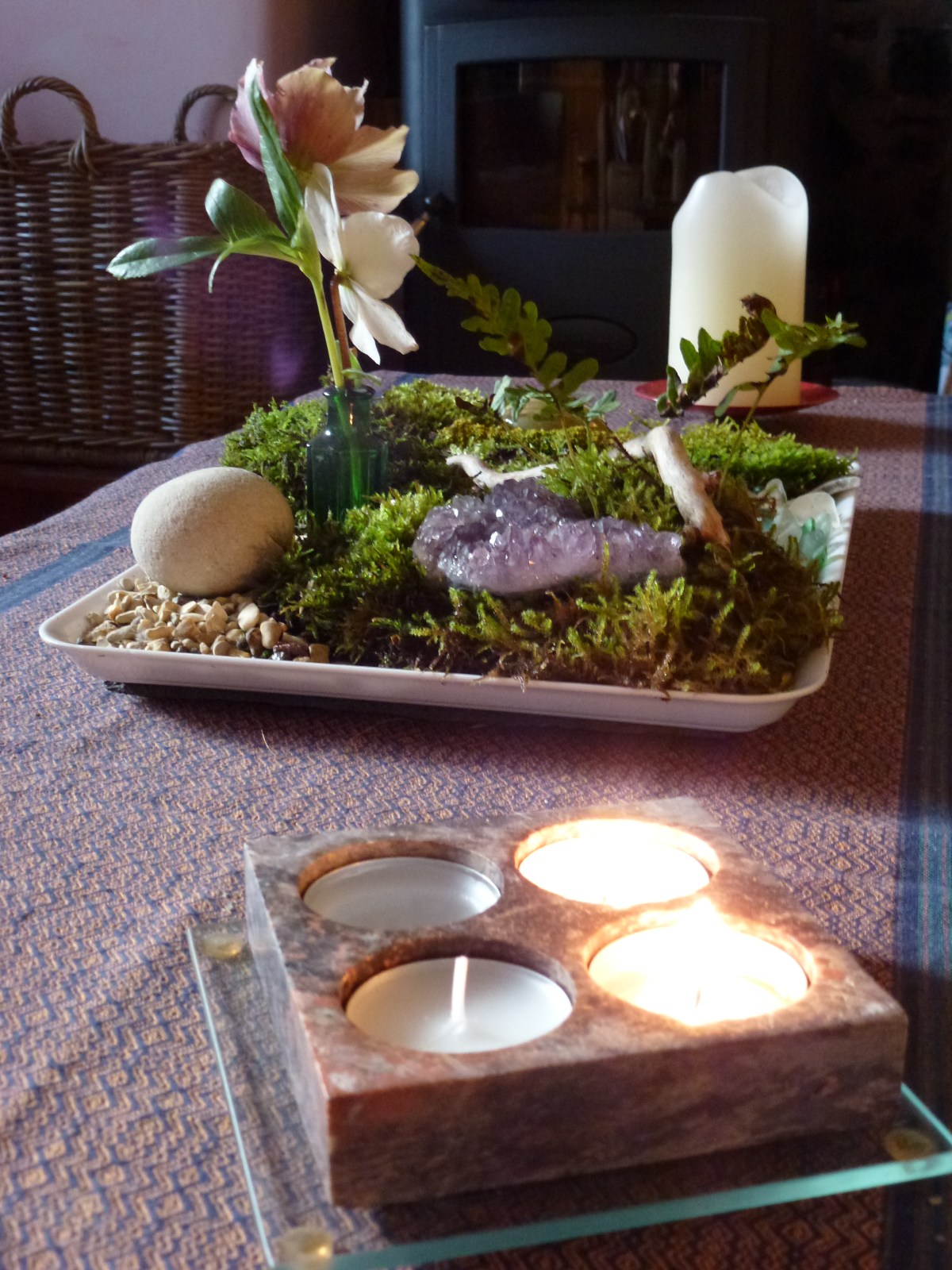
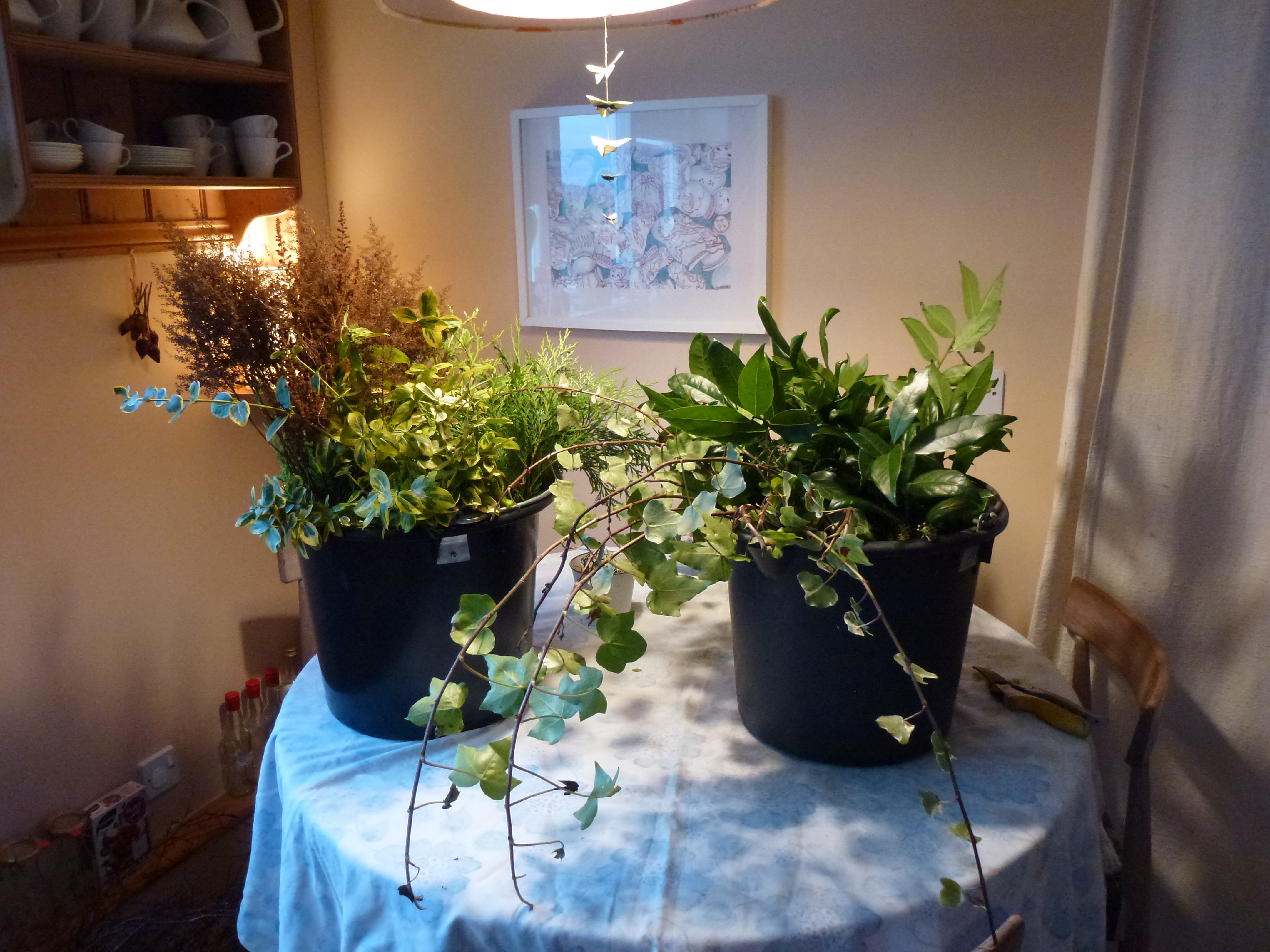
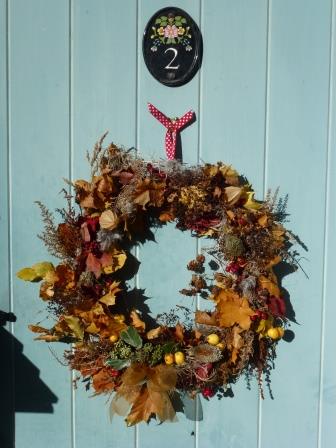
Bringing in greenery generates a sense of freshness to a world now largely sealed off from the outside elements.  Windows tightly sealed, curtains drawn at 4pm, keeping in that vital warm.

Adding a little extra light compensates for the long dark nights.

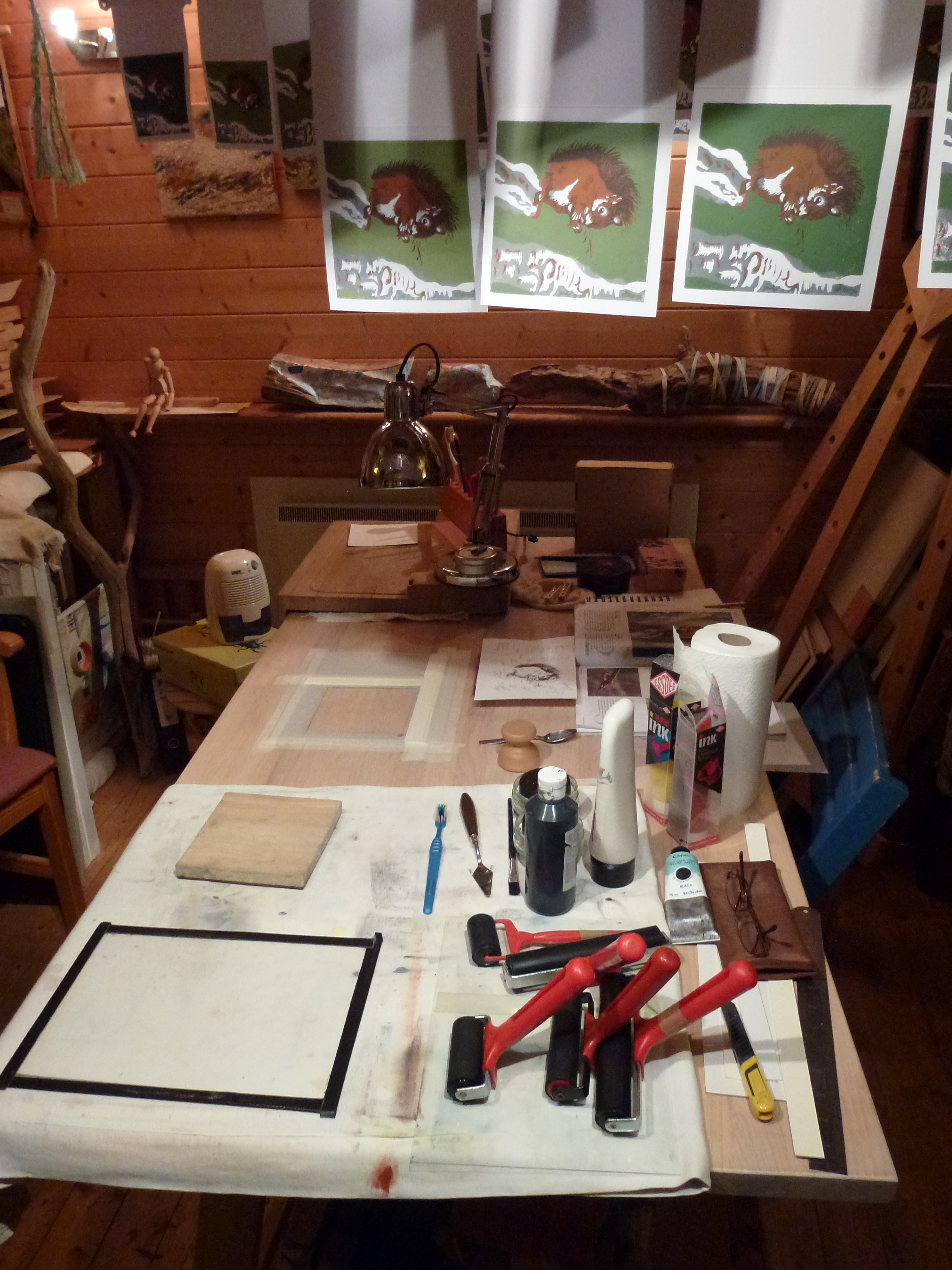
Many hours in December have been spent in Studio Hundy engaged in the printing process.  This year I rose to the challenge of a 4 colour reduction linocut.   I discovered various things along the way, but am always delighted by the experience of seeing the image gradually evolve as each new colour block is printed.

As the earth “slumbers” and plant growth stills, the animal kingdom continues with its winter activities; whilst we, as humans, have the potential to experience the anticipation that advent brings.
 

See also: Midwinter’s nigh and Sounds of December

Candlemas

Jewels of light

Candlemas on 2nd February occurs between the mid-winter solstice and the spring equinox. Imbolc in the celtic calender. North East on the medicine wheel it is the “gate of birth”; between Earth and Air and between love for others and spiritual love.  As with all these “in-between” gateways, within the cycle of the year, it holds a sense of great mystery.

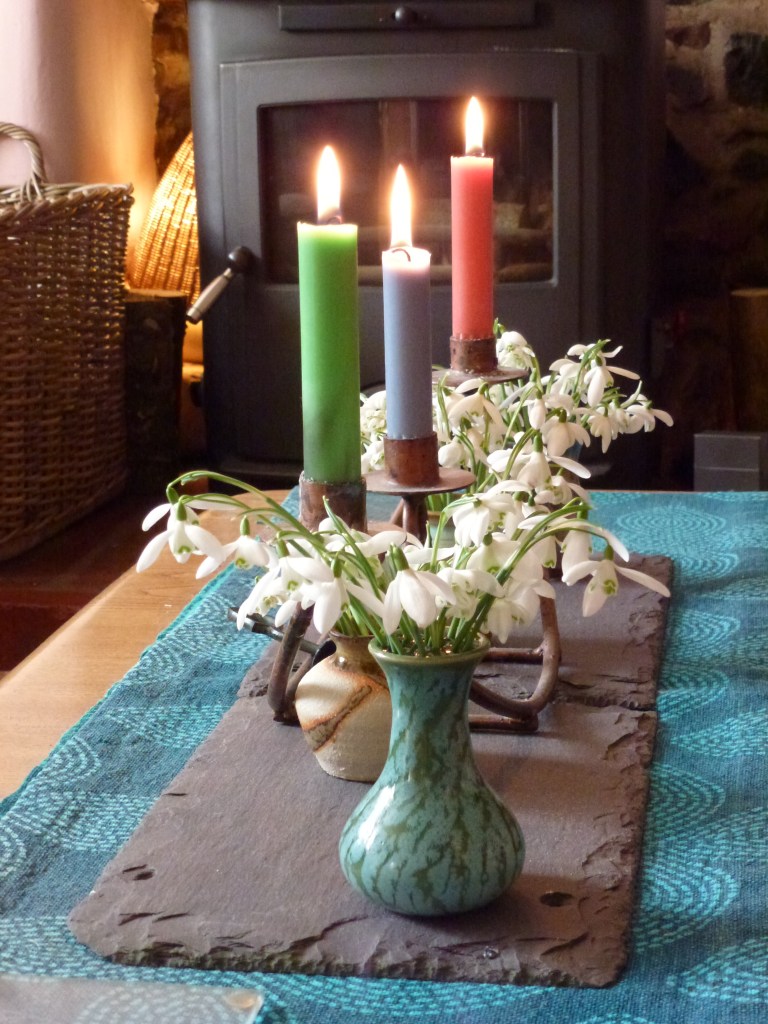
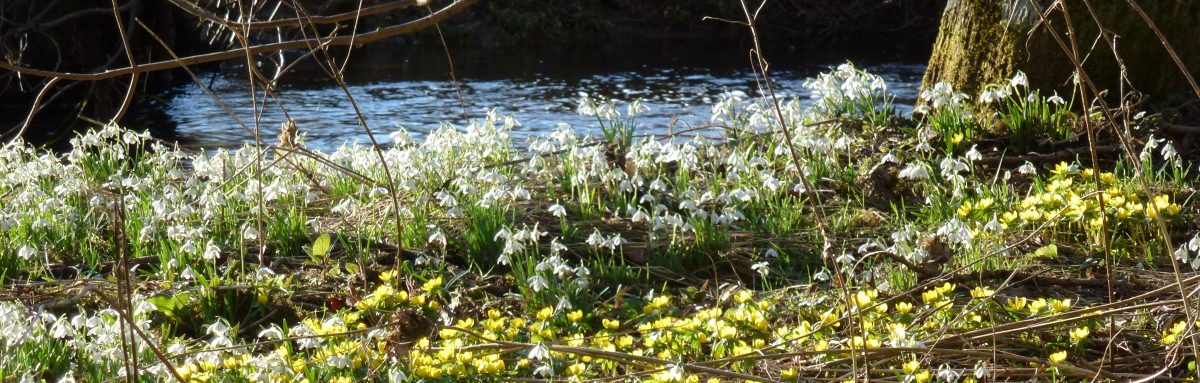
Looking to nature we see the flowering of snowdrops at this time of year. Like jewels of light covering the darkened ground, they bring a sense of hope for the year to come; an uplifting contrast to the often dreary, grey days we frequently experience throughout January.

I am enjoying reading a beautiful book I chanced upon late last year: Nature’s Calendar The British Year in 72 Seasons.

Inspired by a traditional Japanese calendar which divides the year into segments of four to five days, this book guides you through a year of 72 seasons as they manifest in the British Isles.

From Sleeve notes

In a facinating entry for the micro-season 15th-19th January one of the authors, Rebecca Warren, links the emerging snowdrop to the festival of Candlemas. In Italian the plant is named fiore della purificazione (flower of purification) and in French it is sometimes know as violettes de la Chandeleur (Candlemas violets). 

I thoroughly recommend this wonderful book. It can be picked up every 4-5 days for a topical, often thought provoking essay by one of the 4 authors, capturing some aspect of the natural phenomenon we can experience through observation in our immediate surroundings.

Although we may well not have seen the last of the snow this winter, the emerging snowdrops aways remind me of this lovely poem I discovered many years ago:

Last Snow

Although the snow still lingers
Heaped on the ivy's blunt webbed fingers
And painting tree-trunks on one side,
Here in this sunlit ride
The fresh unchristened things appear,
Leaf, spathe and stem,
With crumbs of earth clinging to them
To show the way they came,
But no flower yet to tell their name,
And one green spear
Stabbing a dead leaf from below
Kills winter at a blow.

Andrew Young
born Elgin 1885

Swallows & Martins on the move

Summer visit almost over

“The preparation” – Pastel & Charcoal sketch 2023

As September begins, a sure sign that summer is coming to a close is the change we see in the patterns of the Swallows and House martins. A subtle change that accompanies the transition of the light.

Their early morning flight in large groups, their congregating on telegraph lines, their loud chitter chatter – all signalling that they will be departing soon for distant shores.

For me there is a sadness that accompanies this time, captured in the lines of Mary Webb’s poem:

Within my spirit is a voice that grieves,

Reminding me of empty autumn skies.

“Swallows” by Webb, M. (1930)  The collected works of Mary Webb.  Poems and The Spring of Joy. London:  Jonathon Cape, 1928.

In a small attempt to celebrate these wonderful migrant visitors that bring such joy every year, I have put together a short video clip. It is fairly basic, using limited equipment/resources, but for me it catches something of the anticipatory mood inherent in the “jubilant” activities of these beautiful birds.

Video clip: Swallows and Martins on the move

Related posts:

Four seasonal mandalas

Responding to the changing light – Autumn / Winter / Spring / Summer

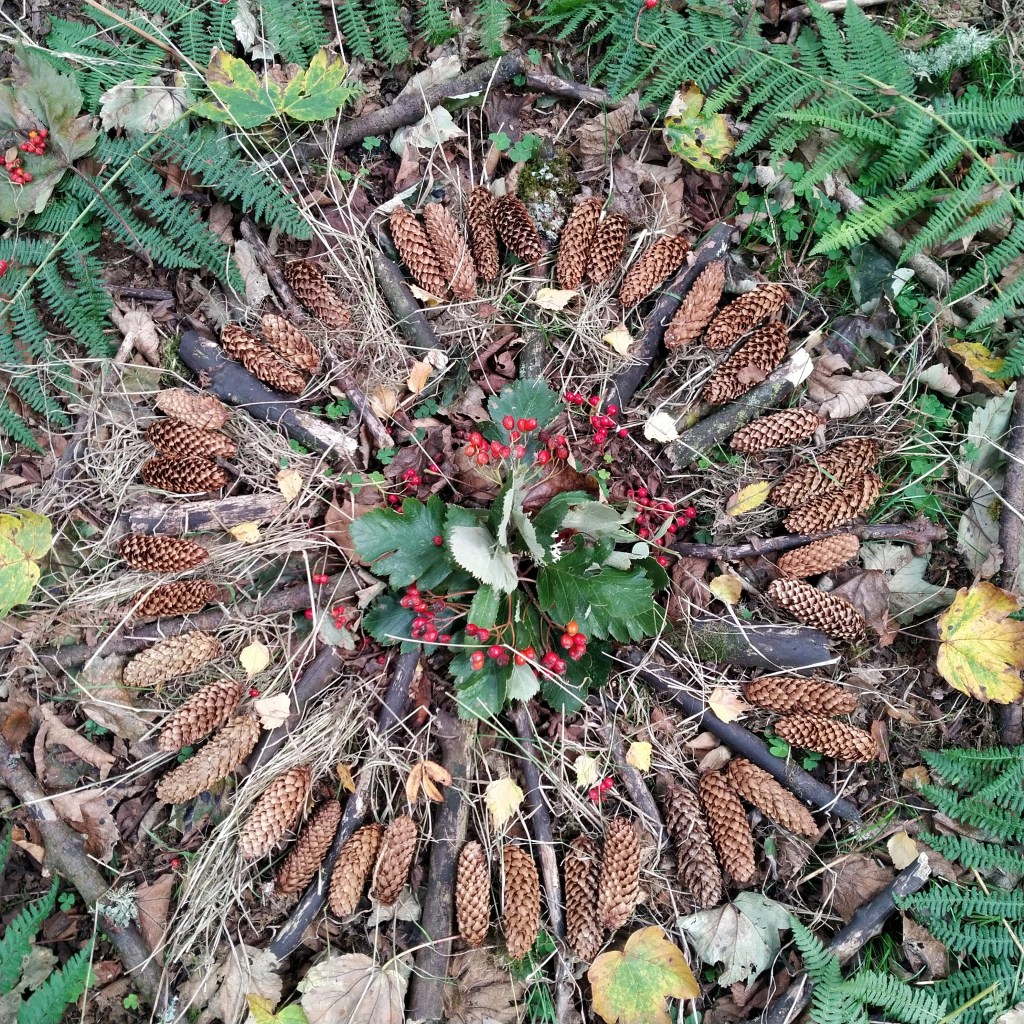
Accompanying the change of light throughout the year, a small group of us have been taking the same walk to a nearby woodland, making seasonal mandalas with found materials provided by nature.

We started at the Autumn equinox in September 2022, repeating the same walk on the Winter solstice and then again in Spring, and finally on the Summer solstice that has just passed.

We tried to be sensitive to the qualities of the day light at each of these 4 points in the calendar, as well as the weather, atmosphere and to the changes we observed in surrounding nature. Responding to these we collectively choose a spot, in or near the woodland, making our mandala using the variety of materials that nature provided at the time.

Photographs do not do justice to the 3 dimensional, sculptural forms that we created. They can only hint at the different locations, materials and qualities that each of the four mandalas revealed.

Autumn Equinox

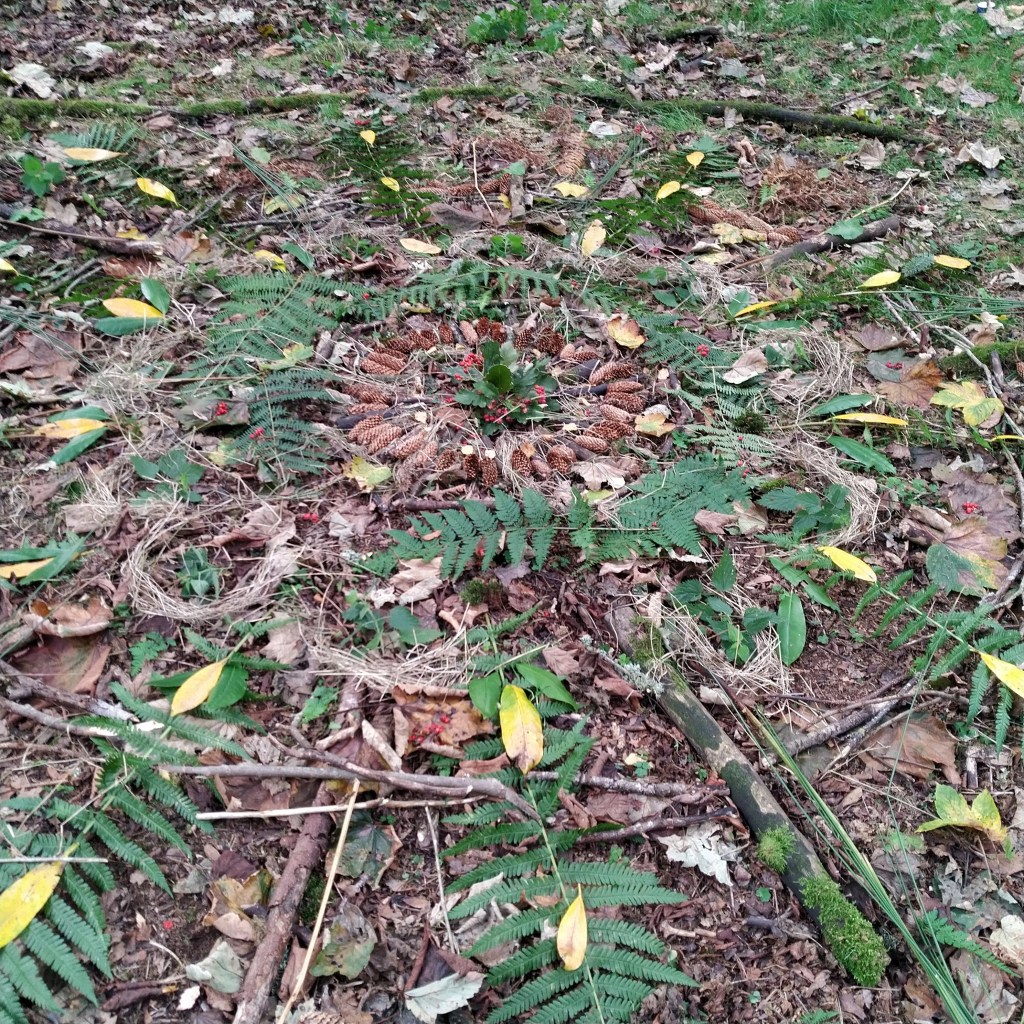
A large expansive mandala formed, within the woodland itself, beneath the canopy of leaves still present on the trees. The transition here from the dominant light of the summer – diminishing to meet an equal proportion of darkness in the night – felt significant as a backdrop to our form. Similarly the differentiation of light and dark within the mandala was so subtle that it seemed to merge with the natural undergrowth on which it had been created.

Found materials reflected the summer growth that had not yet come to a complete hault, and yet we could also feel the movement in nature towards winter.

Winter Solstice

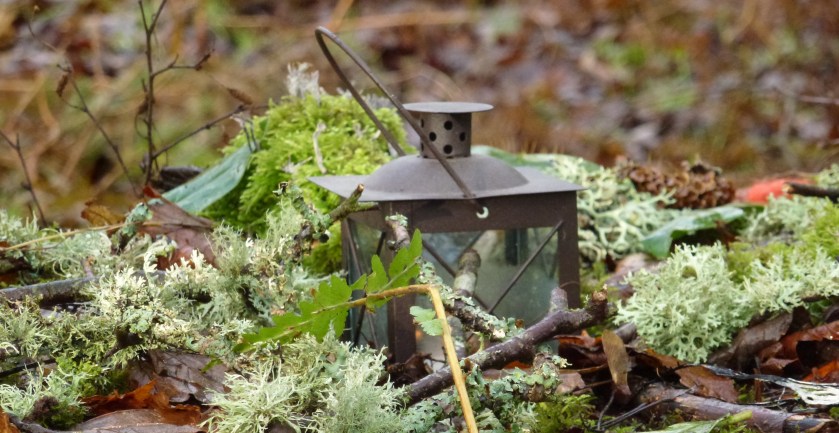
In contrast the site for this mandala was nestled within a cluster of now bare birch trees.

An old mossy stump centred in this small grove was our focal point. A moist misty day gave plenty of opportunity for using mosses, lichens, rotting leaves, ferns and more. Whilst the mandala was concentrated on the tree stump, it rayed outwards beyond the cluster of trees as if dissolving into the rest of the woodland.

To acknowledge the time of least daytime light, we placed a small lantern in the centre and lit the candle.

Spring Equinox

Our chosen spot for this mandala was on the edge of the woodland. On the boundary between bare branched deciduous trees and the “devastation” in the open area, fairly recently cleared of (mostly) pine trees.

This position felt more open and bright compared to inside the woodland and suited the sense of an increasing light, growing into and through the spring equinox. Our mandala gradually formed out of crumbling bark, cones, branches, feathers, stones, moss and lichen.

Summer Solstice

Finally we returned to the same woodland at the summer solstice. We were aware as a group that we found it hard to find a place or focal point for the mandala. We explored the area for some time before agreeing to use a large upturned stump of a pine. This was in the open area of “devastation” from previous felling. The bare barky ground now beginning to “green”, populated with small creeping plants and other seedlings.

The beautiful stump, with its gnarled roots protruding skywards, acted like an “altar” on which we placed, wove and threaded our summer finds.

A rhododendron bush, growing on the boundary, provided flashes of colour amongst the greenery, grasses and ferns.

Four seasonal mandalas created collectively, without much planning or discussion, responding to nature’s rhythm within the cycle of the year. Thanks to the freinds that participated in this creative, and quite magicial process.

Chattering cheerfully

Twitter …natter …chatter

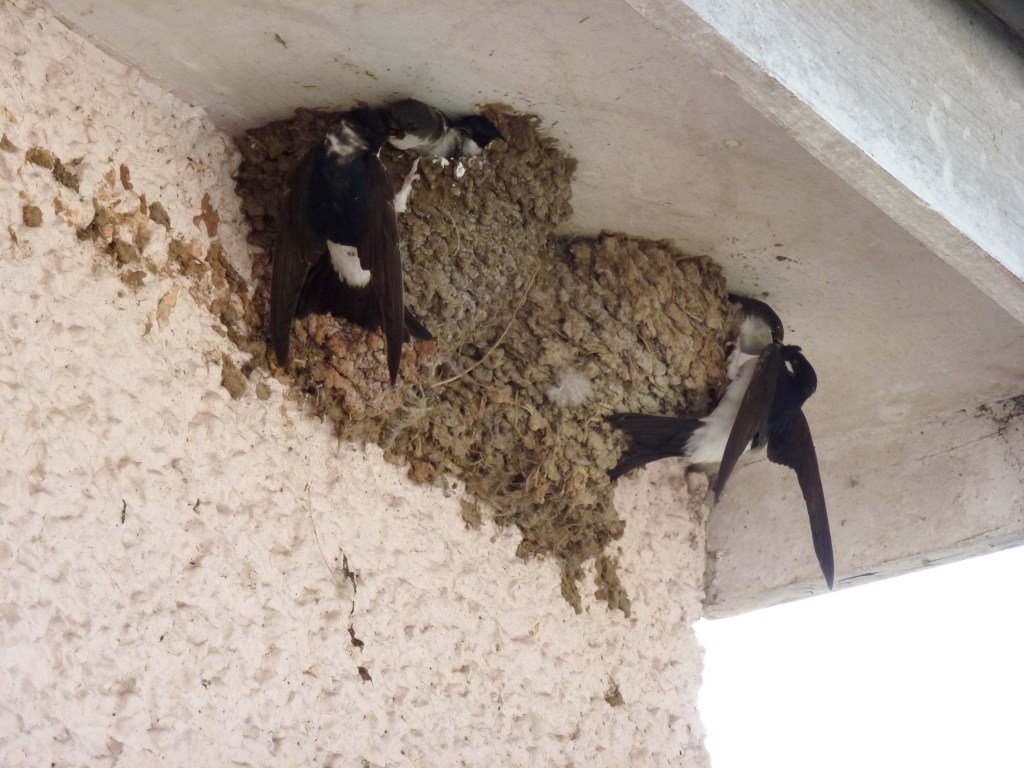
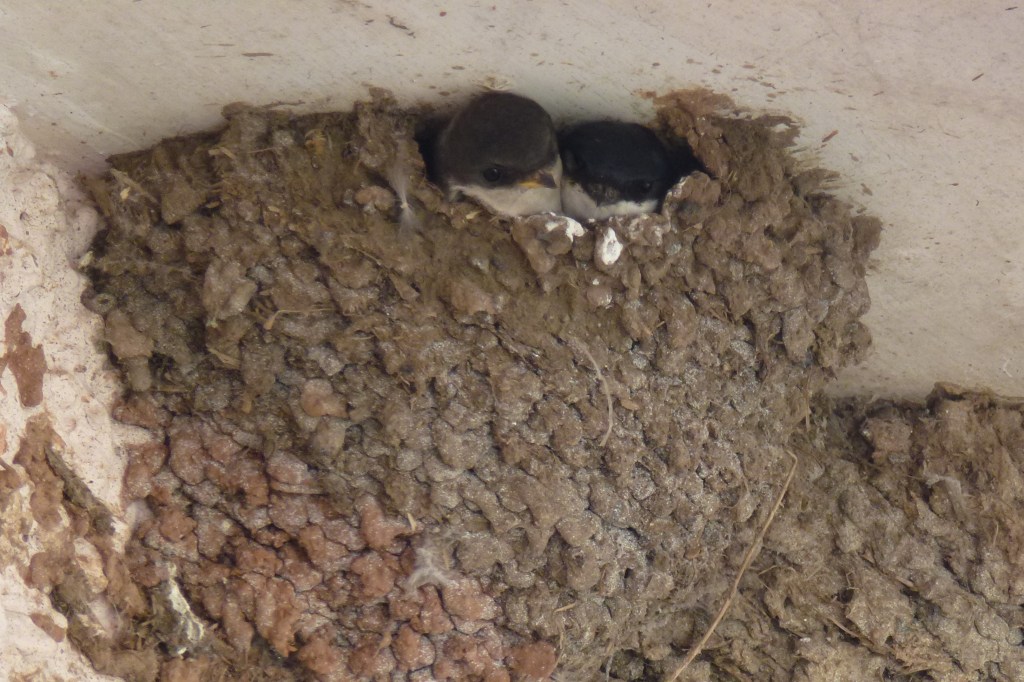
For the last month – or more – we’ve been hearing the cheerful chatter of martins and swallows at the front and back of the house. Flying high overhead in the clear blue skies, skimming low over crops in nearby fields, and swooping and turning with dynamic aerobatics, down and up to their nests in the eaves. Their characteristic twittering, uttered on the wing, is even more pronouced as they land on, or enter into the nest.

This year we are “fortunate” to have a nest right outside our bedroom window! So in the early hours, when they are busy catching insects and returning to the nest to feed their young, we are treated to the sound of their constant nattering. I wonder what they are “saying”?

SOME SERIOUS TWITTERING

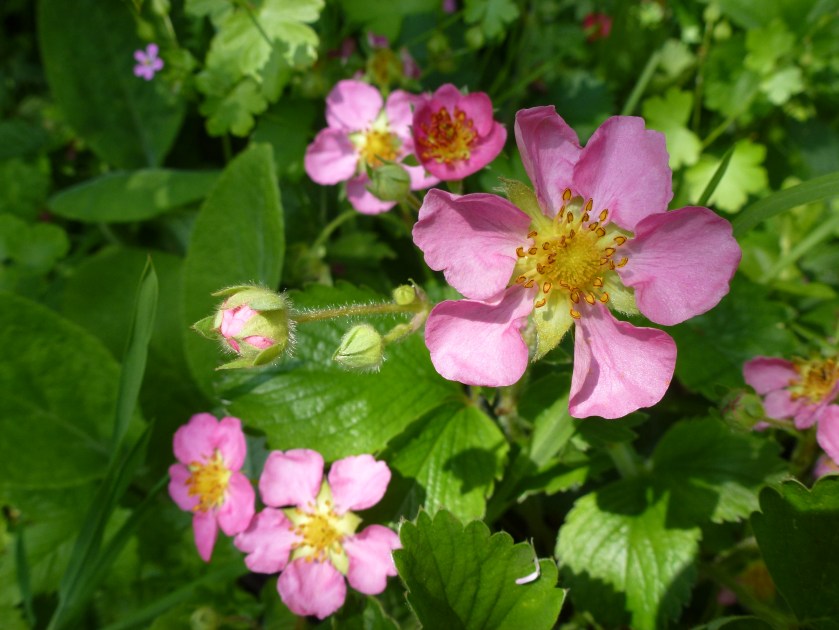
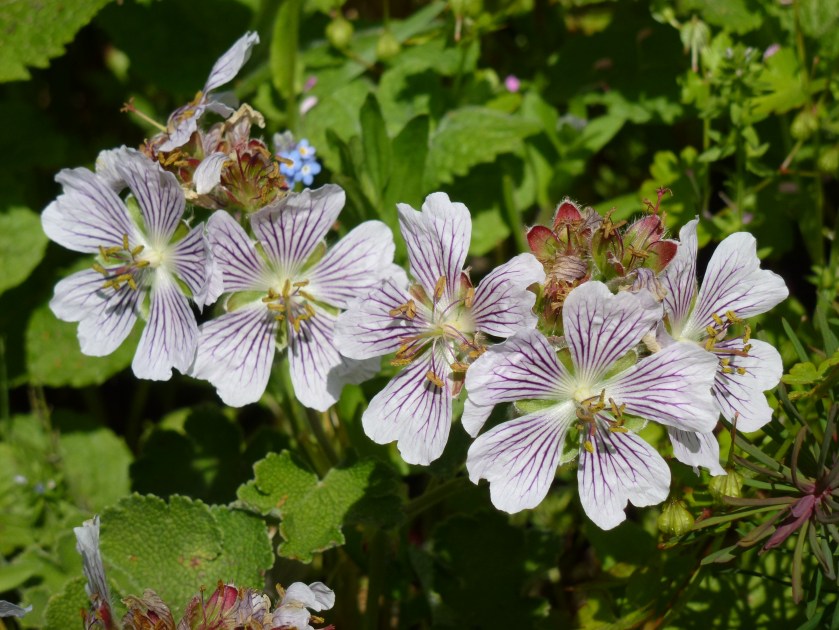
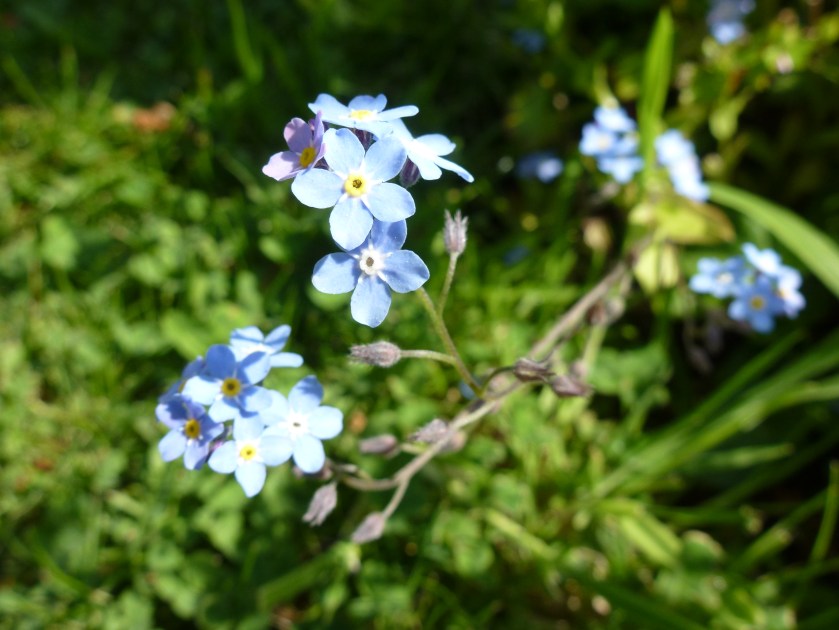
A riot of colour, texture and form

Nature’s palette in June

The garden at this time of year suddenly brings colour, texture and form in abundance. The borders have grown tall and plants are competing for their place in the light.

Some have reached their full flowering potential, whilst others are still emerging from buds. Echos of spring can be seen in swelling seed pods.

What a delight it is to walk quietly through this palette of nature, drinking in the changes that occur each day.

Sounds of September

Honks, barks, and cackles – heralding autumn

Cooler days have arrived and there is a definite autumnal feel in the air. The regular sight and sound of skeins of geese has now started. It is an indication that summer is truly over. These flypasts will become a more frequent occurrence, louder and with greater numbers, as we enter into October. Sometimes the geese fly in their characteristic V formation at a distance, to the north or south of our house, and occasionally (if we are lucky) immediately overhead.

Skein of Geese – watercolour sketch 2021

I have wanted to record the very particular “calling” sound of these birds for some time now, and was fortunate enough to have my sound gear at the ready this year.

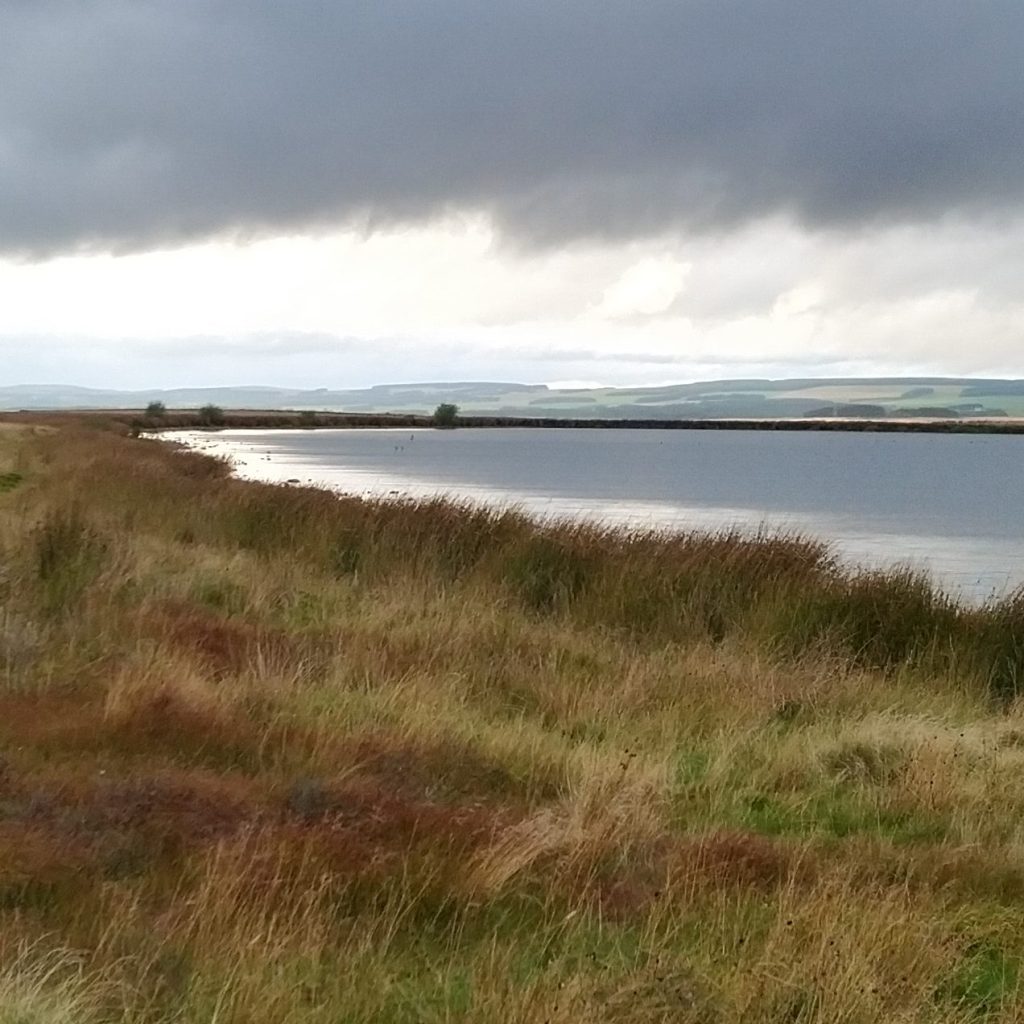
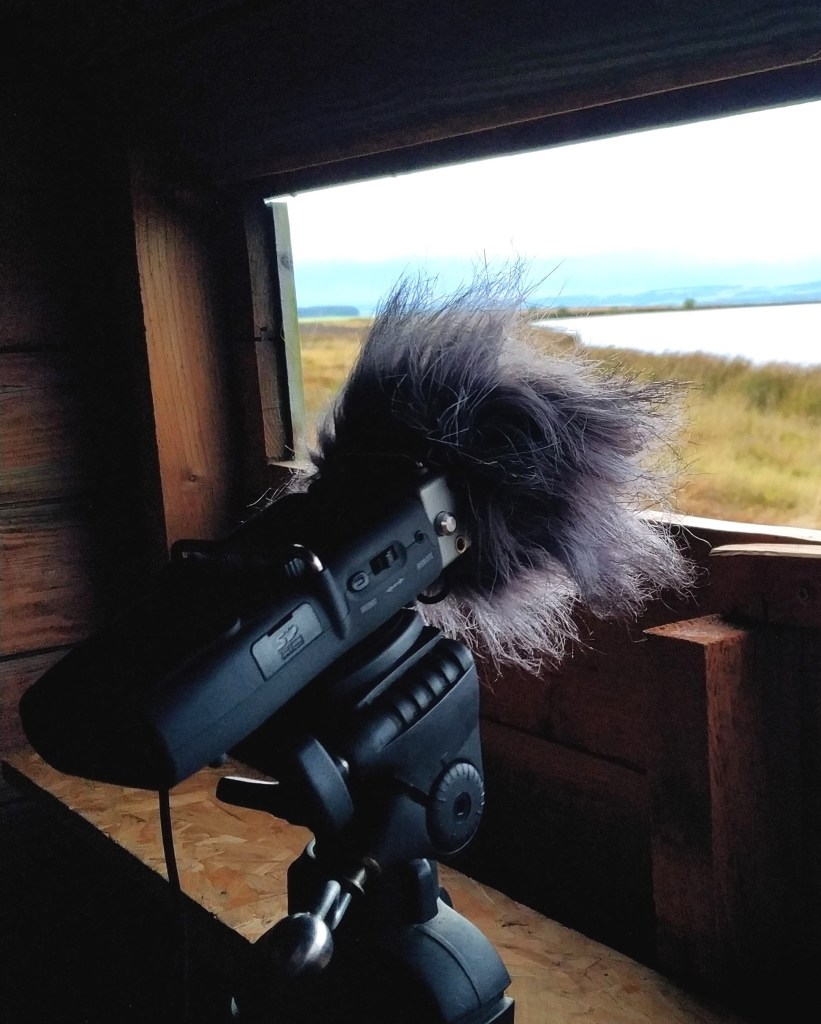
I was also interested to visit a local loch where, I was told, the geese often congregate in the evening. So at the weekend we walked to Hule Loch, located on exposed moorland between Greenlaw and Duns. Sitting in the small hide we were able to take in the panoramic view of the loch, its multiplicity of birds and the surrounding hills. The colours and light changed so dramatically during the short time we were there, as the wind blew, the rain came in from the west and cleared again.

Although the sound of the wind was quite dominant inside the hide, I was able to capture several minutes of audio to bring back to Studio Hundy.

I have created a September sound piece encompassing 3 phases: over our house – a large skein flying in from the east and away to the west; from the hide – a small group of birds on the loch taking flight; and finally (also from the hide) – a large skein of geese coming in to land.

Geese soundscape

The latter was a fascinating occurence as the large cluster of birds seemed to ungainly drop down onto the surface of the water in a random manner, like some kind of precipitation out of the sky! As they landed onto the water their “cries” diminished, until eventually the loud cacophony of sound gave way to an occasional “squawk” or honk.

It’s a sharp sound to listen to, and at the same time incredibly beautiful – also so unmistakable!

Geese in flight (pastel) – sketchbook 2012